
- Key Insight: Learn why vacancy rates for homes held by corporate firms are outpacing national averages.
- What's at Stake: Prospective buyers trying to find available homes as overall vacant units continue to shrink.
Overview bullets generated by AI with editorial review.
While home vacancies in the U.S. housing market remain historically low, the growing share of abandoned institutional investment properties holds clues about financial prospects for the segment and where availability lies today.
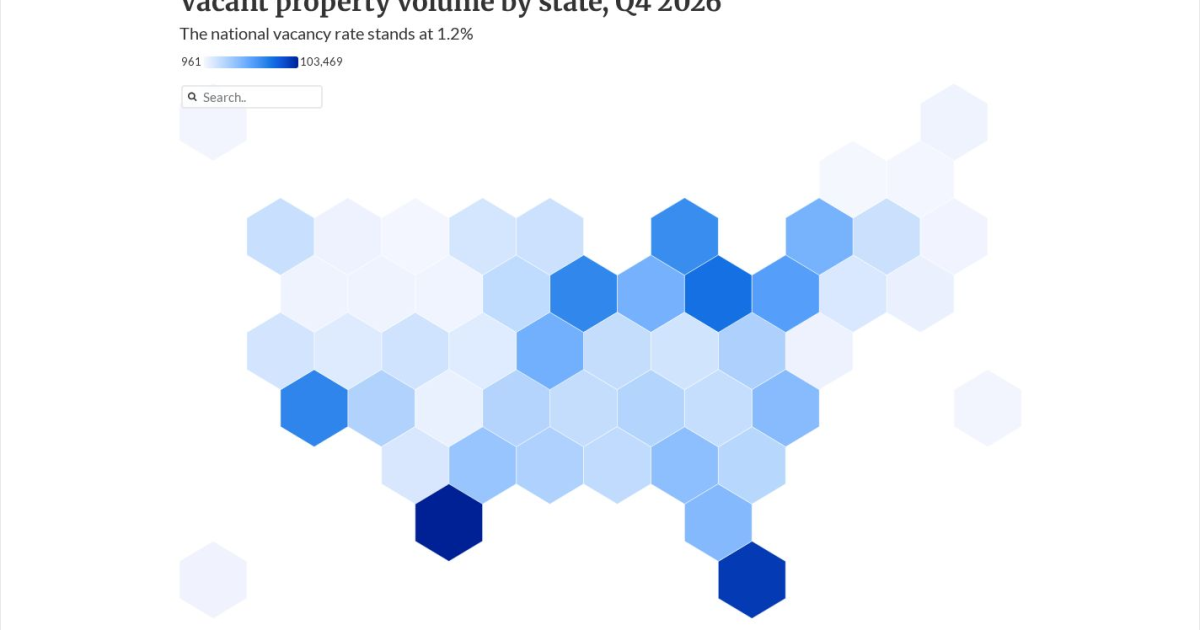
Approximately 1.2% of single-family units are currently unoccupied, according to the fourth-quarter
Among investor-held properties, though, the vacancy share showed greater stress, coming in at more than double the national rate. Of the 30.6 million homes held by corporate firms, over 840,000, or 2.7%, are currently vacant.
For potential buyers, the overall numbers reveal scant opportunities to find a home among vacant units, continuing trends reported last quarter, according to real estate data provider Attom.
"The fourth-quarter data showed modest declines in both vacancy and zombie foreclosure rates nationwide," said Attom CEO Rob Barber in a press release. "While trends vary from state to state, vacant and abandoned homes continue to represent a relatively small share of the nation's housing stock."
Why investor properties might be empty
Economic conditions affecting the housing market as a whole are dealing a blow on the investment community. A new survey of small-business real estate landlords, who rival institutional investors for the same customers, found 60% of the companies blaming the Iran War for subdued sales numbers and dampened consumer interest.
Forty percent also cited rising fuel costs resulting from the war for reducing demand, according to the research conducted by RCN Capital and CJ Patrick Co. Just under half expect investment conditions to improve over the coming year.
Where zombies and other vacant units are growing
Among the number of properties currently in foreclosure, 3%, representing just over 8,000 units, were deemed zombies, meaning owners abandoned the homes prior to completion of the process. The share declined from 3.3% compared to both the prior quarter and year.
Despite the pullback, zombie-property volume still grew in 29 states from the second quarter. Although overall numbers were small, the zombie share increased the most in Wisconsin, Maryland and Pennsylvania.
On the other hand,
Meanwhile, vacancy numbers showed that the smallest share of unoccupied properties in the country was in the Northeast. New England and Mid-Atlantic states of New Hampshire, Vermont, New Jersey and Connecticut all reported vacancy rates below 0.5%.
They came in the highest in the Central U.S., led by Oklahoma at 2.4%. Kansas, Alabama, West Virginia and Missouri all followed close behind with vacancy shares between 2% and 2.3%.
Although vacancy numbers decreased heading into the fourth quarter, both