

- Key Insight: Why Fannie Mae came out ahead in earnings despite mixed impacts from higher rates, and has new reason to press forward with title alternatives.
- Supporting Data: Fannie found borrowers' collective savings from appraisal and title alternatives so far this year have been over $100 million.Overview bullets generated by AI with editorial review.
Fannie Mae reported its highest net revenues since 2023 and revealed significant mission-related borrower savings from title and appraisal alternative initiatives in the third quarter, when it contended with mixed impacts from higher rates but was still able to hold costs for lenders relatively low.Consumer savings from the title and appraisal waiver programs show these alternatives got enough use to drive a 7-figure reduction in origination expenses. They also reinforce
"Our efforts to provide appraisal and title insurance alternatives helped borrowers save an estimated $141 million in closing costs so far this year," Peter Akwaboah, acting CEO and chief operating officer at Fannie Mae said during the government-related loan buyer's earnings call.
Fannie was able to support such housing affordability initiatives with $4.2 billion in net income, representing a 5% rise from the previous quarter and an 8% increase from a year ago, even though higher rates diminished the industry originations it buys.
The government-sponsored enterprise's executives explained why during its earnings call.
Why fewer acquisitions didn't hurt revenue
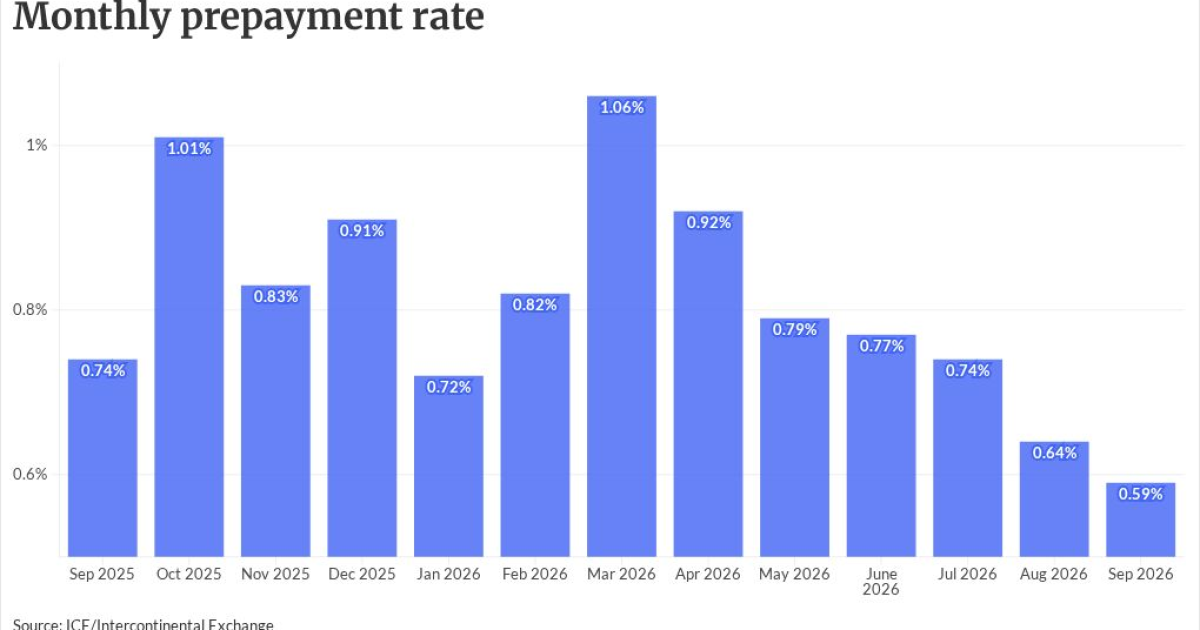
"Changes in interest rates affect various aspects of our financial results. For example, in single-family, while higher rates tend to reduce acquisition volumes, they also slow prepayments and book runoff, helping to preserve guaranty revenues," Chief Financial Officer Chryssa Halley noted during the company's call.
Fannie's core guaranty business fueled 79% of its $7.7 billion in total net revenues, which drove the government-sponsored enterprise's earnings gain.
Single-family loan acquisition volumes did fall by roughly 21% from
Refi activity in the dominant single-family business matched year-ago levels but was down nearly 53% from the previous quarter.
In addition to affecting prepayments and loan volume in the quarter, this may have another impact, according to Halley.
"From an allowance perspective, slow prepayments extend the expected life of our loans, which combined with higher mortgage costs for certain borrowers can increase our expected credit losses," she said.
Serious and 60-day delinquencies in the single-family sector remained historically low but have been drifting generally higher in the past year, ending at 62 and 92 basis points, respectively, in the third quarter. They were both nearly 20 basis points lower than a year earlier.
Sixty-day delinquencies were 7 basis points lower the previous quarter. Serious delinquencies were 4 basis points lower compared to the same period. Thirty-day delinquencies matched the previous quarter's 1.09%, but were below the 1% level reported a year earlier.
Fannie recorded a total single- and multifamily allowance for credit losses of $1.1 billion, offset by other developments that included $630 million in fair value gains. The GSE also reported $94 million in investment gains. It additionally took $1 billion in net unrealized losses in its available-for-sale portfolio.
Efficiency initiatives and regulatory capital
Fannie also engaged in further efficiency initiatives during the quarter that Halley said offset some personnel costs for increased salaries, benefits and a $28 million
Fannie reported a total adjusted capital deficit of $11 billion for the quarter, down from $14 billion in the previous three-month period. Its illustrative return on average required tier 1 capital was 11.1% in the quarter, up from 10.8%.
"Despite volatility across aspects of our financial results, we increased net income both quarter over quarter and year over year, growing net worth to more than $119 billion while reducing our regulatory capital deficit," Halley said.