- Key Insight: Learn why uncommitted funding could be an efficient way to fund the management of real-estate owned inventory.
- What's at Stake: Mortgage companies ideally want to have sources of lower-cost funding available in a challenging market but they can't rely too heavily on discretionary sources of financing.
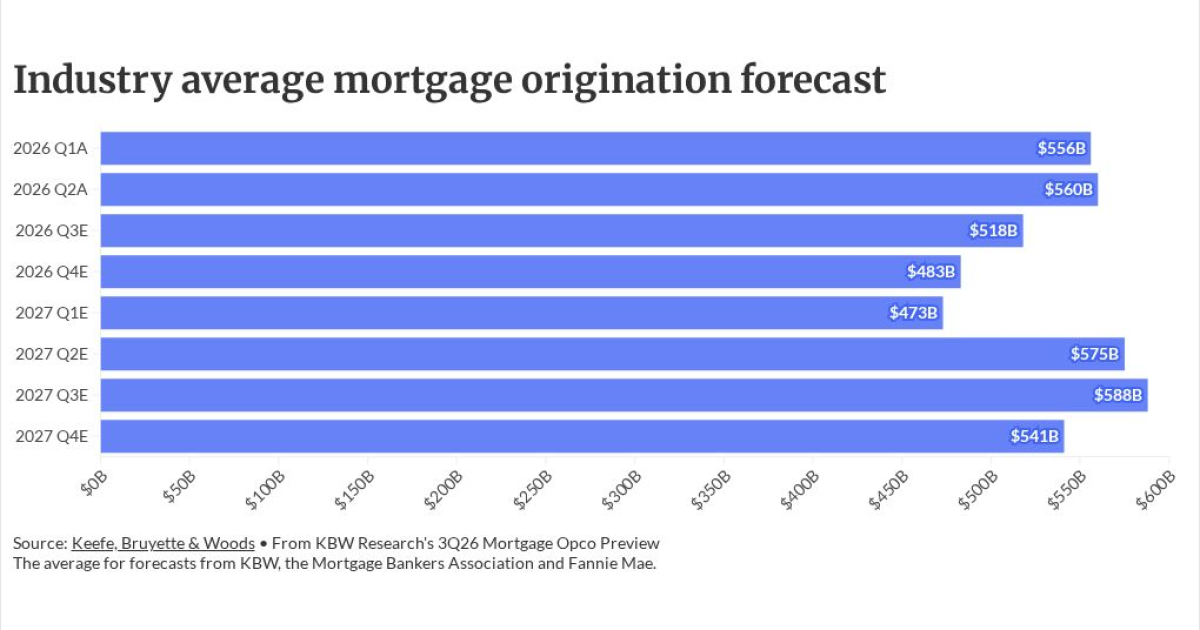
- Forward Look: Averaged industry forecasts show origination volumes could be down by nearly $100 billion from where they were in 2Q by the first quarter of next year.
LoanDepot and a subsidiary have established a real-estate owned repurchase agreement with Nomura Corporate Funding Americas that can be used as a source of uncommitted funding.The pact gives the nonbank mortgage firm access to $125 million it can utilize for short-term expenses without commitment fees as it manages its REO portfolio.
The credit facility points to a way lenders can manage some of funding costs for servicing operations efficiently as
Seasonally, volumes from 1-4 family originations tend to weaken after the second quarter, which Keefe, Bruyette & Wood's average for
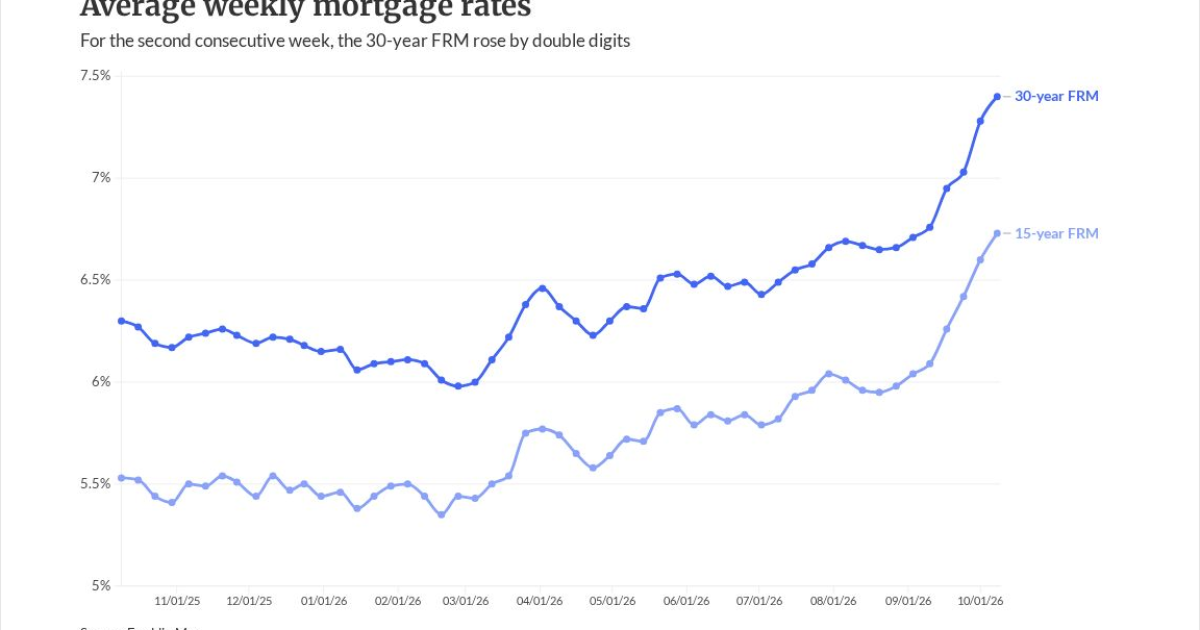
Higher rates could compound this concern by making it more tempting for lenders to compete for loans by lowering rates, resulting in thinner margins, but to date industry professionals have indicated market pricing has been "rational," according to KBW.
"We expect margins to be relatively flat to down slightly in 3Q," KBW researchers wrote in a recent third-quarter earnings outlook report for operating companies in the home mortgage market.
Uncommitted financing and REO
While committed funding lines may be better for originations because they are more reliable and needed on a regular basis, uncommitted financing may work for the management of foreclosure properties that can't immediately be sold because there's been a less consistent need for it.
Higher rates can put pressure on loan performance over time and REO levels have risen somewhat as slower home price growth has depleted equity for more recent borrowers. But REO remains historically low, according to an analysis of Fannie Mae inventory in Bill McBride's Calculated Risk blog.
"REOs increase when borrowers struggle financially and have little or no equity, so they can't sell their homes, as happened after the housing bubble. That will not happen in large numbers this cycle," McBride, a former technology executive known for being an early predictor of the Great Financial Crisis, wrote.
Current market conditions could make a low-cost uncommitted financing resource a company may be able to tap occasionally as the need to get REO properties into a condition where they are more saleable or convert them to tenant units attractive.
The particular agreement LoanDepot has with Nomura allows the company to obtain financing through an arrangement where it can sell and then later buy back loan and REO-related assets if they adhere to certain operational, asset valuation and servicing standards.
To be sure, while uncommitted financing can be cheaper and easier to access than other forms and may be suitable as a contingency source of funds, downsides — like the fact that it may be unreliable — should be considered.
Rating agencies whose assessments carry weight with various counterparties that nonbank mortgage companies work with may be wary of uncommitted credit facilities if there is excessive use of or reliance on them because this type of funding can be pulled on short notice.
Most nonbank mortgage companies in the market currently have speculative grade ratings due largely to market conditions that include high rates,
However, the boost higher rates have given performing servicing units and increased interest in additional borrowing against home equity by existing mortgage holders have offset some of these concerns.