
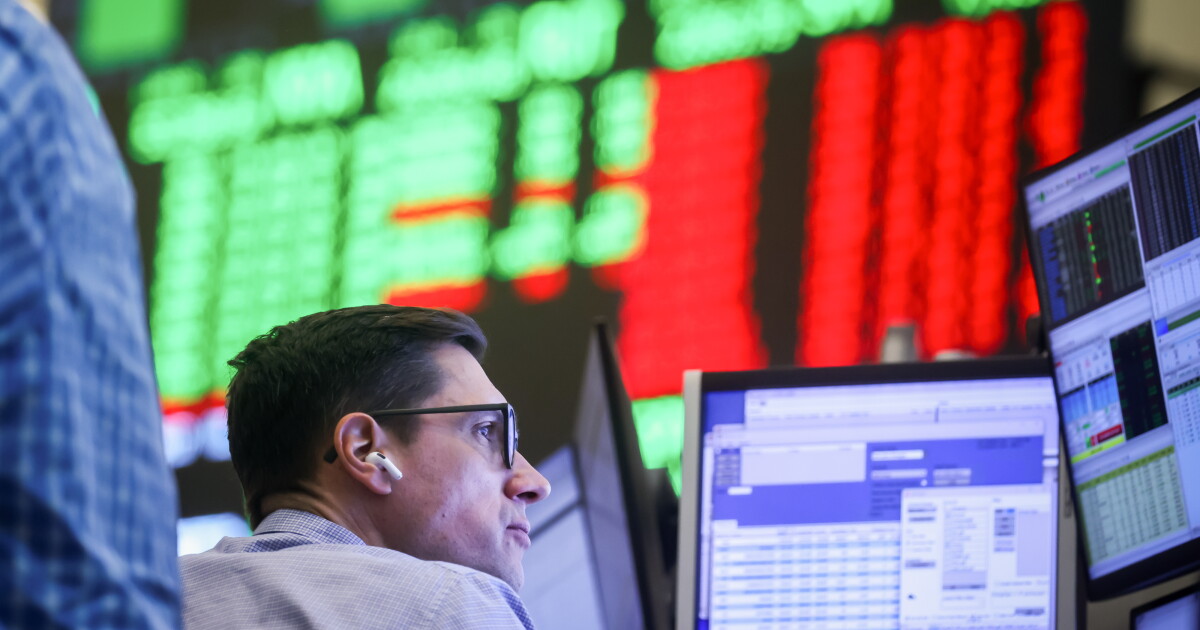
Wall Street sees the Treasury market emerging as a winner from the Democratic landslide in the US midterm elections, giving traders another reason to rethink this year's sharp selloff.
The party's sweep of Congress was seized upon by bond bulls after tech stocks tumbled on speculation the political shift will tap the brakes on an artificial-intelligence investment boom that's been fueling economic growth, fanning inflation and pushing up interest rates as companies flood the market with debt to finance it.
A politically divided government will also prevent President Donald Trump from passing any major tax or spending bills, easing some of the market's angst about an annual budget deficit that's hit $2 trillion, equivalent to roughly 6% of the economy.
READ MORE:
And oil prices tumbled on speculation the Republican defeat will hasten the end of the Iran war, whose energy shock unleashed the bond market selloff eight months ago.
The response to the elections extended a nearly monthlong Treasury rally that pushed 10-year yields down to nearly 4.8%, more than a half-percentage-point below the early October peak. The market largely held its weekly gain even after Friday's Labor Department report showed that job growth accelerated significantly last month.
Treasuries were little changed on Monday morning, as investors weighed a drop in oil prices and a rebound in US stocks.
"AI's been the biggest contributor to nominal GDP, so any kind of stumble probably helps the bond market," said Scott DiMaggio, head of fixed income at AllianceBernstein. "You have the insurance, that if things wobble, we have a great room to move lower in rates."
The bond market's rapid turnaround echoes the one that erupted at the end of 2023, when yields tumbled sharply after the Federal Reserve wrapped up a cycle of interest-rate hikes.
But the scope of the rally has given some analysts pause because the Fed is currently expected resume raising rates next month as inflation continues to run well above its 2% target.
READ MORE:
Moreover, the stock market has been dogged by worries about an AI bubble off and on for years, only to rebound as companies keep plowing money into the technology and investors swoop in to buy the dips.
"Unless stocks continue to sell off violently, I think we have come too far too fast," said John Briggs, head of US rates strategy at Natixis North America.
The bond market will face its next test on Tuesday, when the consumer price index for October is released. Economists expect it to show a slowdown in inflation from a month earlier, though year-over-year figures won't be released because the government shutdown last year hobbled data collection.
The Treasury Department will also hold its quarterly refunding auctions this week.
It will begin with a 3-year sale on Monday, followed by 10-year notes on Tuesday and 30-year bonds Thursday. Cash trading in the US bond market will be closed on Wednesday because of the Veterans Day holiday.
The surging supply of new debt to cover the federal budget deficit is likely to continue to weigh on the market, as will lingering uncertainty about the Iran war, how much further the Fed will hike interest rates, and what policies the new Democratic Congress will embrace.
But given how high yields had risen — and the new political checks on Trump's power — investors still see it as a good chance to lock elevated bond yields.
"Fixed income is a pretty attractive proposition here," said Neil Sutherland, portfolio manager at Schroder Investment Management.
"A lot of the things which are vexing markets today will be behind us" in the next six to 12 months, he said, "which on balance will be supportive for the bond market."