
- What's at Stake: Whether mortgage servicers can maintain enough resources to handle rising agency loan distress
- Supporting Data: 6.9%: The late-summer increase in short-term delinquent GSE-backed mortgages.Overview bullets generated by AI with editorial review.
A late-summer rise in delinquencies among mortgages backed by the government-sponsored enterprises points to an upward trend that may require servicers to keep resources available for agency loans until economic conditions improve.
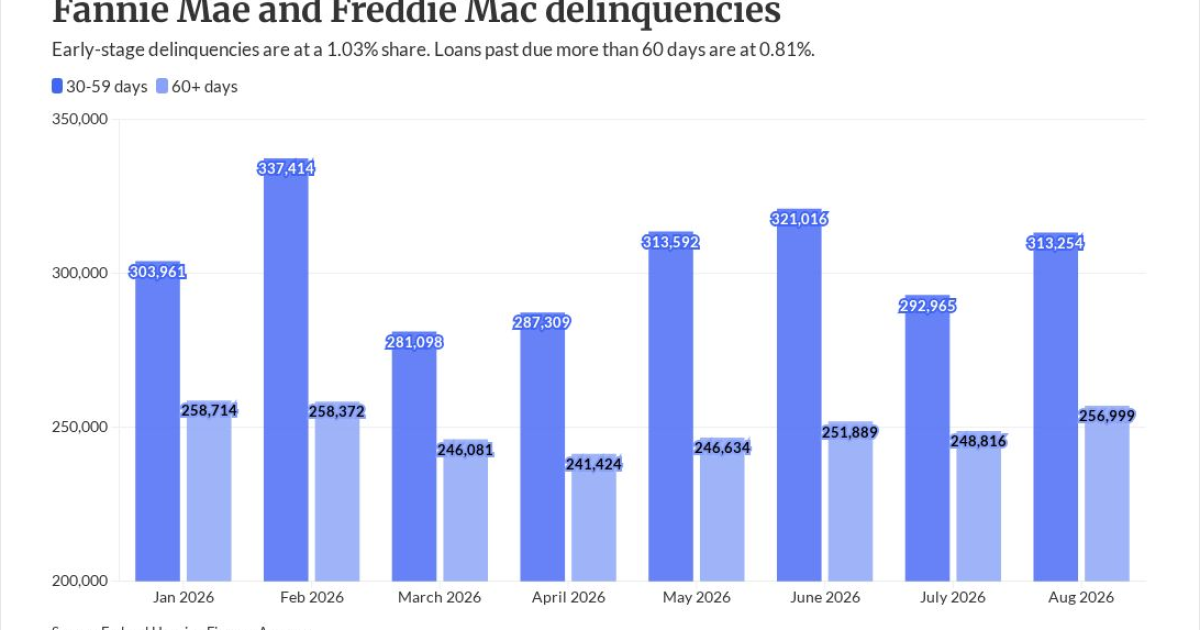
Delinquency totals increased on a month-to-month basis across stages in August, according to data provided by the Federal Housing Finance Agency, the overseer of Fannie Mae and Freddie Mac.
The number of borrowers 30 to 59 days delinquent climbed 6.9% to 313,254 from 292,965
The representative share of delinquencies relative to all outstanding GSE-backed mortgages now stands at 1.03% for early-stage distress. Liens 60 to 90 days past due make up 0.84% of outstanding mortgages. Borrowers in serious delinquency or currently in foreclosure account for 0.6%.
Although mortgage leaders in 2026 raised regular warnings about looming challenges for
While distress eased in the early summer, delinquency volumes finished August higher than where they stood at the end of the first quarter, when they settled at 281,098 and 246,081, respectively.
FHFA's findings suggest rising prices and economic uncertainty continue to take a significant toll on the ability of some homeowners to consistently meet monthly mortgage obligations, with downward pressure on affordability becoming more acute as 2026 progresses.
The surge in summer delinquencies came at the same time
Recent forecasts predict many of the same factors will
The extent of homeowner concerns showed up in the number of calls for legal assistance to deal with potential foreclosures in the late summer, which came in almost 15% higher at the end of the third quarter compared to a year ago. Lawyers at LegalShield specifically noted inflation's effect on household budgets
Foreclosure starts leap 18%
FHFA's new report also found foreclosures on the rise among Fannie Mae- and Freddie Mac-backed loans.
The number of foreclosure starts shot up 18% to 8,930 from 7,569 from July to August. Foreclosure and bank sales of properties eased 5%, though, to 1,333 from 1,403.
A report from Auction.com saw such inventory
The FHFA also recorded 7,675 permanent loan modifications in August, increasing from 7,503 a month earlier. More than one-third, or 36.5%, of modifications involved extending the term of payment.
In total, Fannie Mae and Freddie Mac completed 16,335 actions in August aimed at foreclosure prevention.