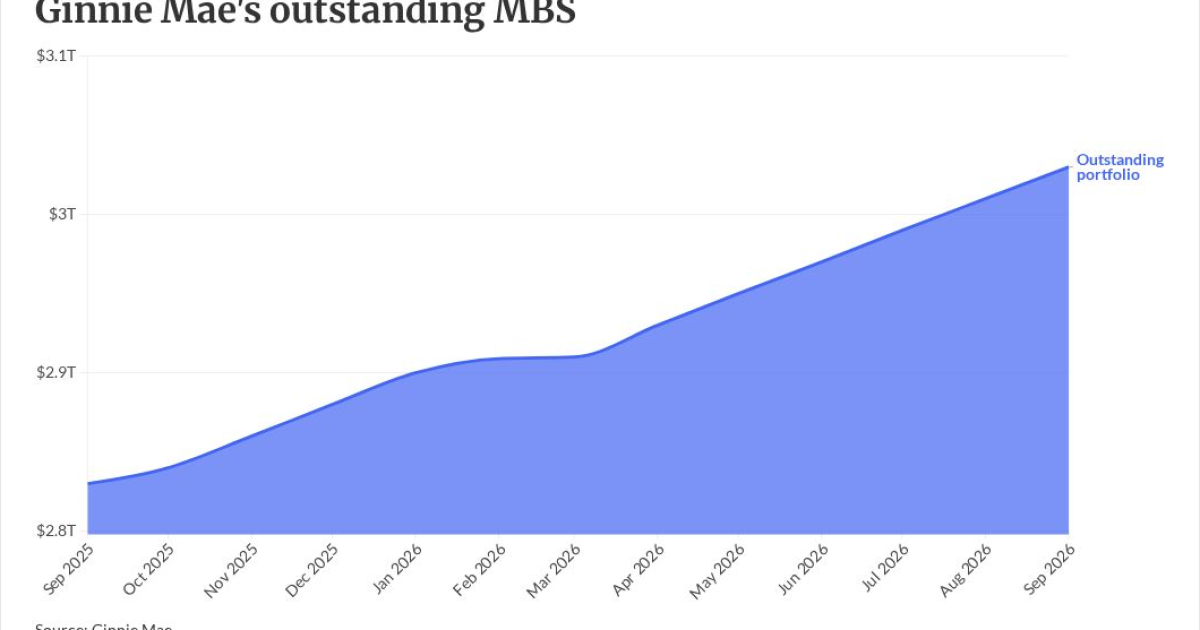
- Key insight: As borrowing to buy or refinance a home becomes less attractive, mortgage lending is suffering at many big banks.
- Supporting data: At PNC Financial Services Group, quarterly noninterest income from mortgages was down 16% year over year.
As mortgage rates soar, many banks are feeling the pain in their residential loan portfolios — and at least one is trying to offload some of the dead weight.
First Horizon Corp., the Memphis-based parent company of First Horizon Bank, announced Thursday that it is selling about $4.5 billion of "lower yielding" residential mortgage loans. The sale is expected to close in the fourth quarter.
During the bank's third-quarter earnings call, executives said the sale is part of a broader plan to focus on deeper client relationships.
"This transaction … is aligned with the strategy we have discussed consistently throughout the past year of prioritizing full client relationships, enhancing the profitability of our balance sheet and driving improved earnings and returns through the cycle," said First Horizon CEO Bryan Jordan.
But the sale also reflects a simple truth: Mortgage rates have been very high in recent years — particularly last quarter, when the Federal Reserve
By the end of September, the average rate for a 30-year mortgage was more than 7%, according to
The Mortgage Bankers Association recently said that for the week ending Oct. 2, its index measuring borrowing for home purchases was down 15% from the same period a year earlier. Its index measuring refinancing activity was down 56% on a year-over-year basis.
"Very few homeowners have an incentive to refinance at these rates, and the jump in borrowing costs has caused many potential borrowers to step back from the purchase market," Joel Kan, deputy chief economist at the Mortgage Bankers Association, said in a press release.
In the third quarter,
In fact, during PNC's earnings call on Thursday, the bank cited residential mortgages as a reason why its consumer loans declined by 1% from the previous quarter — a rare dark spot in an otherwise strong earnings report.
When asked for a line-by-line forecast of fee income in the fourth quarter, PNC's chief financial officer said he expected the mortgage category to decline.
Read more:
State Street's new wealth-services unit notches early win Solid consumer results at Wells Fargo propel larger profits Impostors got past First Horizon's help desk, suits allege BofA gets $1.21B penalty for money laundering
"Mortgage isn't a big category for us, but obviously, given where rates are … that'll be down," CFO Rob Reilly said.
Similarly,
"Generally speaking, we tend to benefit a lot from the fact that we're really big in credit, mortgages and [municipal bonds]," CFO Alastair Borthwick said during
During First Horizon's call, when Jordan was asked to explain the timing of the $4.5 billion sale, he pointed to the same reason.
"The 'why now' is, it became clear that we're in a cycle of rising interest rates," the CEO said.
In terms of commercial real estate, however, Jordan saw growing opportunities for lending — especially for multifamily homes.
"With what consumers are dealing with right now on top of elevated home prices and higher interest rates, renting is relatively more attractive than buying," Jordan said.