

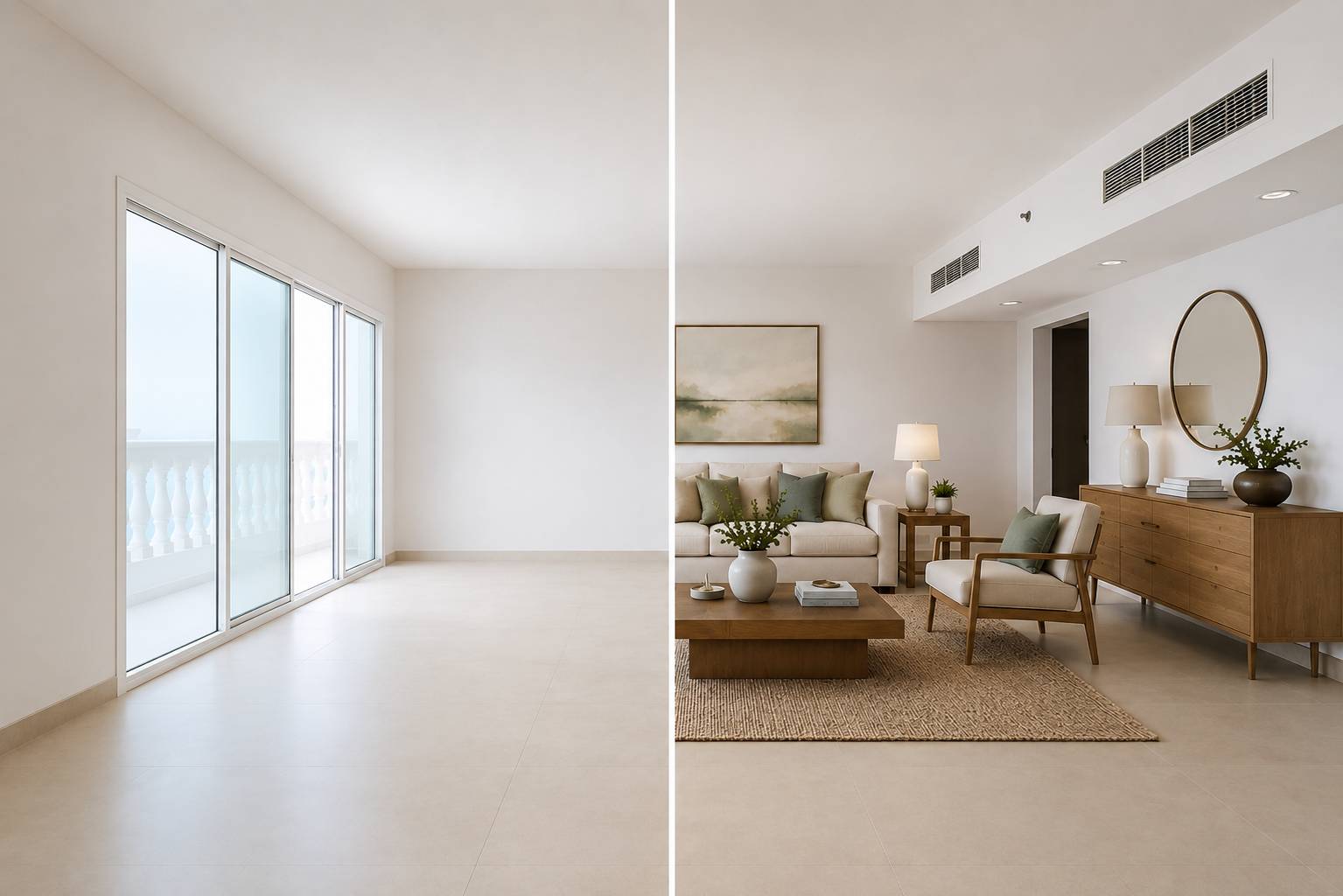
For most buyers, the home search starts online. If a listing’s photos don’t catch their attention, they may scroll right past it. An empty room can leave buyers wondering: Virtual staging helps answer those questions by digitally adding furniture and décor to listing photos, giving buyers a better sense of how a space could look and function. It’s a relatively affordable marketing tool that can increase interest and encourage more showings, though it works best when paired with smart pricing, high-quality photography, and an experienced real estate agent. In this guide, we’ll explain how virtual staging works, when it’s worth the investment, and whether it can help your home sell faster. Virtual staging uses editing software or AI to digitally add furniture, artwork, rugs, and other décor to photos of a home. Unlike traditional staging, nothing is physically moved into the property. The idea is simple: help buyers picture themselves living in the space. As Denise Madan, a HomeLight Elite Agent with nearly three decades of experience, puts it: “If you walk in and someone has really nice furniture, it’s pretty easy to visualize yourself living there. But if not, virtual staging is just a tool.” Basic photo editing usually focuses on things like brightness, color, or contrast. Virtual staging goes a step further by adding furniture and accessories, but it shouldn’t be used to disguise damage or make permanent features look different from what they really are. According to the National Association of Realtors (NAR), 83% of buyers’ agents say staging helps buyers better understand a home’s potential. Whether created by a professional designer or an AI-powered tool, virtual staging aims to do the same thing: give buyers a clearer sense of the space before they visit in person. Virtual staging can help a home sell faster by making the listing more appealing online. Since most buyers begin their home search on real estate websites, eye-catching photos are more likely to attract clicks and encourage buyers to schedule a showing. According to NAR, 49% of sellers’ agents said staging reduced the time homes spent on the market. Vacant homes are often where virtual staging makes the biggest difference because empty rooms don’t always photograph well and can be harder for buyers to picture. “I just think a pretty picture is probably going to help sell the house faster than an ugly picture,” says Madan. “That’s the best way I can put it.” For sellers on a tight timeline, virtual staging offers a faster way to prepare listing photos than traditional staging. AI-powered virtual staging tools can produce staged images in minutes, while professional services often deliver them within a day or two. Virtual staging won’t sell a home on its own, but it can help more buyers take notice of your listing. More interest can lead to more showings, giving you a better chance of selling quickly. Virtual staging isn’t necessary for every listing, but it can be a smart investment in the following situations: An experienced real estate agent can help you decide whether virtual staging is likely to attract more buyers or if another approach makes more sense. Virtual staging can improve a listing’s presentation, but it can’t fix bigger issues that may keep buyers away. If a home is priced too high, needs major repairs, or is in a less desirable location, virtual staging is unlikely to make a meaningful difference. Buyers may click on the listing, but they’ll still compare it to other homes based on price, condition, and value. Virtual staging starts with good photos. If the images are dark, blurry, or taken from awkward angles, adding digital furniture won’t make them much more appealing. And while editing software can remove clutter from a photo, buyers will quickly notice if the home looks very different in person. “At the end of the day, virtual staging is just another marketing tool,” says Madan. “Our goal is to get people to the house and walk through the door, but if the house is like a handyman special and we have it overpriced, it doesn’t matter.” Virtual staging should be just one part of your marketing strategy. If your home isn’t getting enough exposure, few buyers will see your listing, virtually staged or not.What is virtual staging?
Does virtual staging actually help sell a home faster?
When is virtual staging worth it?
When virtual staging won’t help


