A government-sponsored enterprise has announced the winning bidder for the first package of reperforming loans it brought to market in 2026.
Pacific Investment Management Co. won the bid for the $564.63 million pool of RPLs that Fannie Mae co-marketed with Citigroup Global Markets. The second highest bid, which Fannie announced publicly for transparency purposes, was 83.76% of the pool's unpaid principal balance and 43.86% of the portfolio's broker price opinion-based collateral valuation.
The average size of the mortgages in the pool of 2,330 loans was $242,330. Weighted averages for note rate and BPO loan-to-value ratio were 3.67% and 59%, respectively. Rocket Mortgage LLC and NewRez LLC's Shellpoint unit have been subservicing the loans for Fannie.
Enterprise RPL sales aim to both give struggling borrowers a chance to repay through home retention options that offer Fannie an average of $18,670 in
The HRPA study, which the Housing Policy Council published, estimated that the enterprises can save billions of dollars over time by offering programs that give borrowers the opportunity to reperform, improving the marketability of the loans involved.
Those who purchase Fannie Mae's reperforming loans must offer loss mitigation options to any borrower who redefaults within the five year period after the sale closes.
The current transaction is set to close in early August following a due diligence review, according to a whole-loan sales report from Fannie Mae's capital markets unit.
Although Fannie's most recent transaction, FNMA 2026-RPL1, is the first staged this year, it's the 36th reperforming deal the enterprise has brought to market over time. Fannie first began
While the savings from home retention options and RPL sales relative to seriously delinquent loans may be relatively small now when distress in the Fannie Mae/Freddie Mac market
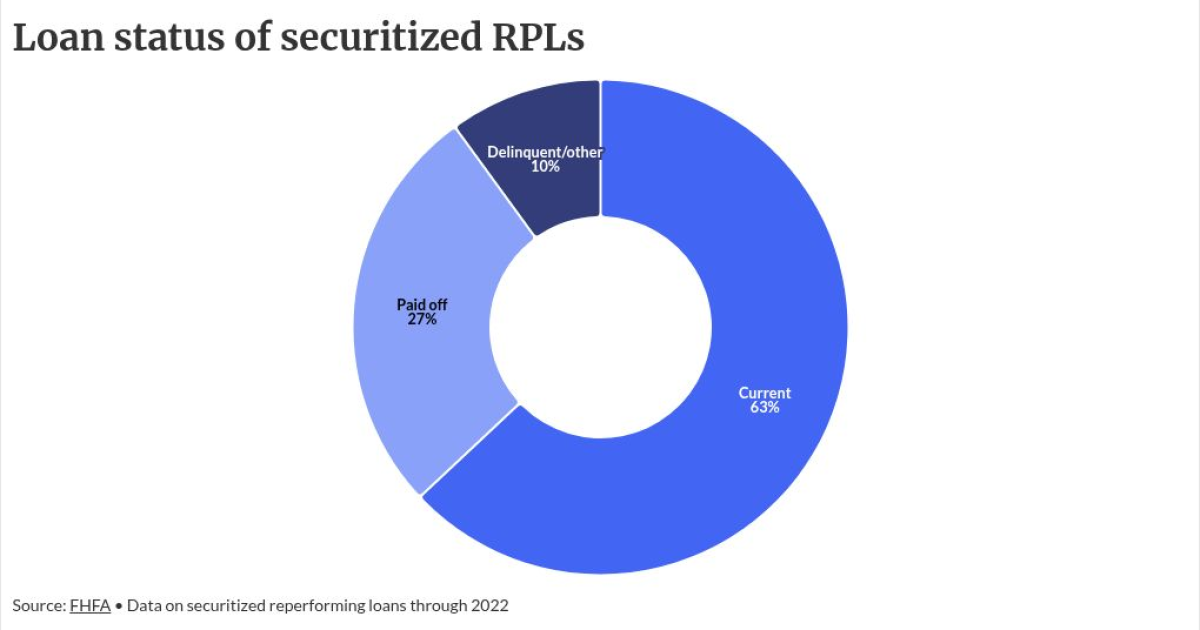
Historically, the majority of reperforming loans don't experience future payment lapses. During a period up through 2022 when the volume was higher, securitized RPLs performed 63% of the time, according to Fannie and Freddie's oversight agency. Another 27% of the RPLs paid off.
The remaining 10% did go delinquent again or experienced some other outcome. The two most frequent outcomes were 30-59 days late at 4% and 90-plus at 3%. The incidence rate for each of the other three categories (60-89 days late, 90 days delinquent or another outcome) was 1%
Other outcomes include transitions into the real-estate owned category, short sales, charge-offs, repurchases, third-party sales or an unknown disposition.