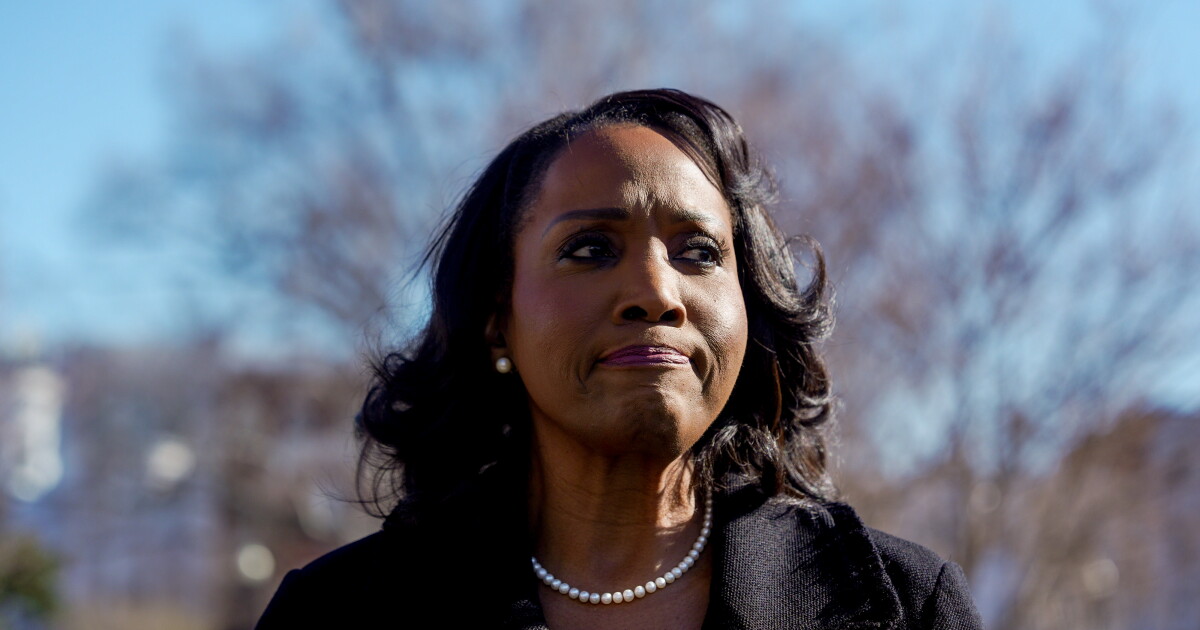
- Key insight: The Supreme Court intentionally left many questions about the independence of the Federal Reserve unanswered in its decision to uphold the lower court ruling allowing Lisa Cook to remain on the central bank's board of governors while her legal challenge to her removal plays out.
- Expert quote: "While the Supreme Court ruled that President Trump couldn't simply push out Lisa Cook from the Federal Reserve Board, the ruling gives him an opening for him to go forward with future firings, as long as he fills out the right paperwork. Today's ruling is certainly not the end." — Former Consumer Financial Protection Bureau Director Rohit Chopra.
- Forward look: It could take years for lower courts and the White House to fully litigate what constitutes a proper channel to remove a sitting governor like Cook from the Fed.
The Supreme Court provided short-term clarity about the composition of the Federal Reserve Board this week, but left many questions about the exact contours and limits of the central bank's independence unanswered.
In a
The ruling is a win for the Fed's independence in the near-term; it asserts that mere allegations of wrongdoing will not suffice to remove a sitting Fed board governor. But just how much more effort President Donald Trump would have to exert to remove governors remains to be seen.
"While the Supreme Court ruled that President Trump couldn't simply push out Lisa Cook from the Federal Reserve Board, the ruling gives him an opening for him to go forward with future firings, as long as he fills out the right paperwork," said former chair of the Consumer Financial Protection Bureau Rohit Chopra in a written statement. "Today's ruling is certainly not the end."
Further complicating the matter was a concurrent decision about another high-profile market regulator. In Trump v. Slaughter — a case brought last year by two terminated Federal Trade Commission members — the court voted 6-3 that the president had the power to fire any agency head at any time for any reason.
Some see these two opinions as being contradictory. On a Monday call with reporters, Graham Steele, an academic fellow at Stanford Law School and a Biden era Treasury official, said the decisions seem to set a double standard for the optimal use of independent oversight.
"Some justices believe that economic stewardship is so important that it must, by and large, be subject to partisan control. But at the same time, they also hold the position that the Fed's functions and money are too important to be subject to partisan control," Steele said. "Those two things don't really square with one another unless you view this court as protecting the interests of financial capital."
Justice Amy Coney Barrett, in a dissent to the majority opinion, also argued that the court's decision on the Cook case created "serious tension" with its ruling for Slaughter. She added that the ruling left many important matters unaddressed.
"How can history support both a categorical rule and a carveout? Do all the Federal Reserve's existing regulatory powers have the requisite connection to monetary policy? If not, are they grandfathered in?" Barrett wrote. "And is the Federal Reserve unique, or might history sanction other exceptions too? The Court does not say."
Barrett voted with the majority in the Slaughter case, embracing the view that all government agencies are ultimately accountable to the executive.
Others see the disparate outcomes as merely the result of the underlying litigation. At the heart of Trump v. Slaughter was a constitutional question about executive authority, said Meg Tahyar, a partner and co-head of the financial institutions group at the law firm Davis Polk, whereas Trump v. Cook was a procedural question about whether lower courts erred in granting — and upholding — the injunction that allows Cook to continue working at the Fed while her case is resolved.
Tahyar said the Trump administration made the strategic choice to avoid raising questions about the constitutionality of the Federal Reserve Act and its for-cause removal standard. She noted that the majority contingent on the Fed seized the opportunity to avoid specifying which of the Fed's functions were worthy of special consideration and which were not.
"The Supreme Court has weighed on the independence of the Fed's monetary policy, but has deliberately not decided on regulation and supervision," Tahyar said. "It deliberately didn't weigh in on those because of the procedural posture of the case."
The opinion stated that Trump failed to give Cook proper notice about her termination — which
Whether the termination effort continues remains to be seen. Along with a long duration — one that could extend beyond Trump's term in office — there is no guarantee a continued legal battle would have the White House's intended result. David Zaring, a professor of legal studies at the University of Pennsylvania's Wharton School of Business, said the court's reluctance to apply the standard of executive authority outlined in Slaughter to Cook bodes poorly for the administration's case.
"The White House may be cautious about trying to remove Cook without a clear standard as to what the process required to remove her is," Zaring said.
In a social media post published hours after the Supreme Court's ruling, the president said he was not willing to let go of the allegations against Cook, but he was noncommittal about what the next course of action would be.
"[W]e will take appropriate action immediately to make sure that someone who has committed wrongdoing will not be making vital decisions concerning the Welfare of the United States of America!" Trump wrote.
In a separate post, Trump praised the Slaughter opinion as a "Monumental Ruling" that would "greatly increase Presidential Power."
In weighing his next steps, Trump also has something else to consider that he did not when his efforts to remove Cook began: how it might impact Kevin Warsh, his
Chester Spatt, a finance professor at Carnegie Mellon University's Tepper School of Business and former chief economist for the Securities and Exchange Commission, said Trump's aggressive approach to the Fed has probably cost him nominations to the central bank board. If Trump's ultimate goal were to lower interest rates, Spatt said, he similarly might achieve more by backing off.
"On that front, the White House understands they need to cut him some slack for him to be effective," Spatt said.