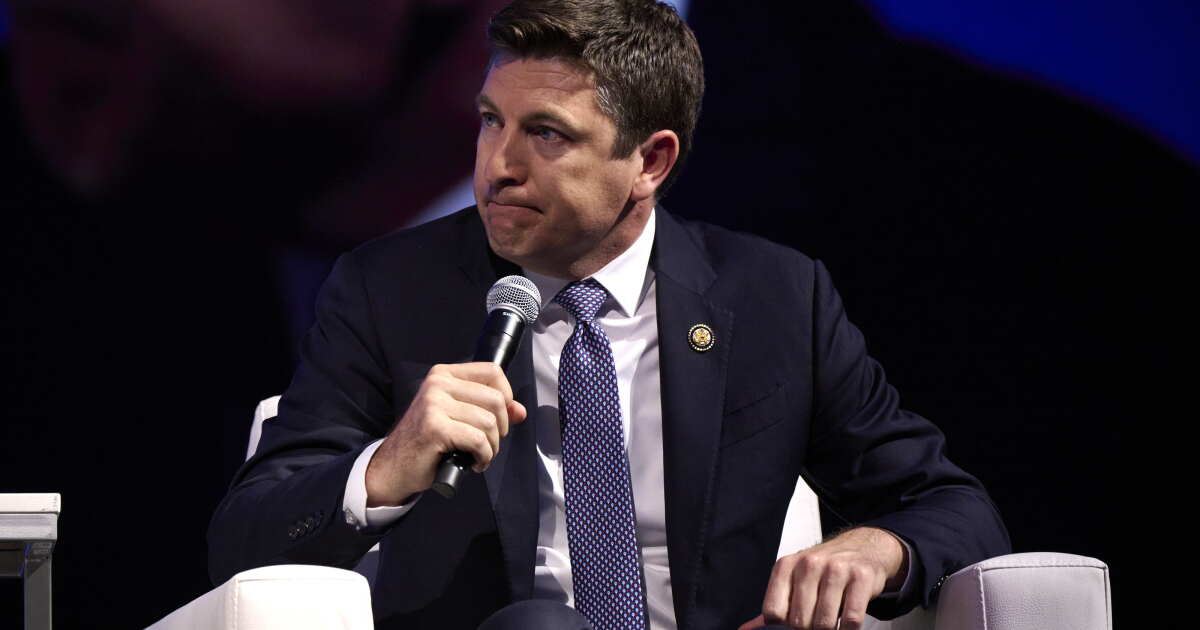

United Wholesale Mortgage expects to keep fourth-quarter gain on sale margins in its 115-to-130 basis point range, even as some wholesale competitors price down to 70 to 80 basis points to "win loans and stay afloat," Chairman, CEO and President Mat Ishbia said on the company's third quarter earnings call.
Ishbia argued that scale is what lets UWM hold pricing where others can't. The company can absorb a $35 million AI investment and "spread it over a lot of loans," he said, adding that "there aren't any other companies that can do it at that level," with only a couple of rivals close enough in size to try.
The operating gaps at other lenders, he said, come down to volume: "they don't have enough business, they don't have enough opportunity to get loans, they can't keep up production, they can't invest in AI."
UWM's own weak spot over the past year was capital, Ishbia acknowledged, and it was fixed by "someone writing a check and with me and Oaktree partnering to do that."
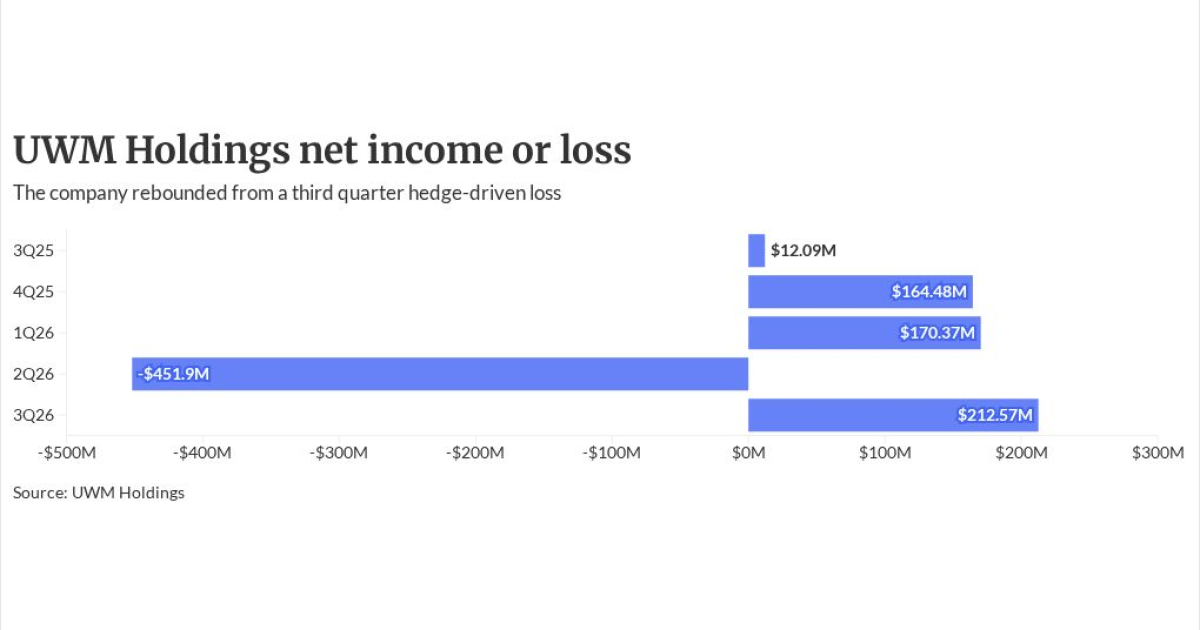
The company returned to profitability at $212.5 million, at the midpoint of the range provided on Oct. 23 when
UWM beats estimates
Keefe, Bruyette & Woods calculated operating income at 4 cents per share, which beat its outlook by 2 cents per share and consensus by one cent, analyst Bose George said in a flash note prior to the earnings call.
"Operating trends were largely in line and the beat came from a combination of lower amortization (1 cent) and lower expenses (1 cent)," George explained.
As for its servicing income, the 12% increase over the second quarter to $246.6 million, was in line with KBW's revised $249 million estimate.
"Positive MSR valuation marks of $632.9 million were partially offset by $481.5 million of derivative losses, resulting in a net valuation gain of $151.3 million, which drove the higher GAAP income versus operating," George said.
Turning around UWM's 2Q loss
In the second quarter,
Origination volume was previously reported at $33.4 billion. This trails
How UWM's servicing sale is progressing
At the same time UWM announced preliminary earnings, it also revealed plans to sell $70 billion to $80 billion of mortgage servicing rights in the current quarter. When asked why the company sold a significant amount of MSRs, Ishbia said he did not see it this way.
He pointed to total sales of $135 billion to $140 billion this year and $180 billion in 2025. The amount is less than its total production this year.
"I do think it's a great opportunistic thing for UWM," Ishbia said. "I'm big on de-risking, deleveraging; it creates cash, it helps us in a lot of different respects. We're always looking at that opportunity, and we'll look at it again more this quarter or next quarter or whenever the opportunity is there."
However, selling large portfolios also means the company has to take a "liquidity discount," and in the future it will look at making smaller sales, which opens the transactions up to more buyers, Ishbia said.
'Rocket means zero' to Ishbia
Ishbia was asked about Rocket's statement during its call
"So first off, Rocket means zero to me, they just make numbers up," Ishbia said. "None of that's true, but either way, they can say what they want to say."
He added he does not need to talk about what Rocket does, but what he likes about what they and other wholesalers are doing is showing, "the brokers are the place to win."
Regarding repaying the Oaktree investment, one tool will be the company's earnings, he said.
"I don't have a concise plan because obviously I can't predict what the market's going to be and how much income, but it's definitely a priority of ours to take care of that preferred and at the same time to continue to deleverage and de-risk the business so that we can not only capitalize when the opportunity comes with lower rates," Ishbia said; this includes helping its brokers grow so every succeeds together.