Treasury Secretary Scott Bessent's benchmark financial asset — 10-year US Treasuries — are poised to mark their biggest monthly tumble since Donald Trump returned to the White House, casting a shadow over the economic outlook as the administration struggles to contain an energy crisis.
While Bessent has assured that the global oil deficit caused by the Iran war is
"The risks to the growth outlook are more severe," said Brij Khurana, a portfolio manager at Wellington Management. "Three months ago, we were talking about AI continuing to be this massive disinflationary growth impact to the economy and now we're talking about a supply-side shock that the Fed can really do very little about."
Federal Reserve Chair Jerome Powell on Monday reiterated his view that "our policy is in a good place for us to wait and see" how the energy shock unfolds.
But traders haven't waited to price out interest-rate cuts that the Trump administration has long called for. Futures show no rate reductions fully priced in for any central bank policy meeting through July next year. By contrast, at the end of last month, some 75 basis points of easing was anticipated.
Even Fed Governor Stephen Miran, Trump's former chief economist, has
The latest dynamic for economists and investors to incorporate is the shuttering of the Hormuz Strait, through which 20% of global oil previously transited. The administration's frustration with regard to Iran's continuing control over that chokepoint was on display Tuesday.
Trump Frustration
Defense Secretary Pete Hegseth told reporters that Hormuz "is not just a United States of America problem set." Earlier, Trump said in a social media post that, with regard to jet fuel, other nations should "go to the Strait, and
Spillover from the war is likely to last for some time even if Hormuz were to reopen in a couple weeks, said Diane Swonk, chief economist at KPMG, noting the damage that's been done to infrastructure in the Gulf region. "Clearly the president would like to have this end quickly. I think we'd all like to see it end quickly. That said, there's still a tail effect that's not inconsequential now."
Swonk added that "there's going to be disruption" beyond just energy costs, with the higher cost of inputs including aluminum feeding through to retail prices.
On the eve of the war, the US central bank's preferred price gauge, the core PCE index, was already rising at a 3% year-on-year pace, according to Powell. He also said at an event Monday that "inflation expectations do appear to be well anchored beyond the short term." Even so, some metrics are signaling long-term worries about borrowing costs.
A one-year forward measure of the yields on 10-year Treasury inflation-linked notes last week hit levels last seen in the first decade of this century. That gauge, which implicitly strips out any volatility over the coming year, has averaged about 1.74% the past two decades, and was at 3.38% Tuesday. The steady increase in recent months and years also reflects an escalating US debt burden,
Bessent's missive for the public to just see past the current Iran war turmoil is an echo of what he said about Trump's
"Yes, these are all 'one-offs' and can be discounted as transitory — but the broader context matters. It has been five years since the Fed last durably hit its inflation target," said Christopher Hodge, chief US economist at Natixis. "This series of successive events has cast some doubt about the ability or willingness for the Fed to bring inflation down to target."
Ten-year Treasury yields, at around 4.30% Tuesday, are little changed compared with where they were on Election Day 2024, when Trump secured his return to office on an agenda that included tariff hikes. Soon after Bessent took the Treasury's helm, he emphasized that he was focused on
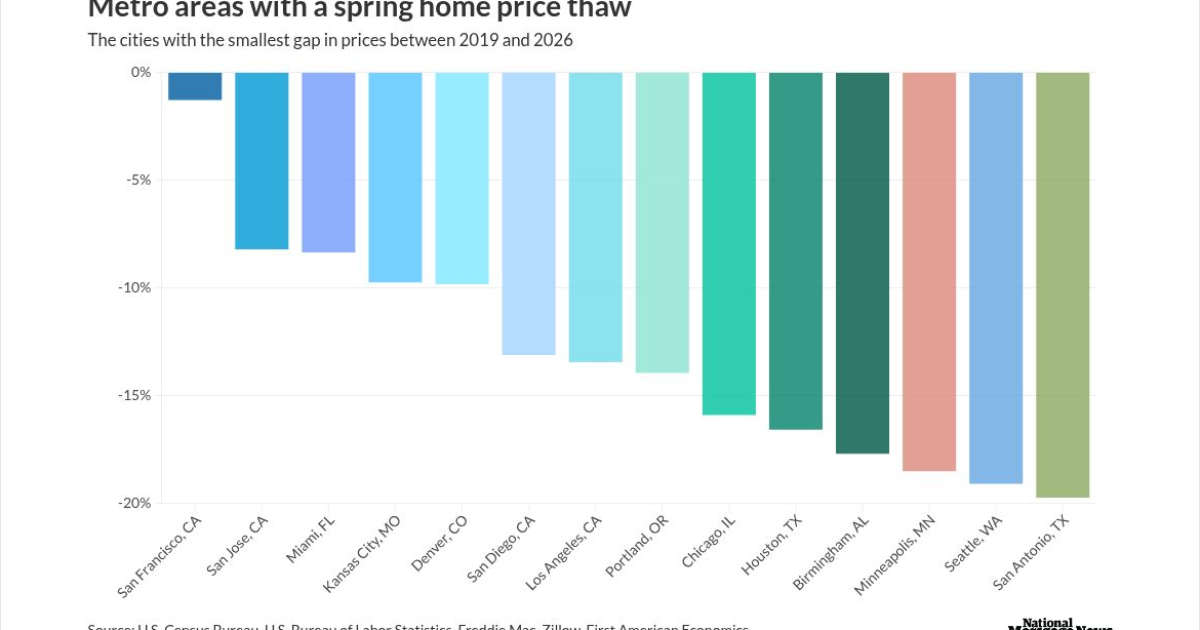
The increase in 10-year yields this month has had the effect of arresting what had been an encouraging decline in US mortgage rates. That's
Tailwind Gone
More broadly, the latest developments have effectively removed "this enormous tailwind" that was expected for the economy this year, including a rebound from the federal government shutdown late last year and fiscal stimulus from tax refunds, said Swonk at KPMG. "That has now evaporated."
The Atlanta Fed's GDPNow forecast for the first quarter averaged 4.6% in January, before sinking below 2% as of March 23, its latest reading.
The longer the Hormuz chokepoint remains shuttered, keeping oil prices higher for longer — or sending them up even more — there's also a potential
"There is a world where, if this spirals, you would have the