

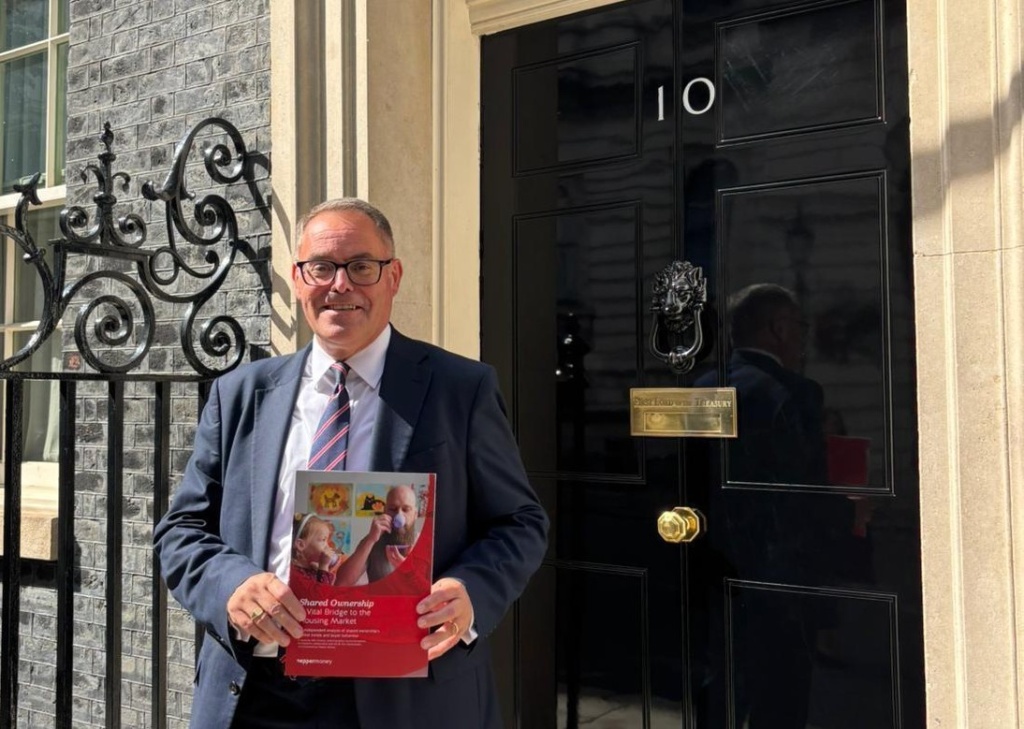
Pepper Money has called on the government to review shared ownership income caps after research found some aspiring buyers are being excluded despite struggling to buy on the open market.
The lender delivered its latest research to Downing Street this week, building on recommendations it presented to No.10 last year.
Pepper says the current household income limits of £80,000 outside London and £90,000 in the capital have remained unchanged for a decade.
Its new white paper found house prices rose by 37% and earnings by 42% between 2016 and 2025, while the shared ownership caps stayed fixed.
One in 10 non-homeowners earning above the caps had previously tried to access shared ownership but were told they were ineligible.
Two-thirds of those surveyed said they would consider buying through shared ownership if the income limits were raised to include them.
The report, Sustaining the Development of Shared Ownership, was written by economist Rob Thomas and draws on data from the Ministry of Housing, Communities and Local Government, the Office for National Statistics, UK Finance, the Land Registry and the Financial Conduct Authority.
It also includes a survey of 1,000 English households that have not yet bought a property and earn above the current shared ownership income caps.
Pepper Money says the current limits can exclude dual-income households in essential occupations.
In seven of the 10 key-worker groups examined, two full-time workers in the same occupation earning the median salary would exceed the income cap both in and outside London.
For example, two teaching professionals would have combined earnings of around £95,000 nationally, while two nursing practitioners would earn about £92,100 and two paramedics around £107,600.
Among all those surveyed, 58% were privately renting and spent around a third of their monthly take-home income on rent.
One in five said they could not afford a suitable home on the open market even with both household incomes.
The report also highlights the growing use of shared ownership among older buyers.
People aged 50 or over accounted for 18% of shared ownership purchases in 2024-25, up from 5% in 2003-04.
Among respondents aged 45 to 54, 74% feared they were running out of time to qualify for a suitable mortgage, while 46% of those aged 55 to 64 believed their age and the shorter mortgage term available could make securing a loan difficult.
As the government develops its Your First Home scheme, Pepper says a review of existing shared ownership eligibility should form part of the wider discussion about routes into homeownership.
Pepper Money intermediary relationship director Rob Barnard says: “The housing market has moved on, but the income caps are still stuck in 2016.
“Many households now earn too much to qualify, yet lack the deposit or borrowing capacity to buy a suitable home on the open market.”
He adds: “The appetite is there: two thirds of the households we surveyed would consider shared ownership if the caps were raised to include them.
“Reviewing those caps is a practical starting point for government and the sector to work together, alongside ensuring buyers can access finance that responsibly reflects their circumstances.”