
A top Biden administration economic official is pitching Democrats on a low-down-payment proposal to bring millions of new homebuyers into the market, as incoming congressional leaders take stock of affordability measures that might help them notch early legislative wins.
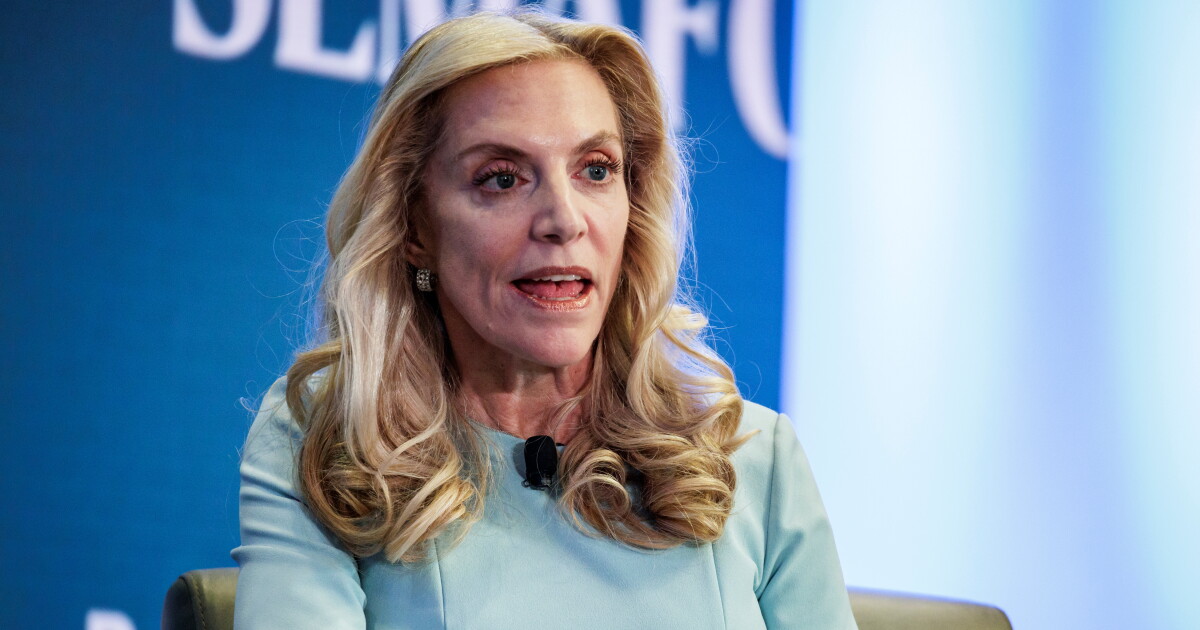
A new policy group chaired by former National Economic Council Director Lael Brainard is pushing for the creation of a Federal Housing Administration program to facilitate home purchases with as little as $1,000 down for first-time buyers who meet "strong underwriting criteria," according to a copy of the proposal reviewed by Bloomberg News. The FHA would cover the cost of the new program by raising an insurance fee it charges.
Housing is a key factor in the
"Not only can it help move 2.2 million renters into homeownership, it can also be done without any cost to the US government," said Brainard, who has also served as a Federal Reserve governor and as under secretary of the Treasury for international affairs under former President Barack Obama.
READ MORE:
Proposals to provide down payment assistance generally take the form of "grants, and grants are a direct cost to the government, and we know that we already have additional fiscal priorities," Brainard added, pointing to Democratic agenda items like restoring Affordable Care Act and Medicaid subsidies along with food assistance. "We really looked for proposals that could be done with a minimal amount of taxpayer funding."
Listening Sessions
High home prices and mortgage rates
The current first-time home buyer is both historically older and more likely to rely on family wealth
First-time buyers – whose median age matched last year's record of 40 years old – accounted for just 22% of purchases over the year through June. And a record 10% of first-time buyers paid all cash, with 28% of those transactions backed by inheritances.
READ MORE:
In listening sessions the Kitchen Table Project conducted with young voters, it emerged that young people "felt like they were already paying a very high percentage of their income on rent, and that it felt like lighting their money on fire," Brainard said. "Interestingly, they pointed to the down payment as the biggest barrier" to buying a home — "a bigger barrier, in fact, than mortgage interest rates or even home prices," she added.
The FHA, an arm of the Department of Housing and Urban Development that insures mortgages for low- and middle-income borrowers, currently offers a 3.5% down-payment option for qualifying households with credit scores over 580.
Under the Brainard-backed proposal, borrowers would need a credit score of at least 660 and monthly payments on outstanding debt to fall below 50% of monthly income to qualify for a $1,000 down payment.
The Kitchen Table Project estimates that 6.7 million renter households between the ages of 25 and 39 would qualify for the program. Weighing it against current payment options, the program could bring 2.2 million new renters between the ages of 25 and 39 into the homebuying market, according to the group.
There is evidence of support in Congress for lowering the down payment hurdle for certain buyers.
Democratic Representative Maxine Waters, who is poised to take the gavel of the House Financial Services Committee in the next Congress, has introduced her own form of down payment help. Qualifying first-time, first-generation buyers would receive up to $25,000 to cover down payments and closing costs under
The conservative House Republican Study Committee, meanwhile, endorsed a zero-to-low down payment FHA option in a January
Geographically Targeted
The Kitchen Table Project proposal suggests paying for the offering by raising the FHA's 175-basis-point upfront mortgage insurance premium by about 30 basis points, or 0.3 percentage points. The report states that "many borrowers would capitalize this fee into their monthly mortgage payment, instead of paying up front, which would add a de minimis amount to their monthly payment."
The fee, the group said, "would protect FHA's Mutual Mortgage Insurance Fund from any potential higher losses and could be adjusted as takeup increases on this program and modeling improves."
An Urban Institute
As for concerns that bringing new buyers into the market would drive up home prices, the group suggested in its report that the policy could be geographically targeted.
"The $1,000 down mortgage program could be conditional" for areas that adopt reforms to boost construction, said Aaron Shoyer, an adviser to the Kitchen Table Project. "Is there a sufficient supply of starter homes in a given area such that any increased demand from this program could be absorbed without increasing prices?"
The group endorsed a handful of other housing proposals in the policy pitch Tuesday, including the creation of an $8 billion revolving loan fund to help move already-permitted housing projects into construction; a $1,000-per-household "community building bonus" to renters and homeowners in communities that meet certain housing permitting goals; and a federal reinsurance backstop that could save homeowners a little under $200 annually on premiums.