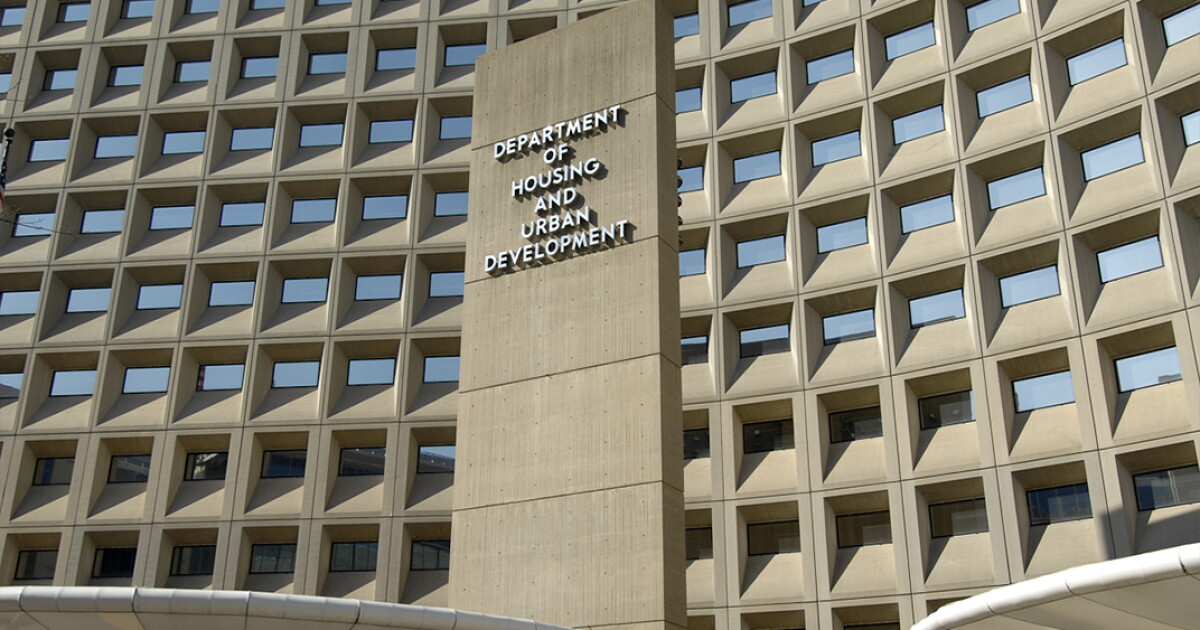
The U.S. Department of Housing and Urban Development opened two funding opportunities worth a combined $13 million aimed at increasing efficiency and reducing costs.
The larger funding opportunity, worth $10 million, focuses on tests that leverage advanced robotics and artificial intelligence to accelerate the manufacturing of
Applications for both funding opportunities have been open since May 29 and close July 13.
HUD is looking for robotics and AI technology that can expand housing supply by allowing homes to be built more quickly and at a lower cost than traditional construction methods. The program will support efforts across a range of construction types, from panelized systems to fully volumetric 3D modular buildings, the agency said.
"There's a massive labor shortage," said Felipe Polido, co-founder and head of technology at Reframe Systems, an AI- and robotics-forward construction company planning to apply. "Forty percent of the U.S. construction force is looking to retire in the next 10 years. ... We're all feeling the crunch. The cost of construction has skyrocketed, and we need to find ways to drive labor efficiency up ... which ultimately means driving costs down."
While the implementation of robotics and AI can result in job cuts, Polido sees this as a chance to improve working conditions and excite a generation that wouldn't otherwise produce very many construction workers, electricians and plumbers.
The funding opportunity falls in line with the Trump administration's interest in the manufactured housing industry over the past year. HUD Secretary Scott Turner said
The manufactured housing market is
Through its permitting funding opportunity, HUD seeks to increase digital adoption in willing jurisdictions, gather data on performance and implementation challenges and develop guidance for other permitting offices considering similar investments, it said in a press release.
"Automating permitting, streamlining a lot of that process, is another thing that could really help the industry as a whole," Polido said.
The findings may influence future state and local policy and permitting modernization efforts nationwide.
Jurisdictions will also track core metrics for their administrative permitting process, including timelines, revision cycles and review outcomes, before and after implementation of the automated system. The test will quantify changes in permit processing time, staff workload, applicant experience and costs that result from the use of automated permitting. It will identify the data, governance and operational conditions required for effective use of these technologies as well, according to a HUD press release.
"The margins have been so thin that there has been very, very little investment in technology," Polido said. "Folks that are in this industry, the budget that they have to try new things is very small and the risk is very high."