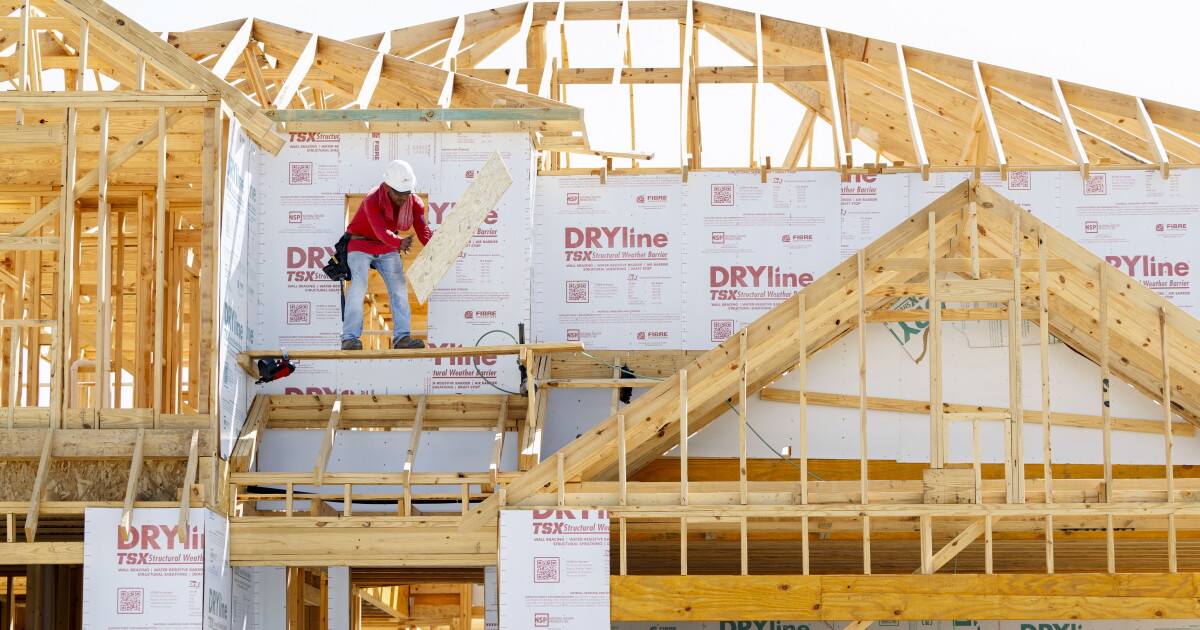
New U.S. residential construction declined unexpectedly in August to one of the weakest paces since the pandemic, reflecting a plunge in starts of multifamily projects.
Housing starts decreased 2.6% to an annualized rate of 1.28 million, according to federal government data released Thursday. The median forecast in a Bloomberg survey of economists was a 1.32 million pace.
Starts of multifamily projects decreased nearly 22%. Single-family home construction rose 7.6% to an annualized 918,000, the fastest pace since March and fueled by increases in the West and Midwest.
Despite the advance in one-family home starts last month, the residential real estate market remains challenged in an environment of rising mortgage rates and constrained affordability. Builders may also be hesitant to ramp up work on new homes considering inventories remain well above pre-pandemic levels.
Housing completions dropped nearly 12% to the slowest pace since the end of 2018. Completions of one-family houses slid to the lowest since before the pandemic.
"The big picture remains that elevated and rising borrowing costs are holding developers back, supporting our view that the downward trend in housing starts has further to run," Bradley Saunders, North America economist at Capital Economics, said in a note.
In August, overall building permits, which point to future construction, dropped 2.7%. Permits for one-family homes decreased 1.8% to an annualized 878,000.
GDP Impact
Home construction has subtracted from economic growth in five of the last six quarters. The Federal Reserve Bank of Atlanta's GDPNow forecast is penciling in residential
The average 30-year
Greater shares of builders are offering incentives and cutting prices in an effort to attract potential buyers, figures from the National Association of Home Builders showed Wednesday.
Read More:
Revenue and new orders at Lennar Corp. declined in the latest quarter from a year ago, the homebuilder reported on Wednesday. Margins are under pressure from price reductions and the elevated use of incentives to shore up sales in the higher-rate environment.
Across the US, housing starts in the South, the nation's largest homebuilding region, decreased 1.3% to a three-month low. Starts jumped in the West to a five-month high. Despite a pickup in single-family starts in the Midwest, multifamily home construction slumped.
The new residential construction data are volatile, and the government report showed 90% confidence that the monthly change ranged from a 14.6% decline to a 9.4% gain.