
- Key insight: The proposal simplifies operational risk capital for the largest banks.
- Forward look: Critics warn lower capital could raise systemic risk as in prior crises.
- Key Quote: "The proposal really misses the mark in terms of what its original intent was." -Phillip Basil, director at Better Markets
Regulators' revised Basel operational risk capital framework makes it easier for the largest U.S. banks, known as Category I and II firms, to calculate how much unborrowed money they must hold to guard against losses from events like cyberattacks, fraud or compliance failures.The proposal replaces what was a more complex regime —
Skeptics of the 2023 rule have largely welcomed the changes as more practical and workable. But skeptics of the new proposals say they will encourage banks to chase the exact same kinds of activities that led to the financial crisis in 2008 – the very kinds of activities the rules were originally proposed to prevent.
The Biden-era framework drew criticism from the industry for requiring banks to compile mass amounts of data on historical losses and complex modeling systems, which would have been difficult for small firms to comply with,according to Matt Bisanz, partner at Mayer Brown.
"[The 2023 proposal was]operationally a very complex rule to apply, and so putting aside the capital charges, it would have been a really negative thing from an operational perspective, for these relatively simple banks out there to build out these elaborate operational risk systems," Bisanz said. "[the recent proposal] got rid of the requirement to base your operational risk capital charge in part on your prior loss history, [instead] it's just held as a constant variable."
The changes address some of the banking industry's loudest
"There are potential downsides to taking some of those determinations out of the banks' own hands, but I believe, at the very least, banks will have a set playbook to operate under [and] regulators themselves [will] be better able to make these apples-to-apples comparisons across banks," Sloan said. "There is certainly an argument that for any given bank, they may be able to more finely tune their own internal models, but I think it's weighing the trade offs of simplicity from a standardized approach … which in turn may have more macro-financial stability benefits compared to each bank continuing with its own customized model."
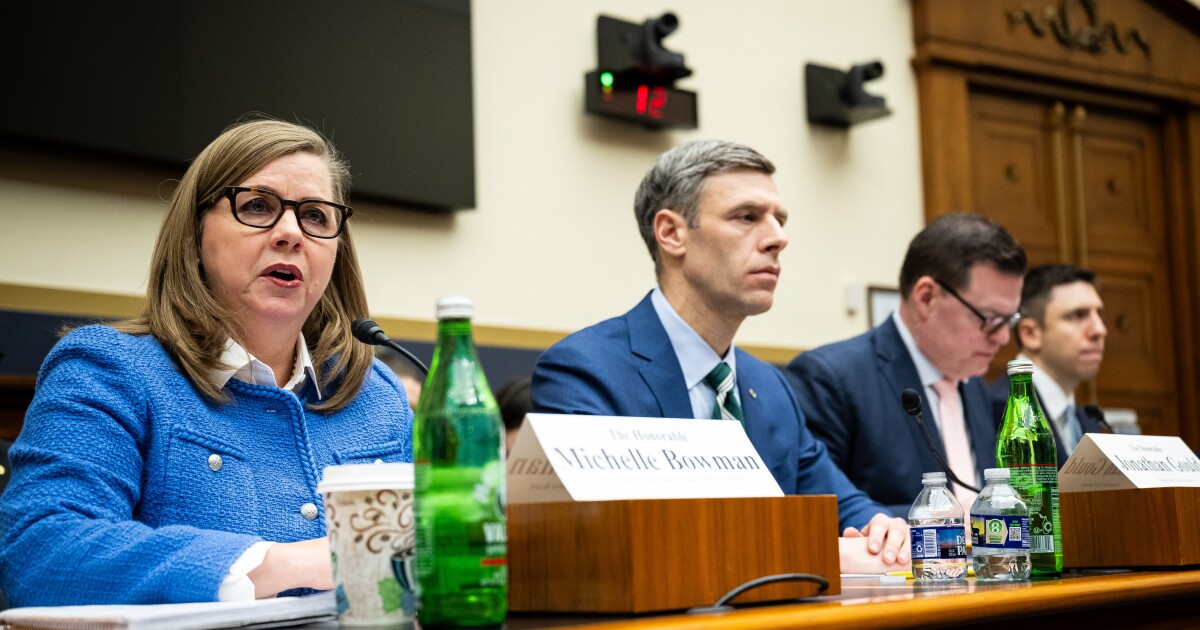
While banking lawyers say the change is positive for banks, regulators are still working through the details and have expressed skepticism with the operational-risk aspect of the proposal.
Federal Deposit Insurance Corp. Chair Travis Hill, speaking at a board meeting announcing the proposal, said while "the proposal … avoid[s] some of the overly punitive aspects of the
Meanwhile, others argue the pendulum has now swung too far in the opposite direction.
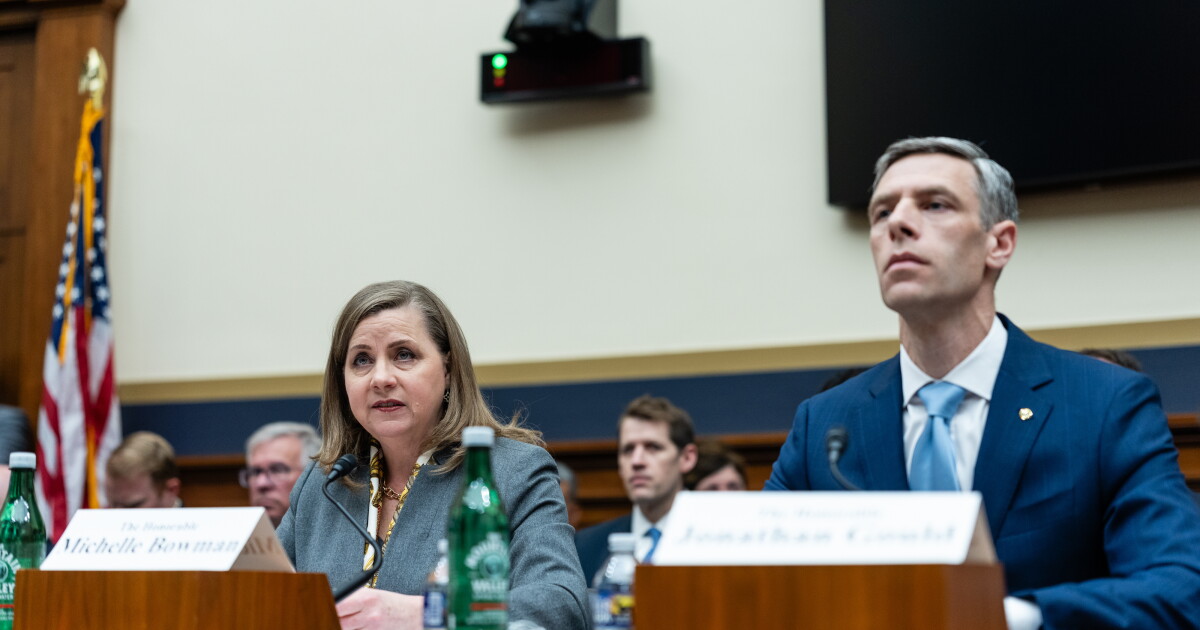
"The proposal really misses the mark in terms of what its original intent was," said Phillip Basil, a director at Better Markets. "This was supposed to be a risk-sensitive framework … the risks for these activities are not by any stretch going to be appropriately capitalized for," Basil said. "They're going back to the capital levels that they had in 2007 … this is an upside down policy framework where the largest banks have the lowest capital and the smallest banks have the highest capital … there's going to be a problem in the large bank space."
Basil says the proposal continues the advantage that trading activities have over the activities that banks are supposed to be doing, which is lending to the real economy. By lowering the capital burden on these higher-risk, higher-reward trading activities, the framework leaves the system more vulnerable, echoing pre-2008 dynamics where large banks were undercapitalized relative to their risks.
"It's really entrenching the G-SIB business model, which is to juice a lot of profits out of your trading book side, kind of muddle through your banking book side and check the box there, but really gain most of your profits from your trading book activities," Basil said. "If you look at the record revenues that the largest banks had in 2025 most of it came from the trading desk, investment banking, from all their [noncore-banking] activities."
Operational risk can be difficult to quantify, since it doesn't move predictably with the economy or balance-sheet metrics. Regulators, in developing a capital framework along the lines of the Basel international standards, still need to try to guard against losses from operational events that can strike regardless of a bank's lending performance or the broader economy, says Bisanz.
"The regulators point to things like sanctions settlements that banks had to pay, cyber security attacks at banks or in 1995 when that