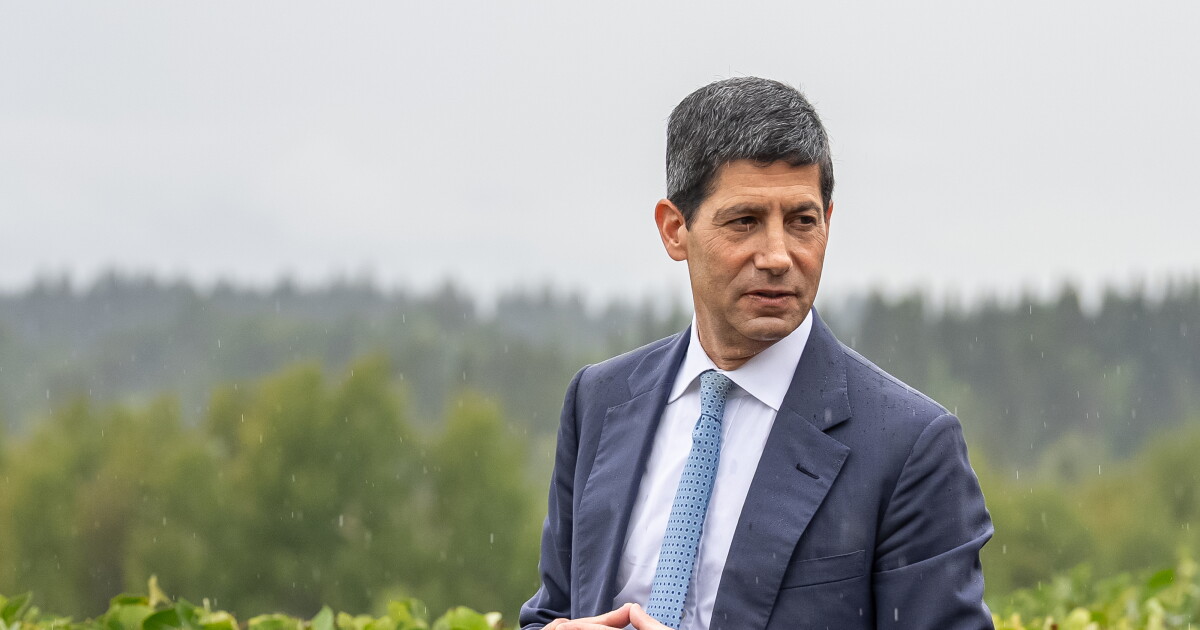
Federal Reserve Chair Kevin Warsh sent markets a clear, hawkish signal: don't expect any interest rate policy shifts, post-speech commentators said.
Warsh, if anything, spoke out against providing
The speech was Warsh's first as chairman at the Federal Reserve Bank of Kansas City's annual policy conference in Jackson Hole, Wyoming. Coming in, market observers, including Kate Wood, NerdWallet's lending expert, were feeling if
What Warsh's comments mean for mortgage lending
Afterward the speech, Wood said she came away with the same impressions of Warsh she held after his first two press conferences after replacing Jerome Powell (who remains a Fed governor) as chair.
"Yes, he's once again stating a firm commitment
Both of those actions could have an impact on mortgage rates. The Fed ended the balance sheet run-off program last December, but as mandated by President Trump, the
Inflation first priority
Warsh during the speech reiterated that the Fed's primary objective is to tame inflation, said Mark Fleming, chief economist at First American. The Fed's preferred measurement remains the personal consumption expenditures index.
"Prognostication about what measures he is using to determine success were put to rest with his clear reference to the 2% PCE target," Fleming said. "The economy remains strong and, while the labor market may be in a low-hire, low-fire regime, the unemployment rate remains on target, which gives the Fed the freedom to focus on lowering inflation."
The markets should look for higher short-term rates with the focus on lowering inflation, "but don't expect a lot of communication about how and when the decision to raise rates will be done," Fleming commented.
With this speech, "Warsh has opened the door to rate hikes, but has not taken any action," added
The speech's effect on the 10-year Treasury
Mortgage rates
During the speech, Warsh only mentioned housing specifically once and it was in passing.
"Now, certain sectors like housing and agriculture are showing strains, but on balance, I would be hard pressed to describe broad financial conditions as restrictive," he commented.
Warsh did speak about the Federal Open Market Committee communicating rate movements. The rates the FOMC sets do not directly impact mortgage pricing, but influence the underlying elements, like the 10-year Treasury yield.
"I believe when policymakers make quasi-commitments on interest rates throughout the cycle, we inhibit our own freedom to make the right calls when it's time to decide," Warsh said. "To get policy right, we also need to get the relationship right between the central bank and financial markets."
While the markets will anticipate what the Fed will do next for the short-term rates it controls, "we should not indulge a regime in which market participants are looking primarily to the Fed for their next trade," he said.
The 10-year Treasury yield, one of the items used to price mortgages, opened the day at 4.67%. When Warsh came to the podium the yield was at or near its day-low at 4.65%, but during the speech it rose to 4.7%, according to data from Yahoo Finance.
By 11 a.m. eastern time it was back to the opening price. But it changed direction again, rising to 4.73% by 1:30 p.m.
Observers have been making guesses after each new data point is released, most recently the personal consumption expenditures index, on whether the FOMC will or won't hike short-term rates in September, or keep them unchanged. Little sentiment exists right now among investors that the next move will be lower.
Today's market opinion on a September FOMC rate hike
"Despite the lack of new information, the odds of a rate hike in September have nearly flip-flopped from where they were yesterday," Wood said. "It wouldn't be surprising to see those expectations tempered relatively quickly."
As of this morning after the speech, the CME Fed Watch Tool gives a 40.5% probability of no rate hike and 59.5% chance of a 25 basis point rise. Yesterday it was 64.6% for no hike and 35.4% for the basis point increase.
But by the time