- Key Insight: Federal Reserve Gov. Michael Barr said inflation pressures on goods and non-housing services remain elevated and that the Middle East conflict could add to the burden.
- Expert quote: "I would like to see evidence that goods and services price inflation is sustainably retreating before considering reducing the policy rate further, provided labor market conditions remain stable." — Fed Gov. Michael Barr.
- Look ahead: The conflict in Iran has introduced uncertainty about how the Fed's rate‑setting committee will approach monetary policy going forward. With energy prices rising amid the Middle East tensions, some economists have scaled back expectations for further rate cuts this year, and many now see fewer reductions as likely.
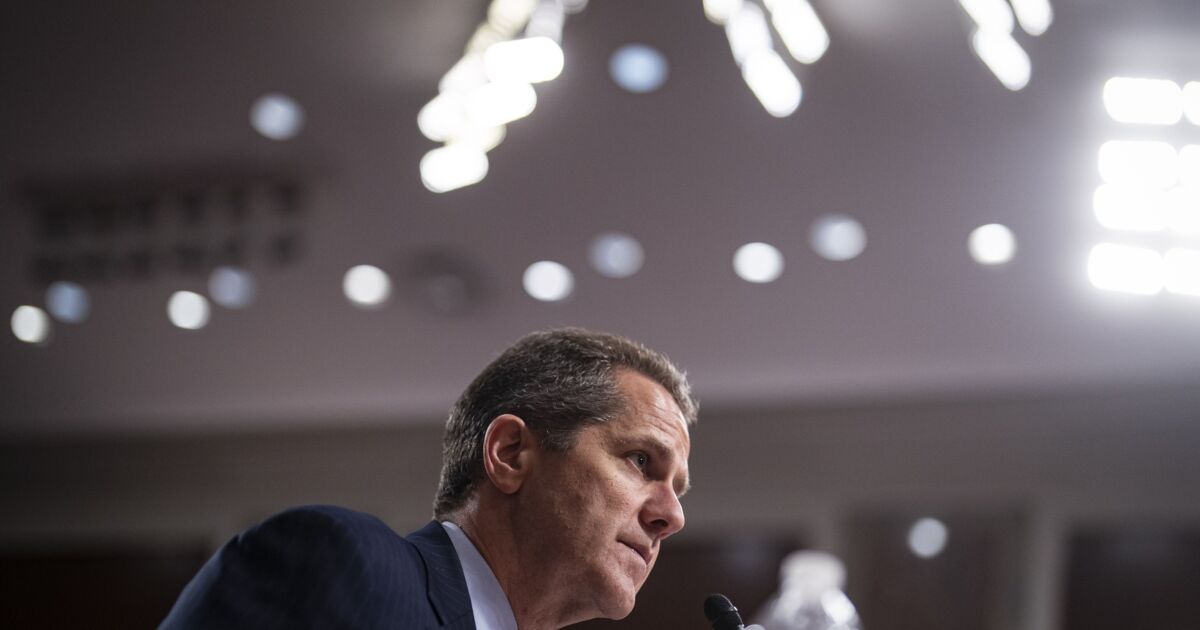
Federal Reserve Gov. Michael Barr said Tuesday that any changes to monetary policy will depend heavily on the trajectory of inflation.Barr, speaking at a National Community Investment Conference in Phoenix hosted by the Federal Reserve Bank of San Francisco, said he wants to see clear evidence that goods and services inflation is easing before considering further rate cuts.
"I would like to see evidence that goods and services price inflation is sustainably retreating before considering reducing the policy rate further, provided labor market conditions remain stable," Barr said.
He said he hopes tariff-related inflation will taper off later this year but noted that goods inflation has increased over the past year and non-housing services inflation remains elevated. Inflation slowed to 2.4% in January and February, down from about 2.7% in prior months, but still above the Fed's 2% target.
Barr also said the conflict in the Middle East raises further risks to inflation, which could complicate the monetary policy outlook.
"Higher oil prices tend to pass through pretty quickly to gasoline prices, and higher gasoline prices can be particularly painful for low- and moderate-income families," Barr said.
The Federal Open Market Committee held its benchmark rate steady at its
Barr said a weakening labor market could shift his policy outlook, but added that conditions appear to be holding steady.
"The labor market appears to be stabilizing with low levels of creation, and also low levels of people entering our workforce," Barr said.
Recent labor market data show a mixed picture. Employers added 130,000 jobs in January, while 92,000 jobs were lost the following month. Fed Chair Jerome Powell in a post-FOMC address in March
Other members of the FOMC, including Fed Gov. Stephen Miran and Powell, also addressed how U.S. involvement in the war with Iran might affect inflation, with both noting the outcome is too early to judge.
Miran, in an appearance on Bloomberg TV Monday, said
"As you look 12 months out — and because of monetary policy lags, we really need to be looking a year to a year-and-a-half out — there's just not enough information yet about what that looks like," Miran said.
The Fed official noted that oil shocks in the past have affected headline inflation, but tend not to pass through to core inflation. For that reason, he said he is treating this oil shock as a one-time increase in prices rather than an ongoing inflationary pressure.
Miran, who has dissented at all of the Fed's rate setting committee meetings since being
Powell said the economic implications of tensions in the Middle East are unclear, noting that higher energy prices
"The thing I really want to emphasize [is], nobody knows," Powell said. "The economic effects could be bigger. They could be smaller. We just don't know."