Although mortgage rates
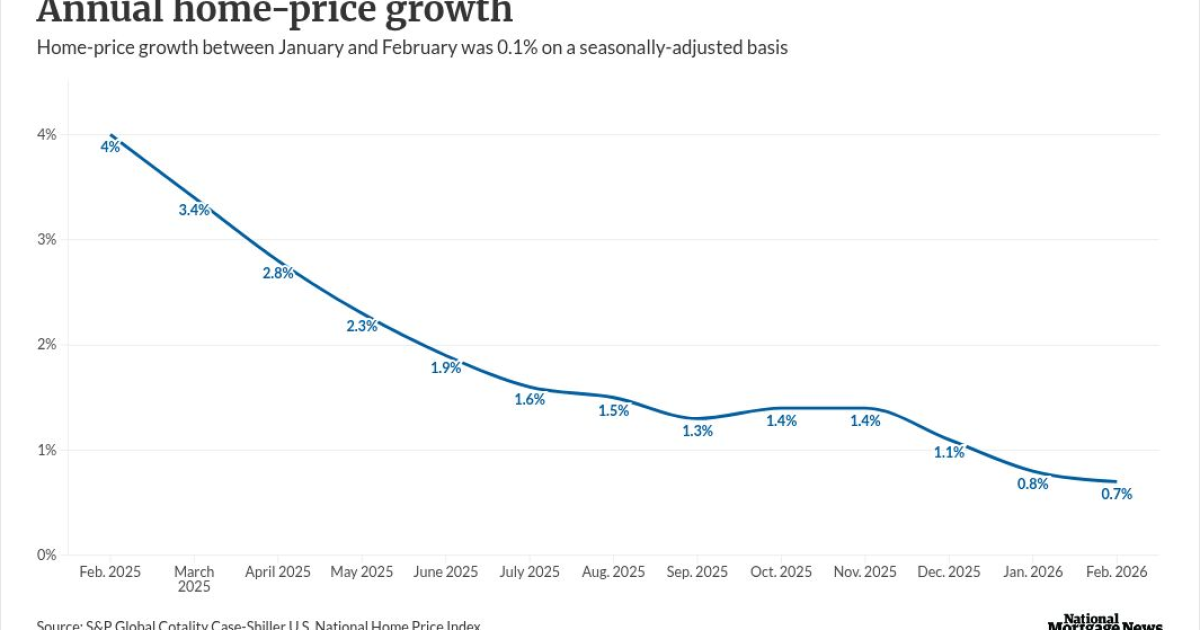
More than half of the major metropolitan markets in the United States posted year-over-year price declines in February, while prices rose 0.7% nationally, according to the S&P Cotality Case-Shiller home price index. That was down from 0.8% growth in January.
"Cooling in home prices nationally should offer some breathing room for prospective buyers currently sidelined by affordability challenges," Bankrate Senior Economic Analyst Mark Hamrick said. "Both the FHFA and S&P CoreLogic Case-Shiller reports for February confirm a cooling trend at the national level, with annual gains slowing compared to this time last year."
Home prices
Inflation outpaced home-price appreciation in February, as the consumer price index increased 2.4% year over year, marking the ninth consecutive month of negative real home price returns, the Case-Shiller report said.
"For existing homeowners, the outlook is more sobering," Hamrick said. "On a national basis, home equity is now losing ground against inflation." The broadening slowdown of more markets posting declines than not also signifies that the correction is no longer localized to a few pandemic-era "hot spots," he added.
Regionally, seasonally adjusted monthly home price changes ranged from a 1.1% decrease in the Mountain division to a 0.6% jump in the South Atlantic division. On an annual basis, the changes ranged from a 0.7% drop in the Mountain division to a 4.2% spike in the Middle Atlantic division, the FHFA report showed.
Chicago led all cities in annual growth at 5%, followed by New York at 4.7% and Cleveland at 4.2%. Meanwhile, Denver, Tampa, Florida, and Seattle posted the largest declines, all just above 2%, according to the Case-Shiller report.
"With inflation-adjusted home values declining for nearly a year, most homeowners are no longer building customary wealth through their primary residence," Hamrick said. "Instead, they are navigating a squeeze. Surging consumer prices, exacerbated by global energy shocks, are forcing families to cut discretionary spending just to maintain necessities, all while housing costs devour a historically disproportionate share of the household budget."
Americans needed to earn $111,252 per year to
Mortgage rates have increased since December, largely due to the Iran war, but have fallen the