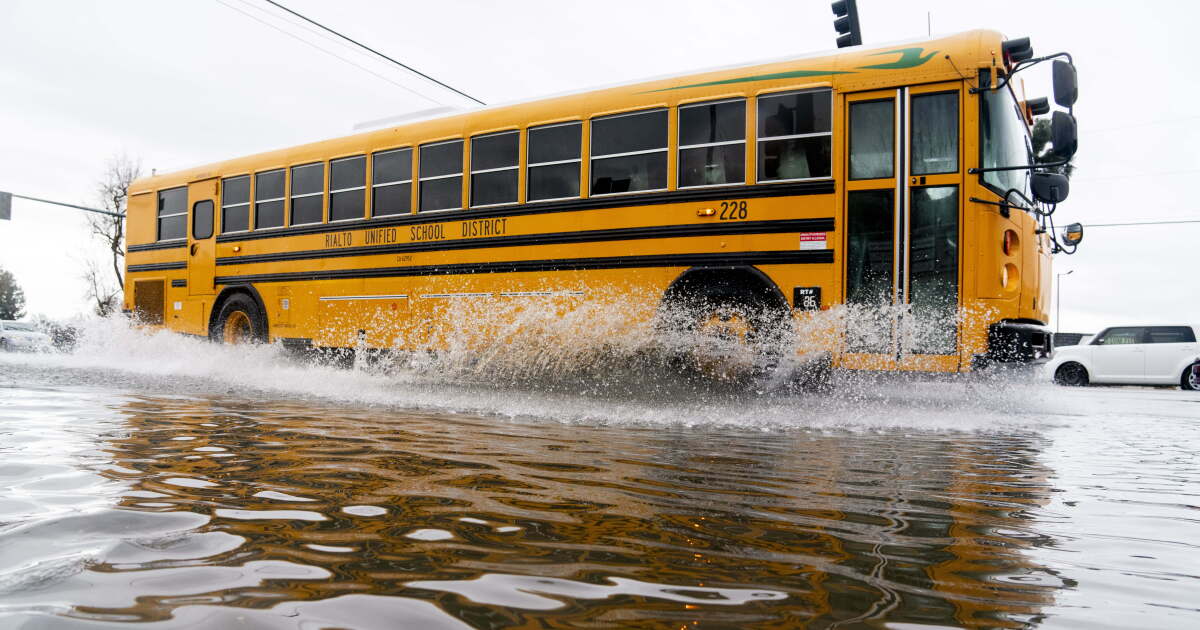
Homes that are not expected to be associated with high flood risk are becoming more so.
Properties in the United States are exposed to $375 billion to $1trillion aggregated uninsured flood losses, according to a recent report from Moody's. These homes could pose a credit risk from rising property insurance costs and falling property values.
The risk isn't evenly distributed, with Florida, Louisiana, South Carolina and Texas having the largest potential uninsured losses. Less than 2% of counties account for 65% of the protection gap. However, inland, non-mandated, non-mandated zones are the blindspot.
"Most homeowners in America are probably unaware of flood risk if they're outside the 100 year flood zone and aren't aware that they could get a preferred priced flood insurance policy for a relatively low cost," said Dr. Howard Botts, Cotality's Chief Scientist.
Lenders use the Federal Emergency Management Agency's Special Flood Hazard Area maps to decide whether a property needs mandatory flood insurance. However, these maps primarily targeted
Many homes in high risk areas are insured by the federally funded National Flood Insurance Program. The organization was first introduced in 1978 to provide coverage when private providers left the market and was sufficient for the first 25 years of service. But the NFIP is in debt to the U.S. Treasury and payments have
A report from the Consumer Financial Protection Bureau found that the NIFP
There is also a wealth disparity between those living in NFIP-designated coastal flood zones, who have higher credit scores and larger down payments compared to those living inland. Servicing these loans becomes difficult after severe weather patterns, delinquencies tend to spike. After Hurricane Beryl in Hustom, the storm led to
But warning buyers ahead of time of climate risk can hurt sales. Last year,
In 2024, the Federal Housing Finance Administration
"If you're not insured and you're just outside that 100 year zone, you're essentially self-insuring or hoping FEMA comes in and gives you money, which I don't think we can take for granted any longer," said Botts.