- Key Insight: Fed Vice Chair Michelle Bowman said labor market risks remain elevated and cautioned against signaling a policy pause as the central bank weighs its next moves.
- Expert Quote: "We should also avoid signaling that we will pause without identifying that conditions have changed. Doing so will indicate that we are not attentive or responsive to the recent and expected path of the labor market." — Federal Reserve Vice Chair for Supervision Michelle Bowman.
- What's at stake: The Trump administration has urged the Fed's rate-setting committee to cut short-term interest rates aggressively in an effort to support consumer spending ahead of the midterm elections.
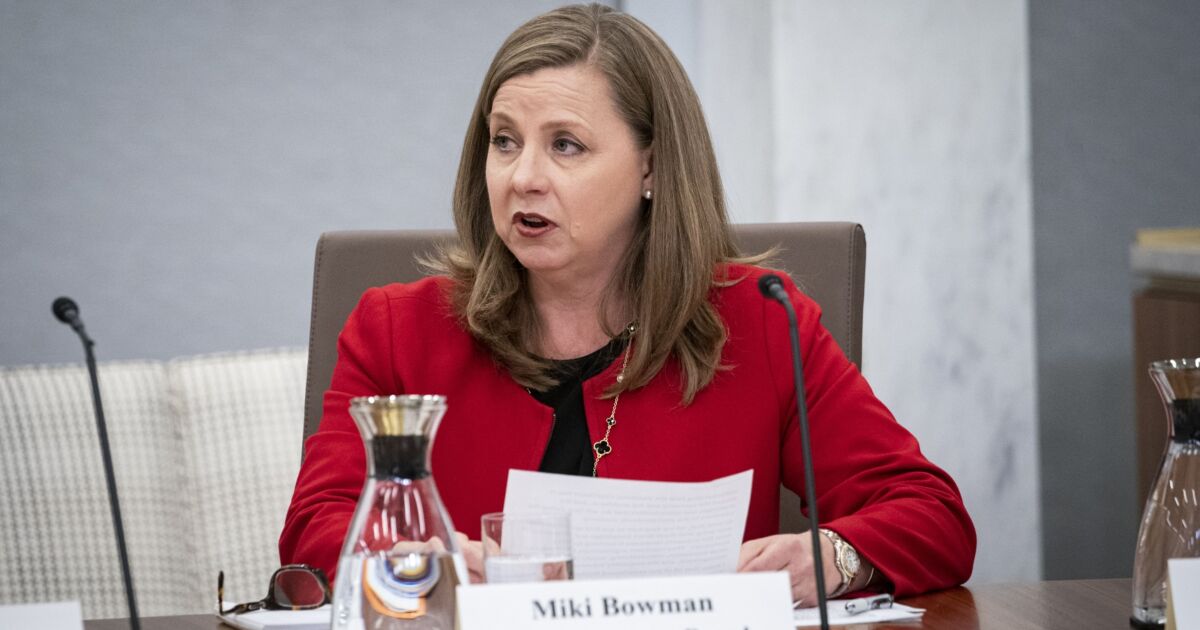
Federal Reserve Vice Chair for Supervision Michelle Bowman said Friday that the labor market shows signs of fragility and that it may be premature for the central bank to adopt a wait-and-see approach to monetary policy.
Speaking at the New England Economic Forum in Foxborough, Mass., Friday morning, Bowman said there is a material risk that labor market conditions could weaken further, citing low hiring rates that could quickly give way to job cuts.
"The labor market can appear to be stable right up until it doesn't," Bowman said, adding that the Federal Open Market Committee should take a proactive stance.
"Absent a clear and sustained improvement in labor market conditions, we should remain ready to adjust policy to bring it closer to neutral," Bowman said.
She also seemed to take exception to previous commentary from Fed Chair Jerome Powell, who has said the
Bowman said the rate-setting committee should "avoid signaling that we will pause without identifying that conditions have changed."
"Doing so will indicate that we are not attentive or responsive to the recent and expected path of the labor market," Bowman added.
The FOMC cut short-term interest rates by
At a December news conference, Powell said the Fed was "on hold" for rate adjustments in 2026 until it determines which side of the central bank's dual mandate — keeping inflation low or employment high — requires more immediate attention.
During her speech Friday, Bowman said that despite the labor market being near full employment, there are signs it could deteriorate in the coming months.
She pointed to an increase over the past two months in the share of workers employed part-time for economic reasons, as well as a rise in the number of people holding multiple jobs. This "suggests that an increasing number of workers struggle to make ends meet," she said.
"The unemployment rate increased substantially to 4.4% in December, reflecting a decline in hiring rather than a sharp increase in layoffs, as many firms appeared focused on retaining workers rather than expanding payrolls," Bowman said. "Payroll employment growth slowed significantly, and job gains became increasingly concentrated in a relatively small number of nonbusiness service industries."
Employers added just 50,000 jobs in December, according to the latest data from the
On inflation, Bowman cited "considerable progress" and said she believes still-elevated inflation largely reflects the effects of tariffs, which she expects to fade this year..
"The underlying trend in core PCE inflation appears to be moving much closer to our 2% target than is currently showing in the data," she said. "Core services inflation is already roughly consistent with our target, and only core goods inflation remains elevated, but I expect it to start moving down in coming months as the effects of earlier price increases and one-time tariff-related adjustments fade."