The spike in the 30-year fixed-rate mortgage during the between July and September cost potential home purchasers $19,000 in buying power, economists at First American calculated.
"For a prospective buyer, that can mean shopping at a lower price point, bringing more cash to the table, or taking on a larger monthly payment," said Mark Fleming, First American chief economist. "It also puts more distance between what the typical household can afford and what homes currently cost."
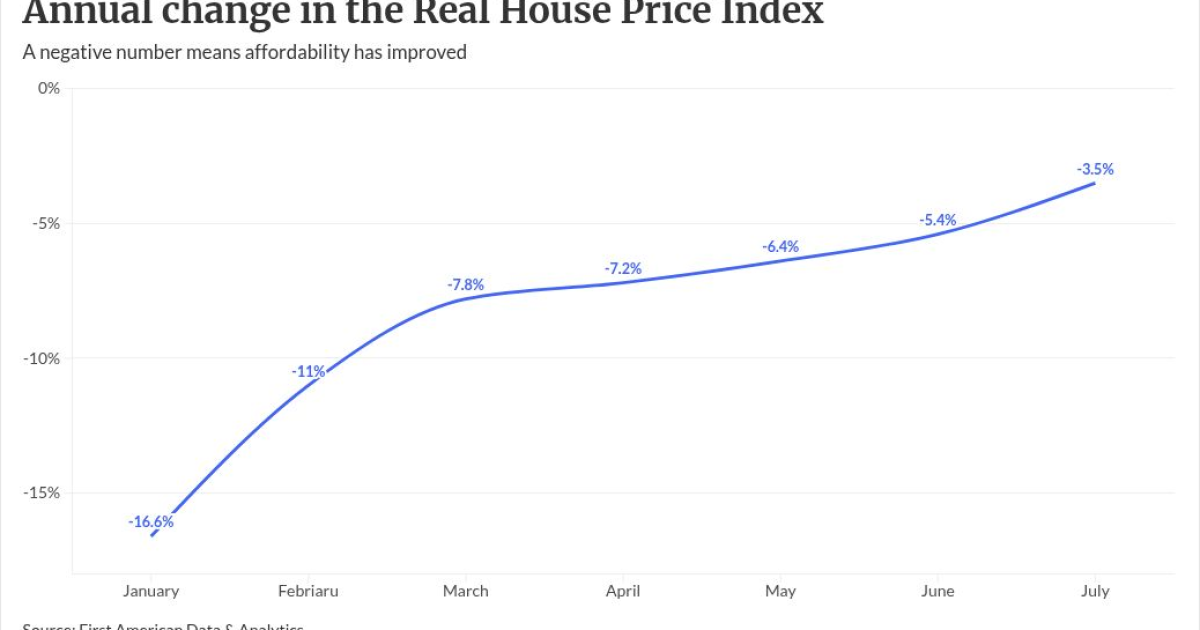
Housing affordability, better in July than it was one year ago by 3.5% but down for the fifth consecutive month, could be slammed by the time September's data is examined, First American Data & Analytics said.
"The affordability tug-of-war has shifted," said Fleming. "For much of the past year, rising incomes and
First American used Freddie Mac data in calculating the impact on buying power. During July the 30-year fixed was around 6.5%; the
The 30-year conforming ended July at 6.65%, Optimal Blue, another data source, said. But as of Sept. 29, it had conforming 30-year at 7.34%
"The next few months will test whether the recent year-over-year improvement in affordability can survive higher mortgage rates," Fleming said. "Slower house price growth and rising incomes remain affordability tailwinds but, if mortgage rates stay near 7%, more of those gains will be consumed by higher borrowing costs."
The 10-year Treasury yield, one of the metrics used in pricing mortgages, ended trading on Wednesday at 5.29%. On Sept. 23, it was at 5.11%, 18 basis points lower.
The Mortgage Bankers Association's Weekly Application Survey released Wednesday for the week ended Sept. 25 put the conforming mortgage at 7.3%. This is the highest since November 2023.
Its measure of application submissions, the Market Composite Index was down 9% seasonally adjusted from the previous week.
"Mortgage rates jumped to their highest level in almost three years, pushing borrowers to the sidelines," said Joel Kan, the MBA's deputy chief economist in a press release. "Mortgage applications fell by 6% due to the recent surge in rates, with purchase and refinance applications both declining to their slowest weekly pace since 2025."
Adjustable rate mortgages, with a 10.3% share, were at their highest since October 2025.
First American's data found house price growth slowed to roughly 1% for July. At the same time, household incomes continue to rise, up 3.1% over July 2025. Together both provide some offset to those higher borrowing costs, Fleming said.
Consumer house buying power was almost flat month-to-month, down 0.3%. On an annual basis, it rose by 5%, First American's Real House Price Index determined.
Recently released data from Realtor.com found