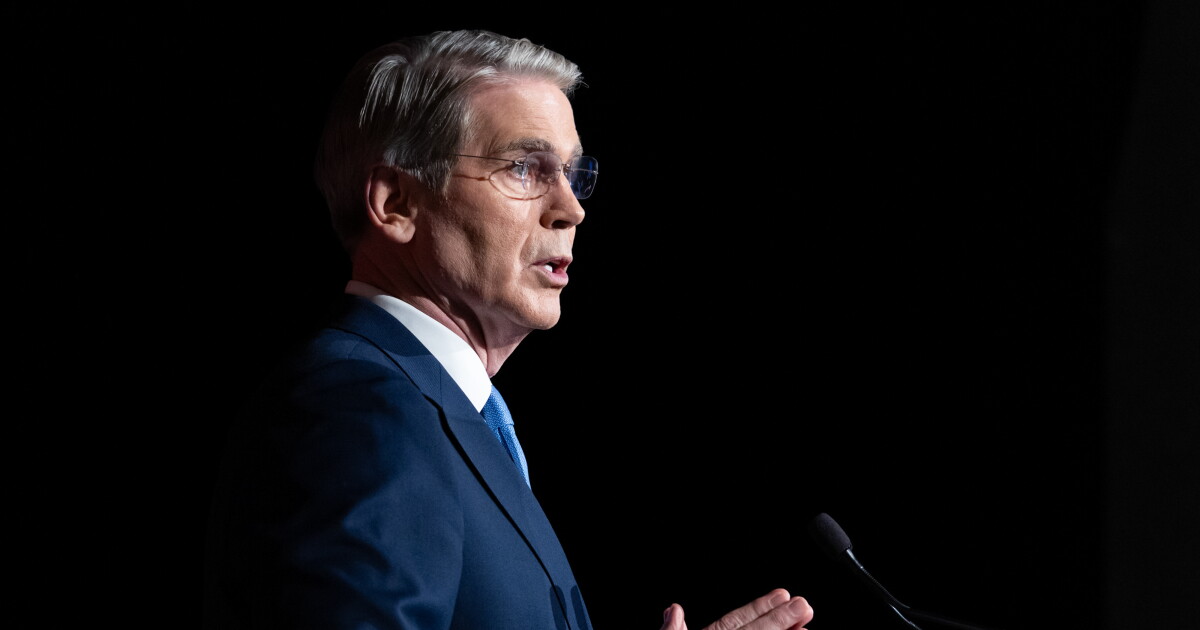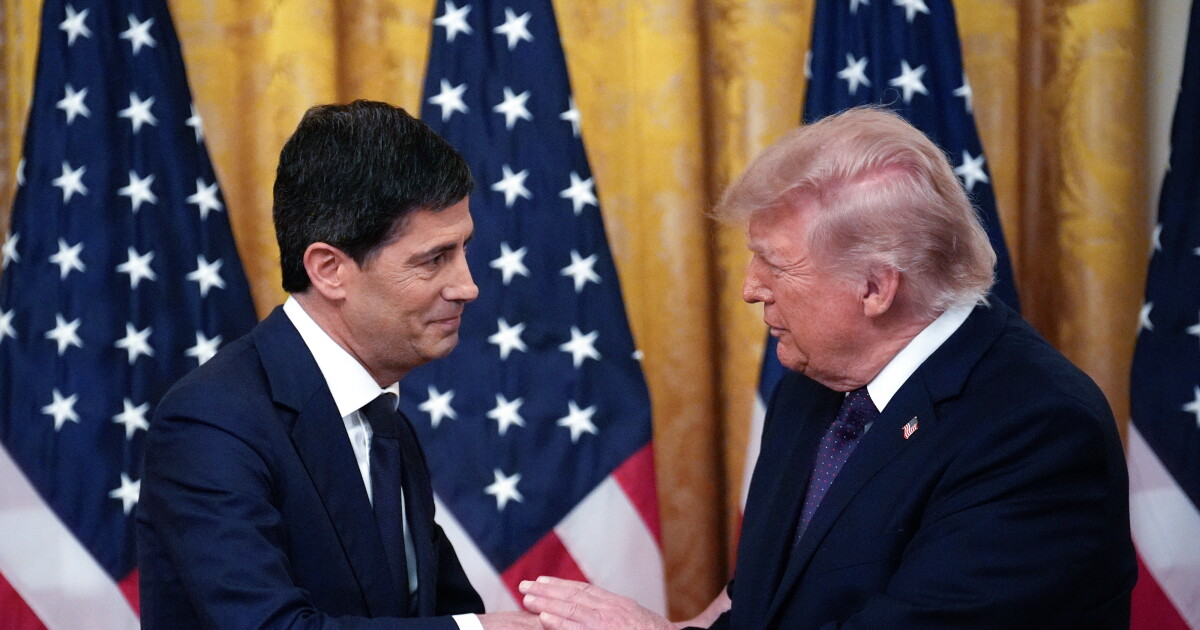
When Kevin Warsh was sworn into office at a White House ceremony in May, President Donald Trump praised his hand-picked Federal Reserve chairman and encouraged him to be "totally independent."
"Just do your own thing," he said.
That latitude from the president will be tested this week as the Fed faces mounting pressure to hike interest rates to tame elevated inflation. Friday's report on consumer prices showed so-called core inflation grew at a hotter-than-expected pace in August, pushing investors' expectations for a rate increase at the Fed's Sept. 15-16 meeting above 85% in futures markets.
That puts Warsh on a collision course with a president who has repeatedly pressed the central bank to slash rates. Trump recently
Asked if he expected the central bank to raise rates at its upcoming meeting, Trump said: "I don't know."
The push for looser policy is only intensified by political angst inside the White House. Just ahead of midterm elections, polls have shown growing
That dynamic leaves Warsh trapped in an institutional vise just weeks before voters head to the polls.
"They really are in a no-win situation where they incur the president's wrath or diminish their credibility in the markets, with consequences for inflation that are probably more severe down the road," said Maurice Obstfeld, senior fellow at the Peterson Institute for International Economics and former chief economist at the International Monetary Fund. "I don't think Warsh wants to go down as the Fed chairman who buckled to administration pressure when the Fed's mandate was at stake."
Since the new inflation report, one White House official has offered mixed signals over how the president might react to a rate increase.
On Friday, National Economic Council Director Kevin Hassett told Bloomberg TV that Trump still wanted rates to go down and, if the Fed hiked, "The president will have something to say about it."
On Sunday, Hassett softened that somewhat.
"If it's a rate hike, then the president — I'm sure he's not going to be super happy about it, but he will defend the independence of Kevin Warsh above all," he said on Fox News Sunday.
Attacks on Powell
If Warsh's predecessor is any gauge, he may be in for trouble. Trump's first Fed chair, Jerome Powell, was sworn into office in early February 2018, and by July of that year the president was publicly criticizing him for raising rates. Years of unprecedented attacks followed.
Yet Powell maintained a distant, formal posture with the White House. Warsh, by contrast, has spoken
"He can flatter the president on the phone and listen to him and hear him out," said Michael Redmond, US economist at consulting firm Energy Aspects. "Maybe there isn't such a squeeze on Warsh."
Still, Warsh is treading a delicate path with a White House that has applied intense pressure on the central bank, and not only through verbal attacks.
Trump has tried — in a bid that has so far been blocked by the Supreme Court — to fire Fed Governor Lisa Cook. And his Justice Department pursued a criminal investigation into Powell over allegations of fraud related to the reconstruction of the Fed's headquarters. The probe was
"Warsh can't win politically right now," said Heather Long, chief economist at Navy Federal Credit Union. "If he hikes, he's going to get a tweet, and if he holds steady, he's going to get backlash" from markets.
Major Wall Street firms including TD Bank and JPMorgan Chase & Co. quickly revised their calls after Friday's inflation report in anticipation of a rate increase this week.
Patrick Harker, a former president of the Philadelphia Fed now at the Wharton School at the University of Pennsylvania, said a rate hike could, counterintuitively, aid the administration's broader economic goals by easing worries over inflation. Higher inflation expectations can drive up the yields on longer-dated Treasuries, making mortgages and corporate borrowing more costly.
"By raising rates, that signals that the Fed's on the job," Harker said. "That might help with what the administration is trying to do, not hurt it."
The yield on the 30-year US Treasury bond notably rose on July 29 when the Fed left rates unchanged and Warsh failed to explain the move to investors' satisfaction.
Balancing Act
Meanwhile, Warsh has another balancing act to maintain, this one inside the Fed. The policy committee he inherited in May is keen to preserve the Fed's independence. That instinct for institutional defense was punctuated in May when Powell broke decades of precedent by staying on as a governor at the conclusion of his tenure as chair, blocking Trump from filling his seat.
Against that backdrop, Fed officials have grown steadily more concerned with stubbornly high inflation. Three policymakers dissented in favor of a rate hike at their July meeting. After the most recent data, an attempt by Warsh to forestall a rate increase could damage his standing among the colleagues he's hoping to lead.
It's a moment, ironically, that Trump anticipated when he was interviewing candidates for the Fed's top post.
"They're saying everything I want to hear, and then they get the job," Trump said in January, days before picking Warsh. "They get the job, and all of a sudden, 'Let's raise rates a little bit.'"