- Key insight: The housing package includes a custodial deposit bill that some experts say could make bank-fintech partnerships cheaper.
- Forward look: President Donald Trump is expected to sign the bill into law.
- Expert quote: "It seems when it comes to community banks, the biggest usage of custodial deposits — or at least the most profitable usage, as far as we can see — would be banks and tech partnerships." — Phillip Basil, director of economic growth and financial stability, Better Markets.
WASHINGTON — A provision tucked into a sweeping housing package is being sold as regulatory relief for community banks. But some experts say the biggest winners could be fintech and crypto firms that are looking to embed themselves more deeply into the banking system.
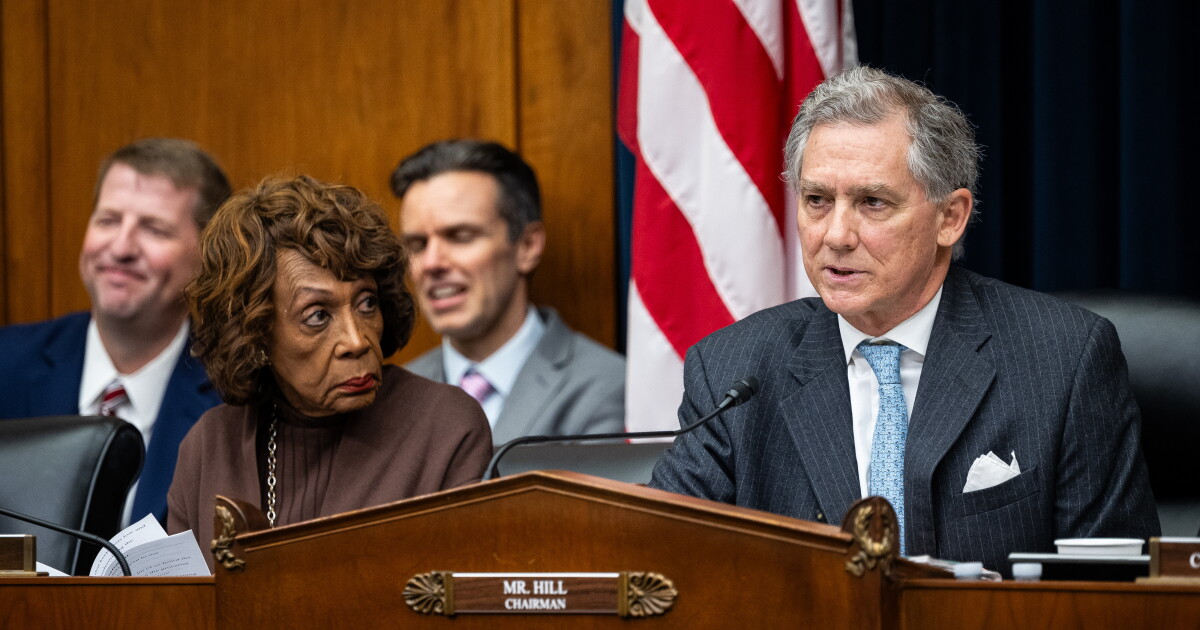
House lawmakers, led by House Financial Services Committee Chairman and ranking member French Hill and Maxine Waters, have for months pushed to include two pieces of brokered deposits
That package sailed through the Senate earlier this week and was
The lawmakers argued that the bills would free up capital by excluding certain theoretically less-risky deposits from the definition of "brokered," a designation that triggers higher fees and capital requirements. Since the failure of Silicon Valley Bank and deposit flight toward larger institutions, policymakers have generally moved toward the idea that deposits used in a network designed to spread them across banks and institutions to maximize the extent to which they are covered by deposit insurance are reasonably safe.
The newly freed-up capital could then be used in mortgage lending, House lawmakers say.
But one of those bills could make a far bigger splash elsewhere, as it touches on the kind of complicated financial arrangements that banking-as-a-service fintechs and crypto firms
That bill would carve out a number of "custodial" deposits from the brokered definition. Unlike the "reciprocal" deposit bill — which has been pared down since it originally won the approval of House lawmakers — the custodial bill has sailed through the last months of negotiations between the House and the Senate relatively untouched.
The custodial bill would exempt custodial deposits from being considered brokered if they make up no more than 20% of an eligible bank's total liabilities and so long as the bank in question has fewer than $10 billion in assets.
But custodial deposits aren't commonly used by regular community banks for FDIC insurance, said Phillip Basil, director of economic growth and financial stability at Better Markets who recently served as a financial stability expert at the Federal Reserve Board.
"Our big concern is it seems when it comes to community banks, the biggest usage of custodial deposits, or at least the most profitable usage, as far as we can see, would be banks and tech partnerships," he said.
What deposits are we talking about?
Brokered deposits have been a longstanding concern for bank safety and soundness because of how quickly they can flee a bank if there are signs of trouble.
A broker shopping for the best rate across banks can quickly pull money if a better rate appears elsewhere, making regulators wary of concentrations of the volatile "hot money" that could leave a bank en masse. And banks that rely heavily on brokered funding pay higher insurance fees and face tighter capital requirements.
After the failure of Silicon Valley Bank and the regional bank crisis that followed, lawmakers began considering if reciprocal deposit networks, which have been offered for years by companies like IntraFi, shouldn't be codified as a reasonably safe private-sector alternative to full-sale deposit insurance reform, an initiative that has
When a customer like a local government, small business or even home owners association comes to a bank with a deposit over the $250,000 FDIC limit, the bank might break that deposit up and spread it across a reciprocal network of banks so the entire deposit stays insured. This keeps depositors from panicking and moving their deposits to a larger bank, or from losing their money, as a few consumers did when
Custodial deposits came into that conversation relatively late. StoneCastle has the biggest custodial deposit alternative to reciprocal deposit networks like IntraFi, and was involved in the bill's conception as a technical advisor, two people familiar with the legislation said.
StoneCastle has now been acquired by Fiserv, a fintech company whose former CEO, Frank Bisignano,
"Fiserv supports passage of this important legislation, which will give many smaller financial institutions, including community banks, greater flexibility to manage deposits, support lending and serve their communities," Fiserv said in a statement in response to an inquiry by American Banker for this story.
And for some people associated with the community banking world, the option is a step forward for this issue.
"I think a fair question to ask is whether this provision is community banks finding modernization or brokered-deposit deregulation for intermediaries," said Anne Balcer, principal of Community Bank Advisory Services. "However, in the current environment, in which banks are facing increased deposit pressure and competition from large banks and nonbank entities alike, ideally this provision should help community banks retain municipal or public-fund deposits, or institutional funds, such as those from nonprofits or [homeowners associations] that provide stable sources of funding."
The fintech of it all
But others point to the wording of the bill, and say the legislation is going to specifically affect bank-fintech arrangements more directly.
"The kinds of institutions that are eligible for the kind of exemption here is one that's sort of unique to banks and tech partnerships, and then the kinds of ways in which deposits are placed at partner banks fits largely within the way that they are talking about what is a custodial deposit," said Graham Steele, a senior fellow at the Roosevelt Institute and former Treasury Department assistant secretary for financial institutions during the Biden administration.
That means that these kinds of bank-tech relationships will become less expensive for those banks, since fewer deposits will be considered brokered. And that reality could mean that those kinds of partnerships will balloon in the aftermath of this bill, Basil said.
"Anytime you put something like this in regulation that provides a clear, structural regulatory advantage for a specific business type, that business type will end up flourishing," he said. "Any sort of rule that benefits custodial deposit arrangements with community banks over time would, of course, incentivize these types of arrangements, which kind of get away from the core mission and the core purpose of community banks."
The $10 billion limit also doesn't put much of a meaningful limit on the arrangements, since most banks that offer their services to fintechs are already under that threshold, and the balance sheet size doesn't reflect potential risk to the financial system and to American consumers.
"That's the size of banks that we know are the ones that are more likely to engage in these kinds of partnerships, so it happens to hit on the part of the market that does this kind of business," Steele said. "The problem with these kinds of arrangements is that they represent potential liabilities of the partner banks that are not necessarily reflected in balance sheet size, so they create a whole bunch of risks and obligations to these third parties through arrangements that can have a lot of impacts on customers and other entities and on the bank itself."
The degree to which these kinds of relationships are a problem for financial stability — and how much bank-tech relationships cause problems on banks' balance sheets — is an open question. But for Steele, it's not zero.
"Exempting these kinds of custodial arrangements from the very definition of brokered deposits doesn't eliminate the risk of that flight from happening," Steele said. "It just creates a legal fiction that you know that they are not actually risky, thereby circumventing a lot of the financial restrictions that apply traditionally to brokered deposits."