
- Key insight: Reducing the number of interest rate-setting meetings could be the first of several changes to the Fed's monetary policy practices.
- Expert quote: "Getting policy right involves assessing near-term developments at timely, regular, and information-rich intervals. But it's equally important we reserve time and space as an intellectually diverse group for strategic deliberations, for thinking anew about big questions, looking out over longer time horizons, focusing, as I say, on the left side of the decimal." — Federal Reserve Chair Kevin Warsh
WASHINGTON — The Federal Reserve will vote on its benchmark interest rate just seven times next year instead of eight.
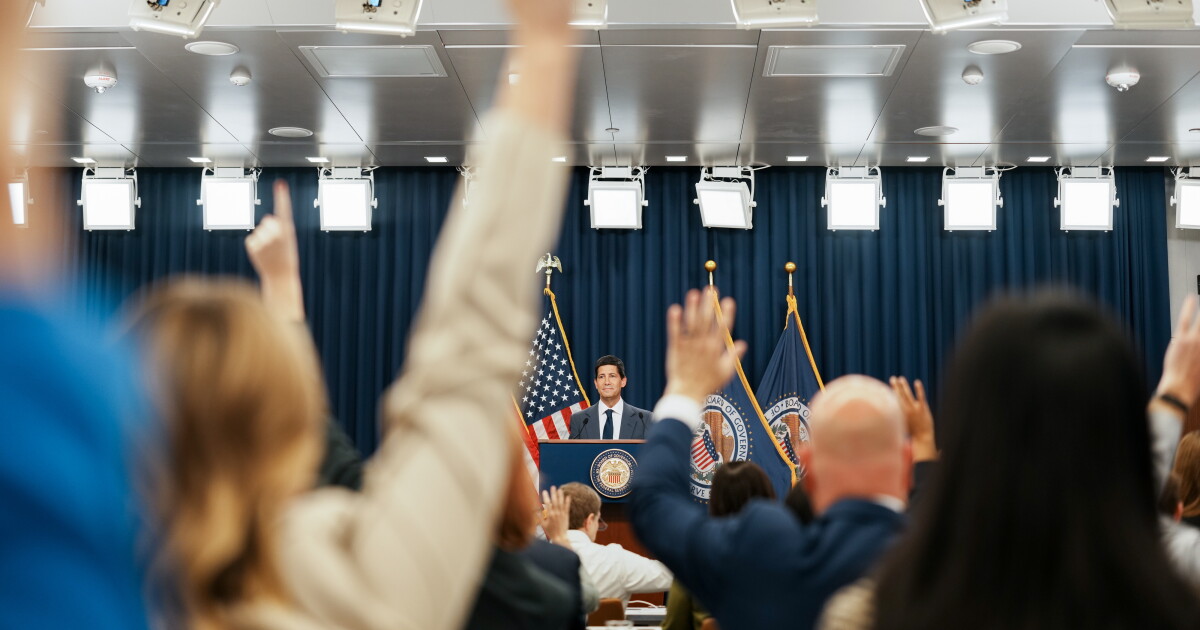
Fed Chair Kevin Warsh announced the change Wednesday afternoon during his post-Federal Open Market Committee press conference, saying that the committee still plans to meet eight times next year, but one of those meetings would be dedicated to "broad monetary policy strategy."
During the strategy meeting, which Warsh said will take place next fall, the committee will not vote on the federal funds rate or issue an official policy statement. He said he expects the committee to drop the number of policy-setting meetings to six in 2028.
Warsh said the change is "more than some administrative detail," as it will give the group a needed chance to reflect on its approach to monetary policy.
"Getting policy right involves assessing near-term developments at timely, regular, and information-rich intervals," he said. "But it's equally important we reserve time and space as an intellectually diverse group for strategic deliberations, for thinking anew about big questions, looking out over longer time horizons — focusing, as I say, on the left side of the decimal."
Warsh said the decision emerged from a "robust discussion" among committee members that was spread out over multiple meetings. He said it was not yet clear how information discussed during that meeting would be disseminated or when. Currently, minutes are released three weeks after each FOMC meeting with full transcripts coming out five years later.
"The decision on the new format for the meetings is relatively new," Warsh said. "As we get details of that … we'll share them."
The reduction of rate-setting meetings could be the first of many
It is unclear whether the idea for fewer policy-setting meetings came from one or more of those task forces, from members of the committee or from Warsh himself. In previous press conferences, Warsh said he was continuing the practice of holding eight meetings — as well as eight corresponding press briefings — out of respect for commitments made before his arrival.
"Between now and year-end, my predecessors and the Federal Reserve committed to press conferences this year. I'm committing to press conferences this year," he said in July.
During Wednesday's press conference, Warsh said he has conducted "some periodic check-ins" with the five task forces. He said he has been "impressed" with their work thus far but said none of their recommendations are final. He also declined to disclose details of those findings before they are final.
Read more:
Banks are blocking external AI agents. Is this sustainable? 'Tell me what you think': Challenges of managing AI users BlackRock's Mullin on a culture of 'maximum flexibility' How banks can reclaim the $18 trillion SMB market
Warsh said he expected that "some but not all" of the task forces would complete their work in time to meet his year-end deadline. But even then, he said, the findings would be only a starting point for policy reform discussions.
"That just begins the process by which we're going to be consuming [the task force recommendations], which is intellectually serious work," he said. "That's a catalyst for us to think anew about productivity and jobs and an inflation framework and what's the best data to help us do our job? How to think about the balance sheet task force? These are huge intellectual investments that I think are going to bear fruits in the next policy conjuncture."
Conditions tightening, not restrictive
During the press conference, Warsh described the U.S. economy in largely positive terms, noting upward revisions to gross domestic product growth and "historically high" rates of capital expenditures, particularly among high tech firms.
But Warsh also acknowledged that inflation continues to run above the Fed's 2% target.
When asked why the committee opted to keep rates steady despite key inflation indexes rising faster than expected, Warsh said the committee opted to gather more information rather than moving to raise rates for the second time in as many months.
"The period right in front of us is information-rich. There is a lot that's happening in the world. My colleagues and I are keen to take notice of it," Warsh said.
Still, Warsh said the committee is already observing signs that the quarter-percentage point rate hike instituted in September is having its intended effect: making monetary policy less accommodating.
"We have started to see some changes in financial and credit conditions. They have tightened for some businesses and households, much as we would expect," Warsh said. "Market participants are becoming somewhat more discerning in their capital allocations, and while overall financial conditions are tighter, I'm unwilling and unable to call them tight. But broadly, these developments go in the direction of achieving a longer, more durable period of economic growth and price stability."
Putting politics aside
Coming into this week's FOMC meeting, markets broadly assumed the Fed would not deliver a rate hike — especially one that was not solidly expected by the markets —
During his press conference, Warsh pushed back against the idea that such considerations factored into the committee's decision.
"Politics played no role in the decision," he said. "I just spent two days with my colleagues upstairs. I didn't hear an utterance about politics. I didn't hear a reference to politics, elections, what's happening in the next week or so. Didn't hear anything about it, and I don't believe it had any role in the decision, not just for me, but my colleagues around the room."
While the Fed did not deliver a surprise to markets, there was one unexpected development related to the committee's vote with potential political ramifications.
Fed Gov. Lisa Cook — the target of a politically charged removal effort from President Donald Trump — cast one of the two dissenting votes against the FOMC's decision to hold rates unchanged. She joined Federal Reserve Bank of Cleveland President Beth Hammack in calling for a rate hike.
Cook's vote did not elicit an immediate response from the president, but the move did evoke a question about Trump's
"I'm not going to be responding to quotes from public officials," he said. "What I can tell you is my experience in five months here. We just came out of a heck of a family fight, serious, sober discussion. I think we came to the right policy decision for this moment, and I'm honored to be here and honored to be the chairman of this group."