In January, the Trump Administration released
Since then, House Republicans have put forward amended legislation that would significantly scale back ill-considered efforts by the Senate to limit the role of Wall Street in housing,
The draft bill narrows the definition of "single-family home," which could make it possible for private equity firms and other large companies to purchase more homes than the previous version allowed.
Specifically, the House legislation now excludes manufactured housing and homes that have been renovated for sale, among others. Despite widespread public concerns regarding corporate landlords, institutional investors only account for about 3.0% of single-family rentals (SFRs),
House Republicans revised the Senate's original housing bill after President Trump reportedly was unhappy with part of the legislation that would
Placing limits on the ability of
By excluding manufactured housing and homes that have been renovated for sale, the new House legislation makes the proposal less offensive in economic terms. But the fact remains that housing affordability has become an explosive political issue in Washington and around the country.
Large institutional investors are important sources of capital for housing, but also make attractive political punching bags. A 2025 analysis from the Private Equity Stakeholder Project reveals that at minimum, private equity firms own 8,200 apartment buildings and over 2.2 million units in the U.S., representing about 10% of all apartment units.
"More than half (55%) of the total units currently owned by private equity companies are in just five states – Texas, Florida, California, Georgia, and North Carolina," notes PESP, "and almost two-thirds (62%) of the total units currently owned were acquired by private equity companies just since 2018."
At the local level, no surprise, many Americans believe that big Wall Street firms are literally buying all of the available houses. One long-time reader, who has worked in the banking industry for decades and now sits on a local zoning board in NJ, put it this way earlier this year.
"All of this talk about 'loosening building zoning red tape' sounds like a bit of a smoke-screen to me. Salaried workers (or those whose parents cannot subsidize the purchase) are competing against investors and builders."
A moratorium on Section 1031 exchanges
One obvious tweak that could be used to balance the scales in favor of individual home owners, says the reader, would be to impose a moratorium on Section 1031 exchanges, named after IRS Code Section 1031, which gives an unfair advantage to professional investors in many tight housing markets.
Section 1031 allows real estate investors to sell a property and reinvest the proceeds into a new "like-kind" property, deferring capital gains taxes. The property in a Section 1031 Exchange must be an investment or business property, not a primary residence. Strict timelines require identifying new property within 45 days and closing within 180 days.
Lawmakers could also implement a similar "disincentive" for primary residence homeowners to sell their home within a similar timeframe, requiring them to pay full capital gains taxes on the sale unless they hold the property for at least 72 months or at least longer than the current 24 months.
If this were enacted, notes the veteran banker, "it would motivate sellers and get people moving again, literally. It would also force investors to move fast, freeing up supply. Realtors would love this proposal. Likewise, the banks can get new buyers with market rate mortgages and relieve themselves of the 2-3% mortgages on their books."
Anyone who bought a home at least 5 years ago has seen over 40% appreciation since then. Anyone thinking about moving would rationally choose to list their home and move into a new home or pay the capital gains tax. This writer just sold a home in Westchester County, NY, purchased in 2021 for a 45% gain due to home price inflation ℅ the Powell FOMC. Thanks Jay!
How HUD policy changes could help
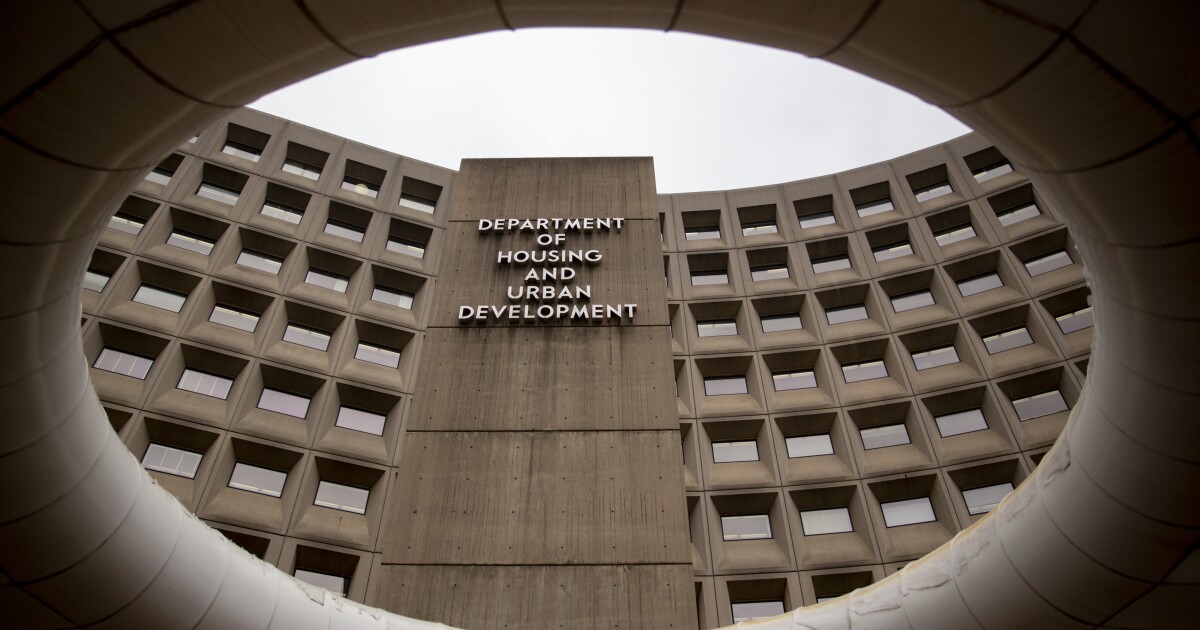
Another important area that is ripe for change is how the federal government disposes of residential properties, including HUD and the GSEs, Fannie Mae and Freddie Mac. At present, there are more than 15,000 homes from non-performing Home Equity Conversion Mortgage awaiting disposal by HUD.
After the January EO by President Trump, HUD postponed its HECM Non-Vacant Loan Sale (HNVLS 2026-1) in February, increasing the backlog even further. These auctions typically involve institutional investors and, to a lesser degree, not-for-profit organizations, which are not particularly competitive.
Instead of erecting obstacles to institutional investors participating in the residential housing markets, the Trump Administration should consider an EO that requires all 1-4 family homes sold on behalf of the federal government be publicly offered to individual purchasers through public listings before institutional investors are allowed to bid.
"These HECM loan assets were expected to be sold earlier this year through bulk auctions such as HNVLS to institutional investors and at prices estimated between 50% and 70% of the property values," notes Bill Bymel, CEO of First Lien Capital.
"In addition to bulk sales of these non-performing loans to institutional buyers, HUD could hire a fiduciary that requires that these homes be marketed to individual buyers. By taking this common sense approach and using realtors to market the assets, we estimate total proceeds to Treasury will be 20% greater than numbers achieved through bulk sale."
Given that HUD has over a 15k asset backlog and can only auction about 2,000 homes at a time, dual tracking bulk sales and a third party managed program will result in quicker delivery of this inventory to market, Bymel adds.
In addition to HEMCs, the Federal Housing Administration disposes of thousands of more homes annually through Real Estate Owned sales and other distressed asset programs. In recent years, FHA has shifted away from traditional foreclosure sales in favor of "Claims without Conveyance of Title" programs where the issuer sells the home directly on behalf of the FHA.
The Trump Administration has been struggling to come up with practical policies to help address the surge in home prices caused by the errant policies of the Powell FOMC. One simple but powerful approach is to require HUD, the GSEs and any private issuers working in the conventional and government markets to expose single-family homes to the retail markets before institutional firms are allowed to bid. Problem solved.