
- Key insight: The Fed's former top regulator continues to beat the drum about the stability consequences of the current bank deregulatory policies being championed in Washington.
- Expert quote: "The bank deregulation undertaken so far, and the plans for more to come, is ultimately going to make our financial system less robust. And when the bill comes due, we will all pay the price." — Federal Reserve Gov. Michael Barr
- Forward Look: Barr argued that lighter-touch regulation and supervision will provide a short-term boost to the economy that will increase the likelihood of a costly crisis down the line.
The Federal Reserve's former top regulator has an idea for addressing the growing risks in the nonbank lending space: tighter regulation on banks.
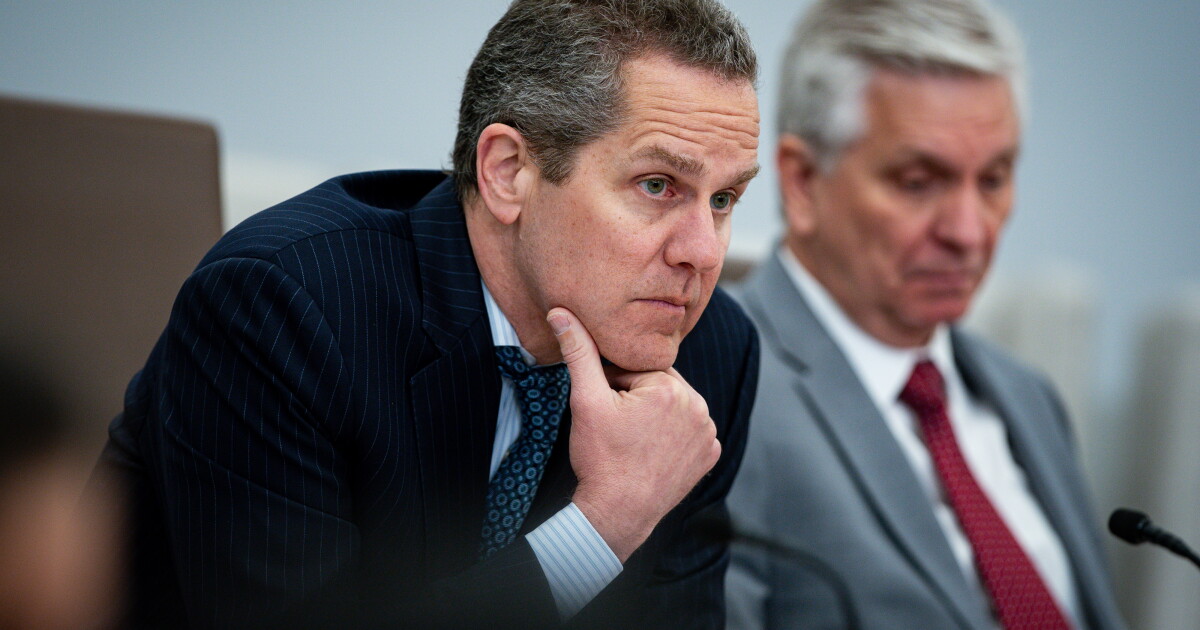
Fed Gov. Michael Barr, in a speech delivered over the weekend at American University in Washington, D.C., said instead of helping banks get an edge on the growing slate of nonbank financial institutions, regulators in Washington should be ensuring that they engage with them safely.
"While some have argued that we should deregulate the banking sector so that it can compete more effectively with private credit and other nonbanks, I would argue the opposite: We should maintain and improve bank regulation because forces outside of the banking sector can, and eventually will, threaten bank balance sheets," Barr said.
In his remarks, Barr noted that banks and nonbank financial institutions — such as private equity, private credit and hedge funds — have become "closely entwined and interdependent." He noted that bank credit commitments to the sector surpassed $2.6 trillion last year.
This large and growing pool of business has created multiple vectors of risks for banks, Barr said. Along with traditional credit risk exposures, banks are also jeopardized by their "asset-holding commonalities" with nonbanks.
"If nonbanks come under stress and must fire sale their assets, this could harm bank portfolios as well," Barr said. "Second-round effects from bank and nonbank interconnectedness may also play a role if fire sales cause institutions that are highly connected with banks to come under pressure."
To address these risks, Barr said, banks need "robust" capital and liquidity holdings. Yet, he said, bank regulatory policy is
Barr was appointed the Fed's vice chair for supervision by then-President Joe Biden in 2022. He served in that position until early last year, spearheading several high-profile regulatory reform pushes, almost all of which have been voided by the Trump administration in one way or another. He continues to serve on the Fed's Board of Governors and has consistently
In his latest speech, Barr called the current policy agenda "the most significant deregulation of the banking system since the Global Financial Crisis," arguing that the reforms have favored the expansion of new business models over the stability of the financial system.
"They tip the imperative balance that must be maintained between openness to innovation, on the one hand, and safety and soundness, on the other, in a way that will increase the risks of financial instability," he said. "I have voted against these changes, and I feel it is also my duty to continue to speak about them and explain that the costs they impose, in the form of risk, greatly outweigh the promised benefits of a lighter regulatory burden."
Barr said deregulation can have positive economic effects, but maintains that they typically take the form of a short-lived "sugar high" and end up being a net drag on the economy in the long run, pointing out to the immense costs incurred as a result of the Great Depression and the global financial crisis, not only in terms of direct government interventions but also lost productivity.
Pointing to evidence that the economy is already growing fast in many regards, Barr said he worries that the U.S. could be poised for another costly downturn.
"We're now in a risk-on environment with a booming stock market, robust bank profits, and a deregulatory mindset," he said. "The bank deregulation undertaken so far, and the plans for more to come, is ultimately going to make our financial system less robust. And when the bill comes due, we will all pay the price."