The increased workload from recent changes in Federal Housing Administration-backed loan servicing means any future strategy to counter today's rising numbers must include engagement to change borrowers' mindset, mortgage leaders say.
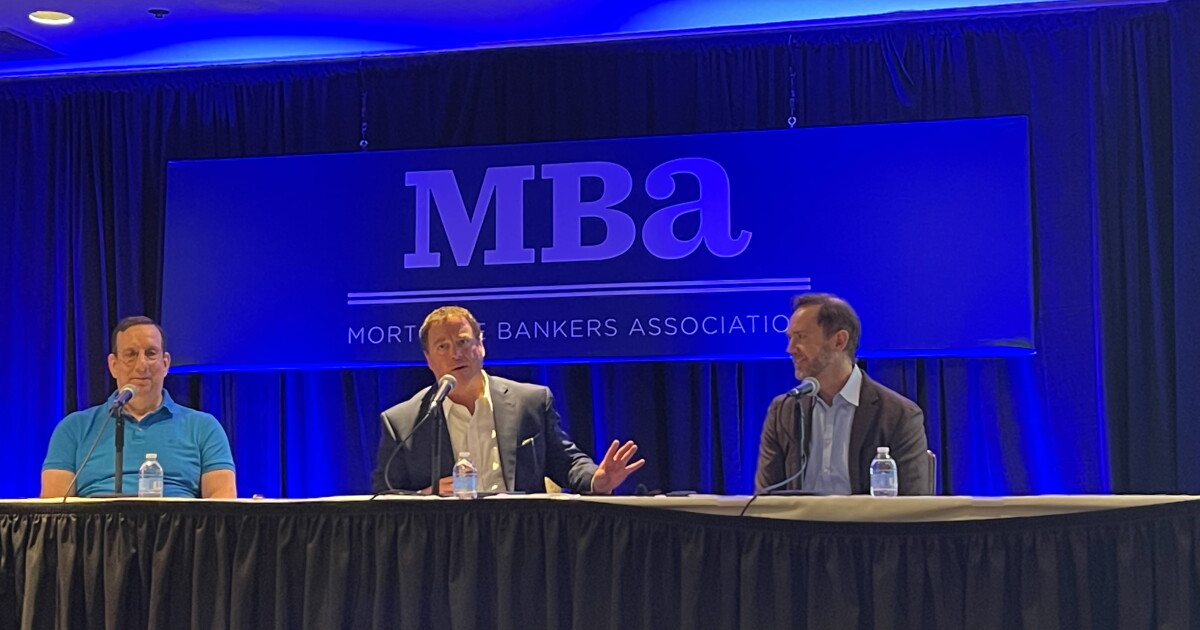
Years of relief measures introduced during the COVID-19 pandemic, beginning with automatic forbearance following any stated financial hardship, created a change in mentality among some borrowers that puts them in a precarious situation today, servicing executives suggested at the
"There's a number of customers in the pipeline that have not made payments for a long time, but that doesn't mean they ever really got seriously delinquent. They continue to use partial claims; they continue to use loss mitigation," said David Sheeler, president of residential servicing at Freedom Mortgage. "Now you're seeing the flip side of that, particularly in FHA."
While
"We've had this environment for the last several years, where some people have stopped prioritizing their mortgage and are focused on other expenditures, whether they be normal household expenditures, but more so lifestyle choices," Sheeler continued.
"It's not so much a question of do they have the money, it's where are they spending it?"
A new
Loan vintages from 2023, when mortgage rates hit their highest mark this decade, represent a particular area of current concern. While initial early rises in delinquencies of new originations tend to stabilize, growth has failed to level off in the same way for recent vintages, which suggests stress comes from more than just 2026's economic shocks.
"It's been an issue for years; it's not just an issue of what's happened in the last two months in the Middle East. It's clearly a trend that's happening to that population," said Brett Ludden, managing director of global advisory firm Milliman.
Do subordinate liens play a role?
The frequency of
Of the 495,086 FHA loans originated three years ago, more than 82,000 currently carry second, third or fourth liens that wouldn't appear in primary mortgage data, according to research from real estate analytics firm Benutech. While the number includes loans coming from down-payment assistance initiatives, most emerged from the standalone partial claims program first created to help borrowers address pandemic-related financial hardships. Although they carry balances of less than $20,000 each, collectively, subordinate liens make up an estimated $880 million in financial obligations sitting beneath the surface of that year's FHA originations.
More than 73,000 properties carried a second lien — a rate of nearly 14.8% nationally, with over 7,500 stacking a third. Of that number, an additional 1,500 carried a fourth, Benutech found. Growth of the latter two numbers was behind the decision to terminate the partial-claims program and introduce the new waterfall last year.
A canary in the coal mine?
The impact of defaults and elevated burdens on 2023 originations appears to be carrying over into subsequent years, the MBA panelists noted.
Recent 2025 vintages are faring even worse than mortgages originated in 2024, Ludden pointed out during the session.
The post-COVID originations, though, don't reflect relaxed loan-qualification criteria on the part of FHA, but may carry warnings of future consumer hardships, according to a leading policy advisor.
"FHA is the canary in the coal mine. You could have real external affordability pressure that's outside the data that's in FHA," said Richard Cooperstein, director of alliances and policies at Andrew Davidson & Co.
Notably, the surge in required escrow to cover accelerating insurance and property tax increases is posing problems for homeowners across borrower segments. Tax and insurance now make up
Escrow payments have gone up as much as 50% since 2023 for some homeowners, with more of an expense burden on "less financially sturdy" borrowers who typically obtain an FHA mortgage, Cooperstein said.
While FHA servicers may be seeing a surge today from the introduction of the loss-mitigation waterfall, numbers will level off but should remain elevated in the near term, Sheeler advised.
"You had to get the pig through the python on getting the loss-mitigation engine fired back up, and getting people back into permanent mod solutions, but not all of those customers are going to continue to re-perform as we move forward."
"We're going to go on a slow and steady gradual increase in FHA delinquencies," the Freedom executive said.