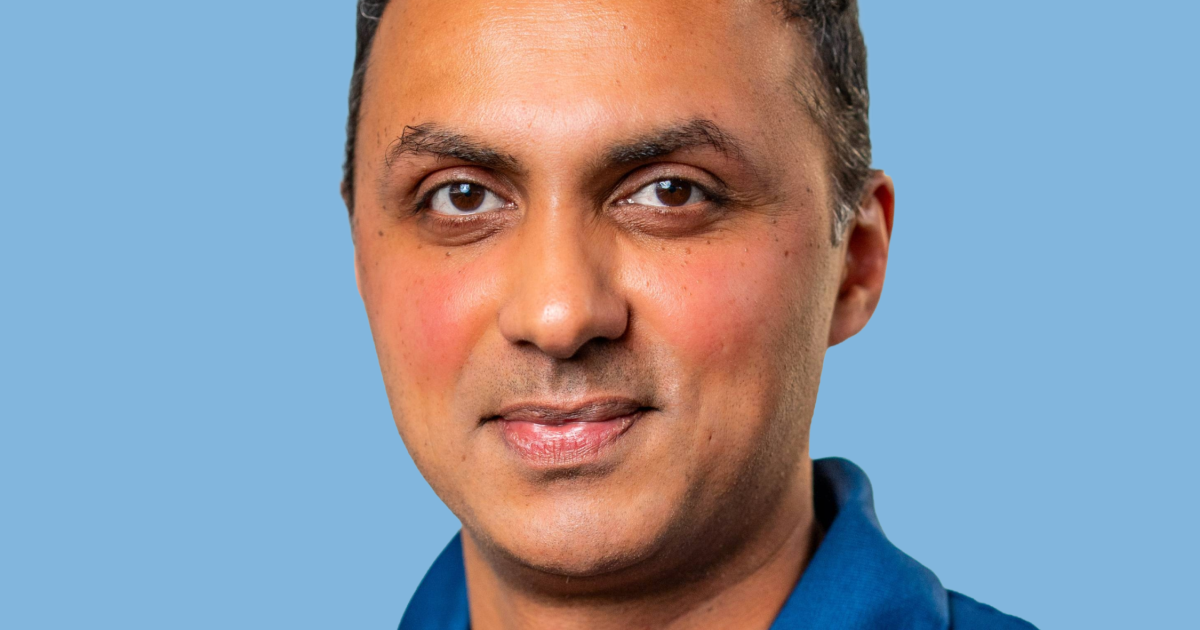
Dark Matter Technologies' new CEO says acquisitions are going to play a vital role in his company's future.
Former chief technology officer at the company, Vikas Rao, took over as the mortgage software company's chief executive this month in an
A veteran of technology circles for decades, Rao's background in mortgage dates back to the Ellie Mae era, where he was a key member of the team involved with managing the company's Encompass loan-origination system before its sale to Intercontinental Exchange in 2020.
Five years later, Rao returned to the mortgage industry, joining Dark Matter, the owner of Empower, an Encompass rival LOS. He now takes over the helm at the Jacksonville, Florida-based company, tasked with shaping its future fully around
At its recent Horizon user conference, Dark Matter rolled out the first of its anticipated AI upgrades, introducing an
This interview has been edited for length and clarity.
How have staff and business partners reacted to the changes at Dark Matter in your initial conversations with them?
Rao: In the last two years that I've been here at Dark Matter, I've had the opportunity to work really closely with a number of our customers. I've interacted very closely with them, and they've seen me kind of lead the strategic direction and the shift in strategy that we have undergone. So from a customer and partner perspective, this was very positive.
We just came out of our Horizon conference. As we shared our direction with our customers, the overwhelming response was, "I want that. How quickly can we have that?"
Internally, the decision to put me in charge was largely driven by that, and also externally, our customers now feel like the person who I've seen, share and deliver that straight AI-first strategy is the person empowered to lead their primary technology provider into the future.
Where will Dark Matter be in a year? Five years?
Rao: We shared our roadmap with our customers at Horizon. Every year, we make a commitment to our customers. We strive really hard to stay true to that word.
We told our customers every one of their users will have an AI agent assistant within Empower. That will be a game changer, so we're going to launch those AI agent assistants, and it'll be a significant shift for the industry.
When you look longer term, build, buy, partner becomes much more prevalent. Buying other complementary businesses is a big part of that strategy for us. There's a number of technology providers in this mortgage space — sometimes they struggle to have the level of distribution they need, which could be significantly different if they were part of an organization like ours with the tremendous customer base that we have.
Mergers and acquisitions are one of my key mandates over the next many years
Ask Aiva is a priority, but in what other products or processes will your customers see you trying to apply AI?
Rao: What we're adding will be AI agents right within our entire suite of products. So there will be AI agent assistants within Empower. That will be the next evolution of what Ask Aiva will be, where it doesn't just answer questions, but you
In addition to that, we're going to have a number of agents across our other products — agents that help a borrower as they complete a loan application or work tasks. Homebuying can be a very complex process, especially for young, first-time homebuyers who are already tech forward, so these agents in the point of sale — as well as our loan origination system, our servicing platform, across the board — become assistants to these tech-forward yet mortgage-nervous buyers. We feel it's going to drive a lot of value and move us forward and differentiate us from everybody else out there.
A lot of others are doing similar things, but within point solutions. What we are doing is doing this comprehensively across the full suite, so that the lender can take full advantage.
What questions does the mortgage industry still have about AI generally?
Rao: Something that is on a lot of people's minds — "I see how AI works when I use ChatGPT or whatever, what does this mean in mortgage?"
This is where we're trying to be their AI technology provider, but also their advisor and guide, helping them adopt AI and roll it out effectively internally.
I think a big part of what people often ask is how their data will be used. We've taken a very clear approach right from the get-go, where no customers PII [personal identifiable information] would ever be used to train models. Data segregation is an important part of security, and making sure no PII ever gets used to train AI models — that's a question I often get.
The other really important thing they want to know is, "If I let AI do certain things, how do I know what was done? How do I measure the quality? How do I review it?"
The explainability of AI is extremely important because fuzzy outcomes, which cannot be explained is terrible. AI can do cool things, but if you can't explain how AI did it, it doesn't fit within mortgage.
It's
Is that where the primary hesitation is, or does cost still present an obstacle for some?
Rao: I don't think it's cost or doubt. I think the biggest thing is change management.
Because in mortgage, we have such a wealth of experience, people who have done things for over 20 years a certain way, and now AI is doing what they were doing. They're not going to embrace that overnight. Helping them embrace that change, helping them understand how AI came up with that income calculation, the explainability is extremely important.
I think the user interface and the intuitiveness and the ability for them to check becomes really important. We're putting so much more thought into the user interface because when they can see it all happen, when they see everything they need in a contextual view, it just puts them at ease.
How ready is the industry for these changes?
Rao: I think the readiness varies across organizations. Even across the Dark Matter customer base, there are some who are embracing it very aggressively, and are seeing great results. There are others who aren't quite ready. Their organizations aren't ready yet to absorb so much change.
In the next year, I think the readiness across the board and the willingness will shift positively. I don't think this is a wave that can be resisted. Technology is going to get better. People's willingness will improve.
How does AI's rise compare to other trends you've seen?
Rao: I think AI is transformative. This is enabling things that we never thought possible.
I would say the last meaningful shift in the mortgage industry was the platform concept. As APIs became extremely important and available, people were able to automate a lot more of the work. Automation of manual tasks was the last innovation wave, if you will, in the mortgage industry,
Post 2015 is when all of this really accelerated, and that's also when I started working at Ellie Mae. That was a great trend, and it really moved the industry forward. Now AI is enabling that kind of mimicking of human judgment, which opens up completely new possibilities. It's complementary to automation. It still has value, but AI takes it further.