
- What's at Stake: Sustaining high operational overhead if mortgage servicers fail to automate semi-manual processes.
- Supporting Data: 16 million loans currently processed on Sagent's mortgage servicing platform.
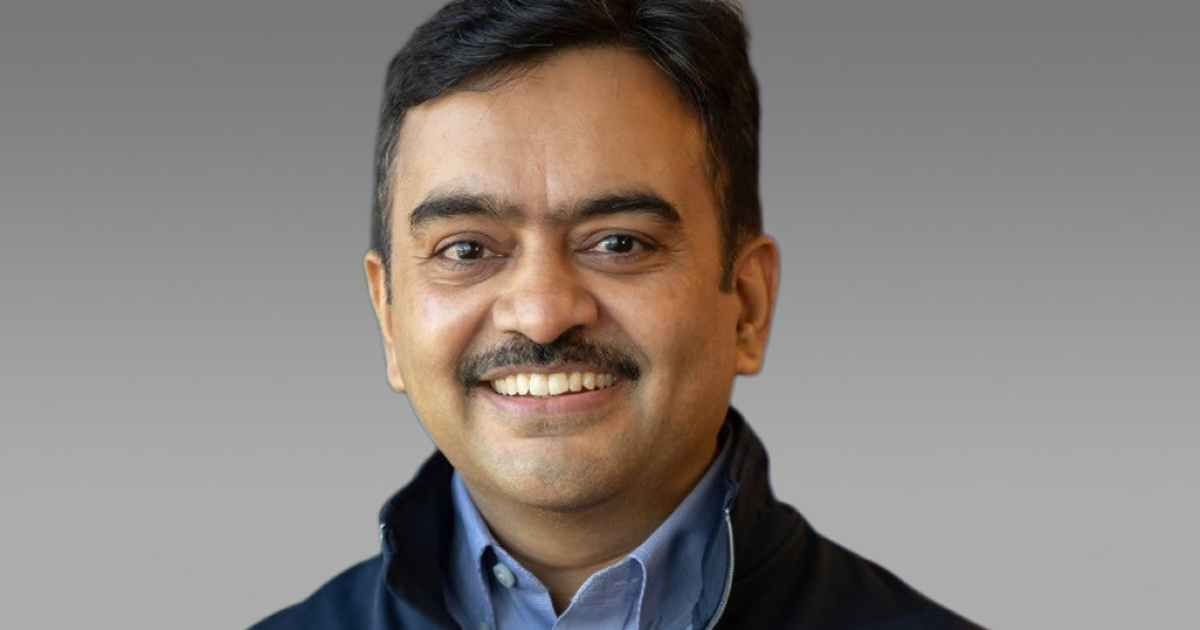
Sridhar Sharma,
That pitch puts Sagent at the center of a competition among servicing and origination software vendors to win new business by showing their AI capabilities, a contest expected to continue into 2027.
Previously the chief innovation and digital officer at Mr. Cooper prior to its merger with Rocket Cos., Sharma had held the title of president at Sagent for over a year before his promotion. He is betting that Dara's agentic AI, built from the ground up, will help the company shed its legacy image. Sagent already has close to 16 million loans on its existing platform.
Once a unit of payments giant Fiserv, the Sagent of today emerged after the sale of the company in 2018, with Warburg Pincus taking a majority ownership stake, to forge a new brand identity. A few years later, Mr. Cooper also took a 20% stake in Sagent, which Rocket maintains.
"We believe Sagent is one of the most AI forward companies in our portfolio, which we think means something," said Alex Stratoudakis, managing director at Warburg Pincus. "Warburg has actually been investing in technology and software for 60 years"
The mortgage industry is increasingly
In a recent interview with National Mortgage News, Sharma and Stratoudakis shared their views about AI readiness within home lending, the current status and future goals for Dara and other challenges and opportunities that await Sagent in a fast-changing business market.
Questions and responses have been edited and condensed for clarity and length.
On marketing Sagent today and efforts to showcase the company's artificial intelligence expertise
Sharma: A big part of my focus is to address that legacy perception. Yes, Sagent is a longtime player in this industry, Sagent does have a platform that current customers are running on, but my focus is very clearly to bring our Dara platform — which has been built ground up, which is AI native — to the industry.
Dara is very clearly the focus for the future. Through this process, my goal is to keep dispelling that legacy — let's call it nomenclature — for what it's worth.
We have close to 16 million loans on our platform right now, and we've been doing this for a while. We have a lot of battle scars. We have a lot of experience in knowing exactly where servicer pain points are, and that is what Dara has been built to help alleviate.
A lot of this is not just the technology; it's also the process. Dara is designed to materially give servicers a lift, 2X to 4X, not 20 to 30%. That's how defining this technology platform is.
What mortgage servicers can expect from Dara
Sharma: I have cut my teeth with Mr. Cooper over 10 years helping build scale. I'm very familiar with the bottleneck servicers face. The cost of servicing is a big deal.
We all know that, and Dara — with its AI agentic technology — we want to push the industry to evolve with us. This is where I was talking about 2X to 4X lift in their cost to service. The platform obviously brings a lot of automation.
We are also seeing some of our customers in various stages of their AI journey. We are prepared, and the platform is designed to meet them where they are. A mature customer that's well on their way on their agentic AI journey — we have a capability for them to bring their own agents, where we will expose Dara's agentic core to the customer,
For other customers that are still dabbling, we are able to help rewrite their processes for the agentic AI experience, so they can cut out a lot of the fragmentation and a lot of the semi-manual processes.
We have a catalog of AI agents that they can use out of the box. As we continue to do this with agentic AI, the workflow is able to bridge a lot of the fragmentation that you see inside servicers.
Next, it's automatically going to help them win in the recapture journey, which every servicer and originator is focused on right now. So a big part of what Dara is able to do is bring down cost of compliance, cost of servicing, and give them real-time insights through agentic AI for them to recapture even better. That's what we are on the journey for.
The customer concerns about Sagent's relationship with Rocket
Sharma: The question does come up, and we have nothing to hide. Dara is designed to be a neutral platform.
We address that by having a very open conversation. We can actually show not just the talk, the clean separation in the architecture with respect to data, with respect to processes, even the agents. The agents I create for customer A and the agents I create and train for customer B may not look the same, and that's OK. We keep them separate. What is common is the underlying services.
We address that at one level with the architecture. Even our teams — we have forward-deployed teams that work with a customer, and they are focused on that customer.
Stratoudakis: Just like in any software company, we don't allow customer A to see what customer B, C and D are doing. Further, at the board level, there's appropriate governance in place.
The comfort level customers have with adapting to AI
Sharma: The customers that are going live now, two are actually net new, and two are coming over from a legacy platform.
The challenges on both are kind of similar, because no matter where they're coming from, they're coming from a flavor of a legacy process that has been built over years.
I use this phrase all the time with my technology team: you have to be able to learn and unlearn really fast. If you can't unlearn, and you're stuck, even as a technologist, you fall behind. This unlearning process is, I'll say, the challenge.
Implementations are hard. No question, we have made the technology very intuitive, very easy to use. Having said that, once you go a level deeper, there's a lot of entrenched processes, and a lot of it is batch centric, and there are vendor integrations and so on. That takes a little time. What we are doing there is having cut our teeth through this, we are bringing adapters and patterns. We're telling them, "Watch for these patterns," so we can work together to redesign them.
Part of our playbook is agentic AI is here. We are going to give it to you. We're going to enable it. However, you control the stops.
The difference in AI comfort levels among certain businesses or professionals
Sharma: If I take banks who are also servicers, you get a different behavior. You go to an IMB that's also a servicer. You get a different behavior.
Banks — more conservative. IMBs — they are a little more open to push the technology farther along if that makes sense.
Compliance and risk come up in every single conversation. We are able to configure it so they feel like they have the control. While it does 90% of the work, they still can check and approve. Those controls are helpful in easing the process, but it'll take time for people to get comfortable with it.
I would say this is my view, and I'll give you my perspective. I think CEOs right now have a bit of FOMO. They have this fear of missing out. If they're not on the AI bandwagon, they feel like they're feeling left behind, and therefore, they're coming out more in favor. If they're concerned, I think they're letting their risk and compliance team act at their behest to go double check, you know, dot the I's and cross the T's.
The value of appointing a tech expert to lead companies like Sagent
Stratoudakis: We're observing a strong correlation between a CEO that has CTO priors like Shridhar and AI success, so it's logical. If we found a chief revenue officer and said, "Become the CEO and lead us through AI," — good luck. I'd much rather have Shridhar, and I think that's notable.
In my view, generative AI helps you do the work, whereas agentic AI actually does the work, and we have agentic AI in Dara. That's what Sridhar has built.
Dara is brand new. All of the code, the product named Dara is brand new and has been kind of completely reimagined with agentic workflows and everything else, while also deeply acknowledging he understands how mortgage servicing works in depth. He was the customer at Cooper, and so he understands what needs to kind of be to enable the customer to get material value from the agent.