- Key takeaway: Federal Reserve Gov. Christopher Waller said he wants to consolidate the corporate functions of the 12 regional banks under one structure and create a role to oversee them.
- Expert quote: "Autonomy is a virtue, but not when it produces costly duplication that serves no one. We owe this to the American people we serve. " —Federal Reserve Gov. Christopher Waller
- What's at stake: Fed Gov. Waller argues that technological changes taking hold should incentivize the central bank to move quickly to modernize and manage risks, including cybersecurity threats.
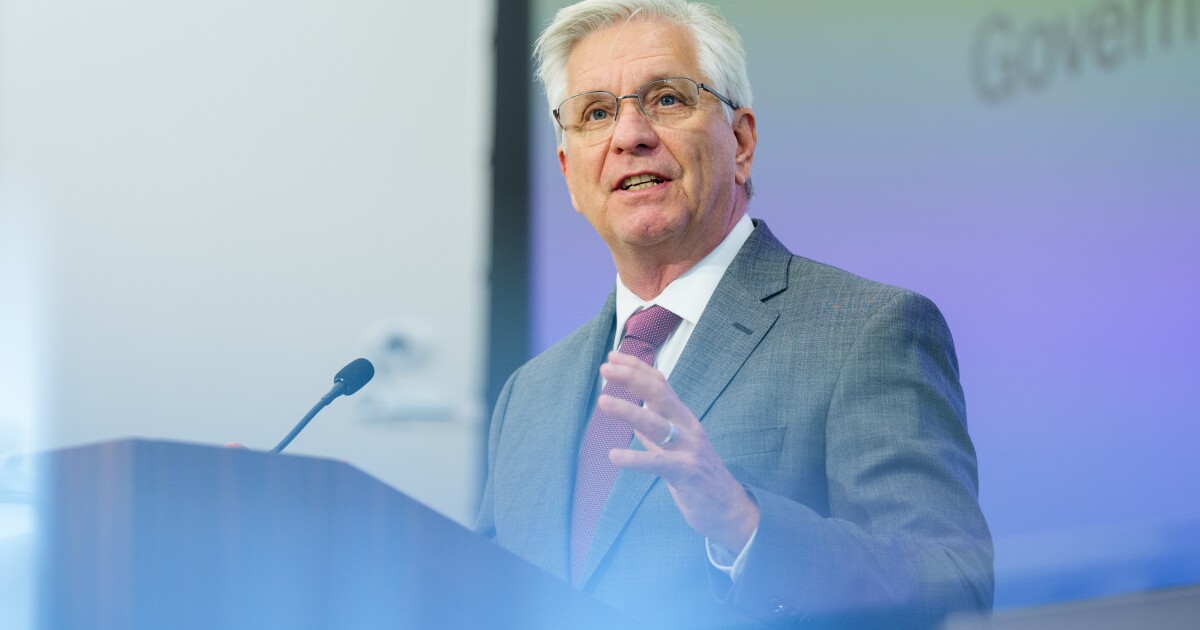
Federal Reserve Gov. Christopher Waller said Tuesday that some functions of the 12 regional reserve banks could be consolidated to streamline operations and save taxpayer money.Speaking at the Brookings Institution, Waller said each reserve bank currently runs its own corporate functions — including information technology, human resources, finance and procurement — and that there is "significant opportunity for improvement" by grouping them under one structure.
"In my view, we have reached a point where we need to better exploit the efficiency and risk-reduction benefits of standardizing and probably centrally leading all of these functions," Waller said.
Waller said he envisions a new role at the Fed being created for someone who will be in charge of consolidating and overseeing the corporate functions of the 12 regional banks. He said the position would report to the Fed's Board of Governors.
"That leader sets standards, makes enterprise-wide decisions, manages vendors, and is accountable for performance across all 12 districts," Waller said. "Local staff remain in place but operate within a unified framework rather than 12 separate ones."
Waller said functions that do not need to be local — such as HR administration, payroll, finance and accounting, procurement and some IT operations — could also be concentrated in a small number of operations centers in lower-cost cities or areas with specialized labor. He added that some activities could be outsourced if it would reduce costs.
He said consolidating those operations would lower costs, reduce risk and generate "greater savings for the American taxpayer."
"With these functions, our philosophy must be 'system first, bank second,'" Waller said.
"Autonomy is a virtue — but not when it produces costly duplication that serves no one. We owe this to the American people we serve."
In a Q&A session following his speech, Waller said the Fed plans to reduce the roughly 20,000 employees across the 12 reserve banks by 10% in the next two years and that the proposed consolidation of corporate functions could affect staffing, though it may also allow employees to shift to other roles.
"That doesn't mean those people don't get repurposed for something else more valuable," Waller said. "If you freed them up, you could do more stuff. We've got the funds and the talent to go rebuild all the tech debt we have rewriting software in all of our older systems. We now have the people and the talent."
Waller said his proposed idea would not change the number of reserve banks or the role of regional bank presidents in setting monetary policy.
"I see no reason to reduce the number of reserve banks or alter their geographic boundaries," said Waller. "Each bank president still has an independent voice at the FOMC on the appropriate course of monetary policy and that should continue."
He said regional bank presidents remain closely connected to their communities, engaging with business, financial and nonprofit groups to understand local economic conditions, work he called "enormously valuable" to the Fed's mission.
Questions about the autonomy of the Federal Reserve's regional banks intensified in late 2025, as expectations grew that the reappointment of regional bank presidents could
Still, the issue has not disappeared.
"The chair and the board have the final say on who the regional bank boards can select," Bessent said in December. "So I am going to start advocating — going forward, not retroactively — that regional Fed presidents must have lived in their district for at least three years."
Kevin Warsh, who is President Donald Trump's nominee to be the next Fed chair,
"Senator, I meant policy regime change," Warsh said, responding to a question from Sen. Lisa Blunt Rochester, D-Del.