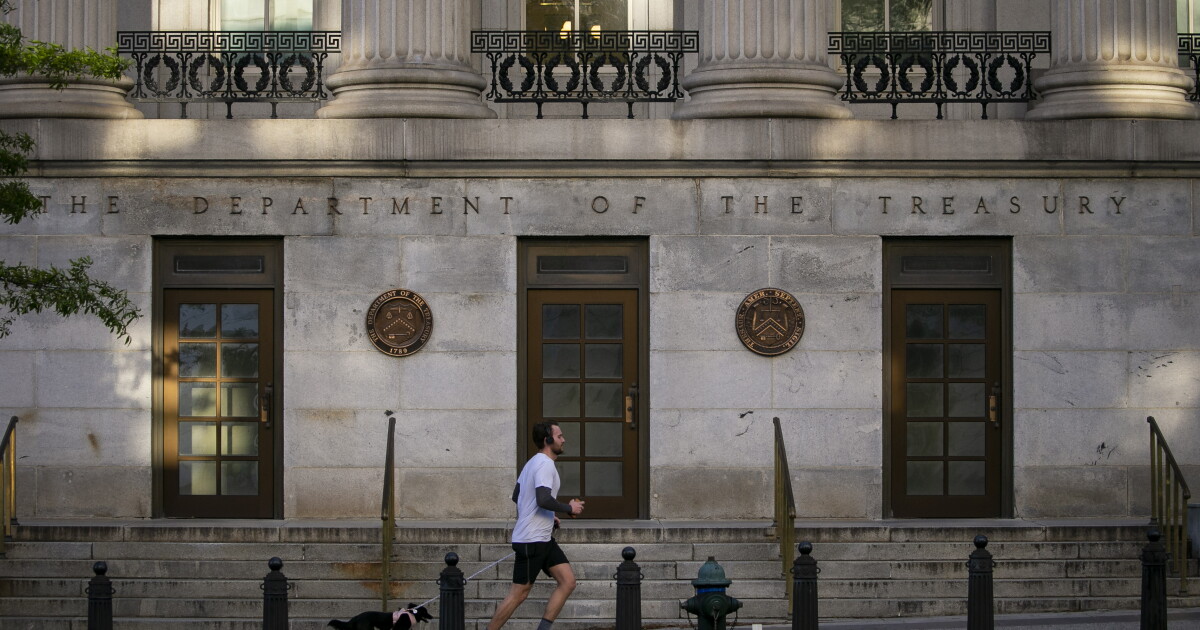
- Key insight: The Trump administration would violate an existing court order if it allows the CFPB to run out of funding by declining to request money from the Federal Reserve.
- Supporting data: The Judge held that the Dodd-Frank Act requires the CFPB to request funding from the Fed's "combined earnings," even when the Fed's expenses exceed income.
- Forward look: The decision disrupts one of the administration's clearest paths to shutting down the CFPB just a day before the administration said it would exhaust funds.
A district court judge Tuesday ruled the Trump administration may not allow the Consumer Financial Protection Bureau to run out of funding, rejecting the Justice Department's argument that no funds were legally available, a day before the agency was set to run out of funding.
U.S. District Judge Amy Berman Jackson's ruling compels the CFPB to continue requesting funding from the Federal Reserve's total net income, even in instances where the central bank's income is in the red, citing the Dodd-Frank Act, which mandated such a funding mechanism and the need for the agency to fulfill its statutory remit.
"The statutory text of the Dodd Frank Act … prescribes a process through which the CFPB is to request the funding it needs to carry out the mission it was assigned by Congress, and the Federal Reserve must provide that funding from its 'combined earnings,'" Judge Jackson wrote. "This process has unfolded seamlessly since the Bureau was established in 2011, even in the years since 2022 when the Federal Reserve's interest expenses have exceeded its earnings."
The ruling upends one of the Trump administration's latest tactics for shuttering the CFPB. The DOJ's Office of Legal Counsel opinion issued in November argued the CFPB cannot legally request funds from the Fed when the central bank operates at a loss. Acting CFPB Chief Russell Vought has cited the memo to argue he is unable to request funding for the agency because of the unprofitable nature of the Fed, though former Fed officials
The decision comes just one day before CFPB officials said the agency's funds would be depleted, though it's not yet clear what will come as Vought is now required to request funding.
Judge Jackson characterized the administration's funding argument as a manufactured crisis.
"The claimed 'lapse' in funding, which was manufactured by the defendants based solely on the OLC memo, is not a valid justification for the agency's unilateral decision to abandon its obligations under the injunction," the judge continued. "Neither the statute, the injunction, nor the Fed's willingness to pay has changed; the only new circumstance is the administration's determination to eliminate an agency created by Congress with the stroke of pen, even while the matter is before the Court of Appeals."
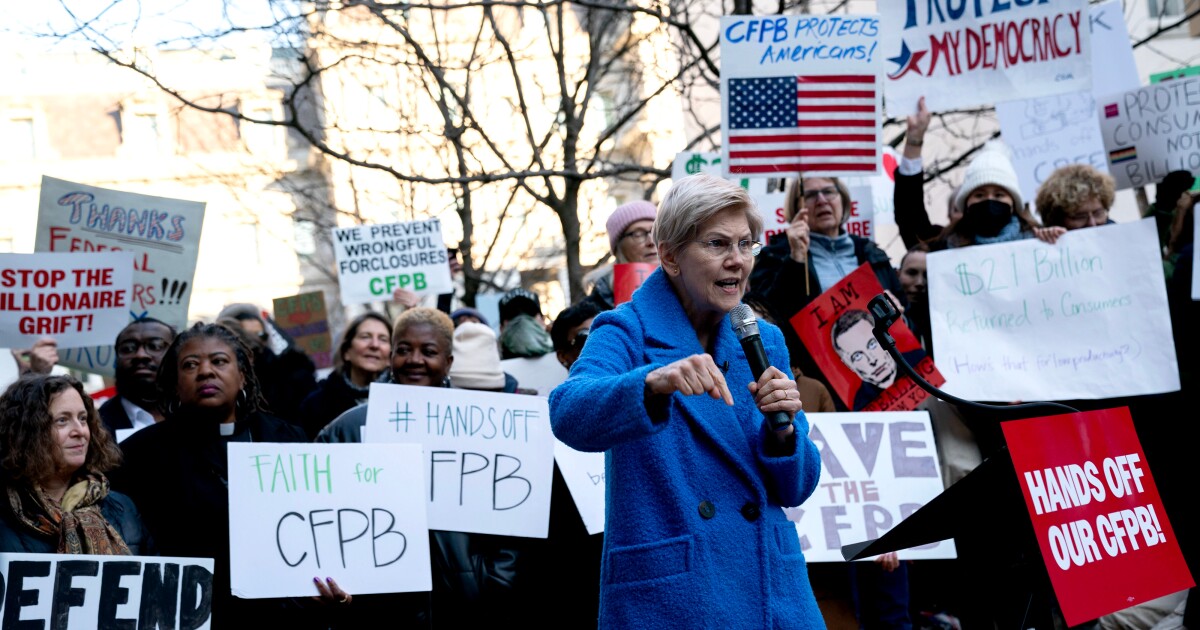
Sen. Elizabeth Warren, D-Mass., who first came up with the idea for the CFPB, applauded the decision, criticizing what she saw as a shoddy legal argument that would ultimately shutter an agency that has helped average Americans.
"Today, a federal court rejected the Trump Administration's most recent, ridiculous attempt to starve the Consumer Financial Protection Bureau of funding," Warren wrote. "If courts continue to uphold the law, they'll keep blocking Russ Vought's illegal attempts to 'close down' the agency that has returned $21 billion directly to Americans who were cheated by big banks and giant corporations."
The fight in the case, National Treasury Employees Union v. Vought, is ultimately about separation of powers, centering around whether an administration can shutter entire agencies explicitly created by Congress.
Judge Jackson first enjoined the administration in March, blocking attempted mass firings, ordering the reinstatement of terminated employees, and the preservation of contracts and records. A panel of the U.S. Court of Appeals for the D.C. Circuit ruled against the injunction in August, reopening the path to firings, but the full federal appeals court in Washington later said it would review the panel's decision, putting the firings on hold.