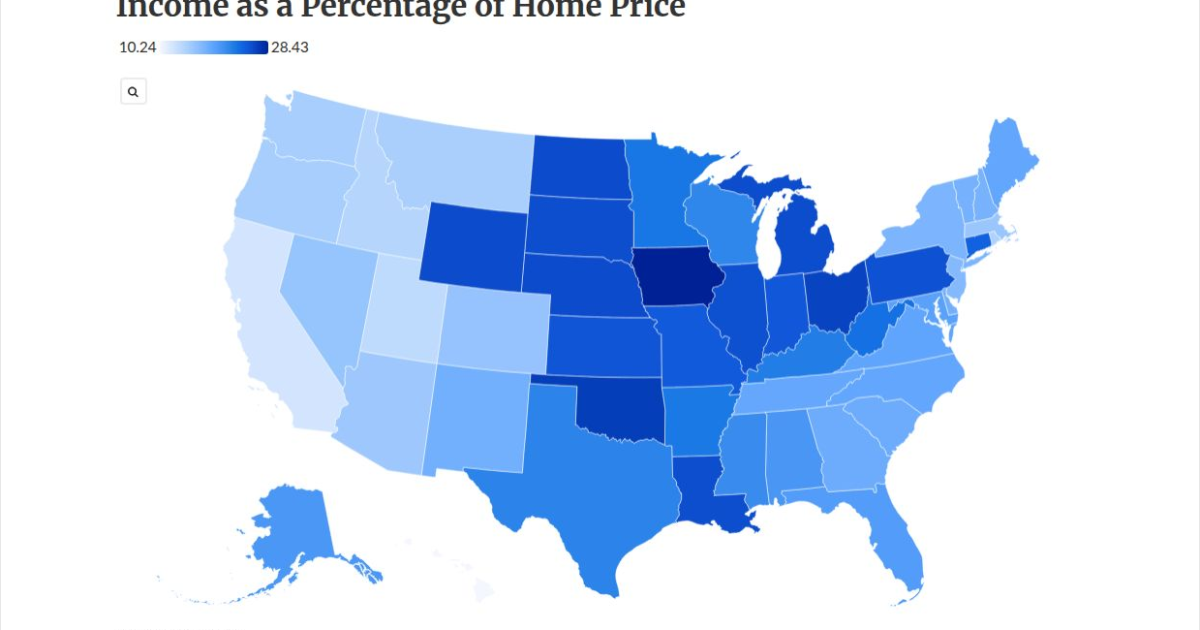
Even though housing prices have stabilized since the pandemic, homeownership is more difficult in some states than others.
Hawaii, California and Utah have the highest median sale price to personal income ratios, making them some of the least affordable markets in May, according to a report by BestBrokers. In Midwestern and Southern states like Iowa, Oklahoma and Ohio, the ratio is lower, with home prices around three times annual income.
Home prices increased dramatically during the pandemic from a bottleneck of supply and below 3% interest rates. The past two years have seen the complete opposite in many markets, as
"The middle upper class and upper class continue to increase their wealth, and the middle class and lower income are getting poorer," said
Even if the selling prices of homes aren't necessarily crashing,
How jobs and incomes impact housing demand
Incomes rose just over 1% in Mid-Atlantic and Southeast states like Delaware, Maryland, as well as the District of Columbia, in the first quarter of 2026. The slow earnings growth in these states, which have some of the most expensive housing in the nation, tightens the pool of individuals who can realistically consider homeownership. In Hawaii and California, almost 10 years of annual income is needed to buy a median priced home in 2026.
"Every increase in home prices asks households to dedicate more years of their lives to reaching the same milestone," said Alan Goldberg, lead data analyst at BestBrokers in a press release.
While some states are more affordable, home prices remain historically high relative to incomes, on top of the current mid-6% interest rate that is not expected to come down soon if the Fed decides to keep steady.
"With war and a high CPI number, I think you're going to see notes come out that are going to be neither dovish or hawkish," said Geertsema, referring to the Consumer Price Index, a key inflation indicator.
The economy also added
Inflation persists
Still, high job growth and wage increases generally are not addressing the affordability gap that has built up over the past decade, according to the Best Brokers report.
Home prices and the
In states like Hawaii, where the median home is $750,000 while per capita income is $76,797, any gains in income are a wash.