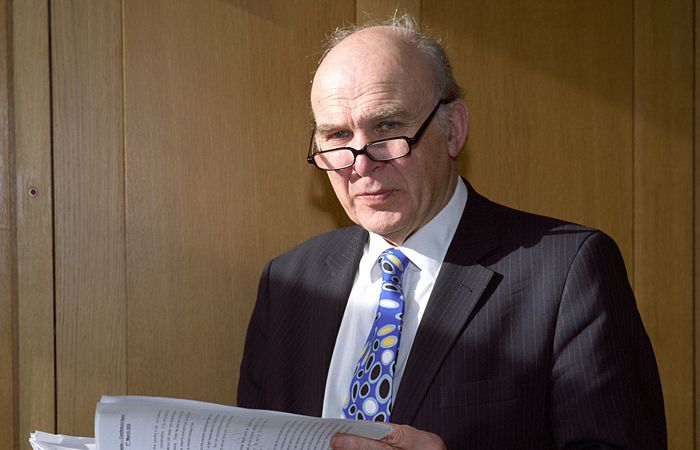
The Office for Budget Responsibility (OBR) should assess every Budget measure for its impact on the housing market, according to an independent committee chaired by Sir Vince Cable.
In its latest assessment of the government’s housing policy and delivery, the Housing Policy and Delivery Oversight Committee has called for a series of measures to boost housebuilding, improve the movement of people through the housing market and reduce barriers facing smaller developers.
The committee said the OBR should ensure government Budget policies do not undermine housebuilding and housing transactions.
The committee’s recommendations include giving the OBR a formal role in assessing the housing implications of Budget decisions, reforming planning requirements for smaller developments, revisiting stamp duty and abolishing VAT on household extensions and refurbishment projects.
The committee also warned that the government is falling further behind its ambition to build 1.5 million new homes by the end of the parliamentary term, with its latest research suggesting the target will not be met.
Sir Vince said housing played a central role in economic growth and argued that government decisions on taxation, regulation and public spending should be assessed in terms of their wider effects on the market.
“Housing can be a tremendous engine for growth in the economy, and we support all efforts to improve quality and delivery,” he said.
“In fact, it is integral to so many aspects of the economy that we believe it would be helpful for any budgetary measure to be assessed for impact on the market. The OBR is a natural place for that to happen.”
The committee expressed general support for the government’s proposed Your First Home initiative, with further details expected in the Budget on 28 October.
Potential measures include price caps and the level of contributions required from housebuilders. The committee said there was a case for reducing the contribution expected from small and medium-sized enterprises (SMEs).
However, it warned that delays in establishing the scheme could disrupt the market if prospective first-time buyers postpone purchases while waiting for the initiative to become available.
Sir Vince said the application process needed to be operational as soon as possible to minimise the risk of transactions being deferred.
He also highlighted the challenge of introducing a new digital system, contrasting it with the previous Help to Buy scheme, which operated through an analogue system.
“The Your First Home initiative can be a stimulus to the market and encourage builders to accelerate developments,” he said. “They need certainty and simplicity, and we hope the Budget will fill in some missing details.”
He added that, although he had previously opposed Help to Buy policies, he believed the new proposals could stimulate additional housebuilding without creating inflation.
The committee said changes to the planning and building regulatory regimes had made development more difficult, particularly for smaller builders with limited resources.
While acknowledging that many reforms were necessary following the Grenfell Tower tragedy, it argued that a uniform approach to regulation could impose disproportionate burdens on smaller sites.
The committee called for consideration of exemptions from some of the more onerous non-safety-related requirements for smaller developments, while maintaining essential safety standards.
It said a more proportionate approach could help smaller builders deliver homes and allow planning officers to devote more time to larger applications.
Sir Vince said the full effects of planning reform were likely to take more than one parliamentary term to work through, but the immediate impact was making SME developments increasingly difficult.
“This concentrates activity in the major housebuilders,” he said.
“Work should identify small developments with less onerous, non-safety-related requirements, to encourage the SME sector. That would also free up planning officers to concentrate on larger developments, leading to swifter decisions.”
On taxation, the committee urged the Chancellor to reconsider stamp duty land tax, arguing that the current system discourages people from moving home and restricts activity across the wider economy.
Its preferred option is to reinstate the stamp duty holiday introduced during the Covid pandemic, which raised the threshold at which the tax became payable to £500,000.
The committee argued that the temporary measure helped keep the housing market moving and generated economic activity across a range of sectors, potentially offsetting much of the tax revenue forgone.
Sir Vince cited evidence from the London School of Economics, referenced in a report available through the Family Building Society, which he said indicated that the holiday generated almost as much tax revenue as was lost through the reduction in stamp duty receipts.
He called on the Treasury to look beyond the immediate effect of tax changes on government revenue and consider their consequences for the wider economy.
An alternative proposal would exempt first-time buyers and people downsizing from stamp duty. The committee said this could encourage people to move, releasing existing homes for others, but warned that such a system would be more complex to administer.
The committee also recommended abolishing VAT on household extensions and refurbishment projects, bringing the tax treatment of improvements into line with new-build housing.
It argued that the change could encourage investment in existing properties and support economic activity in the construction sector.
Sir Vince said the proposed measures could work together to increase housebuilding while making better use of existing housing stock.
“These measures could all help to boost housebuilding and free up existing stock,” he said.
The committee’s warning that the government is unlikely to achieve its 1.5 million-home ambition is set out in a separate summary prepared by planning expert Kelvin MacDonald, an adviser to various parliamentary committees.
The committee said its recommendations were intended to support both new housing supply and a more efficient housing market, with the forthcoming Budget providing an opportunity to address barriers to delivery.
The independent Housing Policy and Delivery Oversight Committee is funded by the Family Building Society to research and deepen understanding of the UK housing market.
The committee is chaired by Sir Vince Cable. Its other members are:
- Mark Bogard, chief executive of the Family Building Society.
- The Rt Hon Damian Green, chair of the Social Care Foundation.
- Sarah Harrison, chief executive of the Building Societies Association.
- Neil Jefferson, chief executive of the Home Builders Federation.
- Vicky Pryce, chief economic adviser at the Centre for Economics and Business Research.
- Ingrid Schroder, director of the Architectural Association School of Architecture.
- Maya Singer Hobbs, senior research fellow at IPPR.
- Professor Tony Travers, director of LSE London.