Freddie Mac has laid the groundwork for some new distressed single-family mortgage procedures as part of its
The government-sponsored enterprise, which is one of two that buy a large number of the
Freddie plans to set up some functions to support the transition away from monthly default reporting with some limited updates set to become available starting on Nov. 16. Mortgage businesses it works with can opt to start moving away from monthly reporting then.
Instead of reporting monthly, servicers will need to record certain default-related events as they happen by Sept. 27, 2027.
"These events are intended to provide Freddie Mac with more timely, granular and actionable information about loan status and default related activity," Mike Reynolds, senior vice president and head of servicing, said a bulletin announcing the timeline for the change.
Increased detail on small share of loans
The triggering events servicers will need to report on are numerous, but because recently numbers show less than 1% of single-family loans sold to Freddie head down the road that leads to default, the new reporting required will likely be limited.
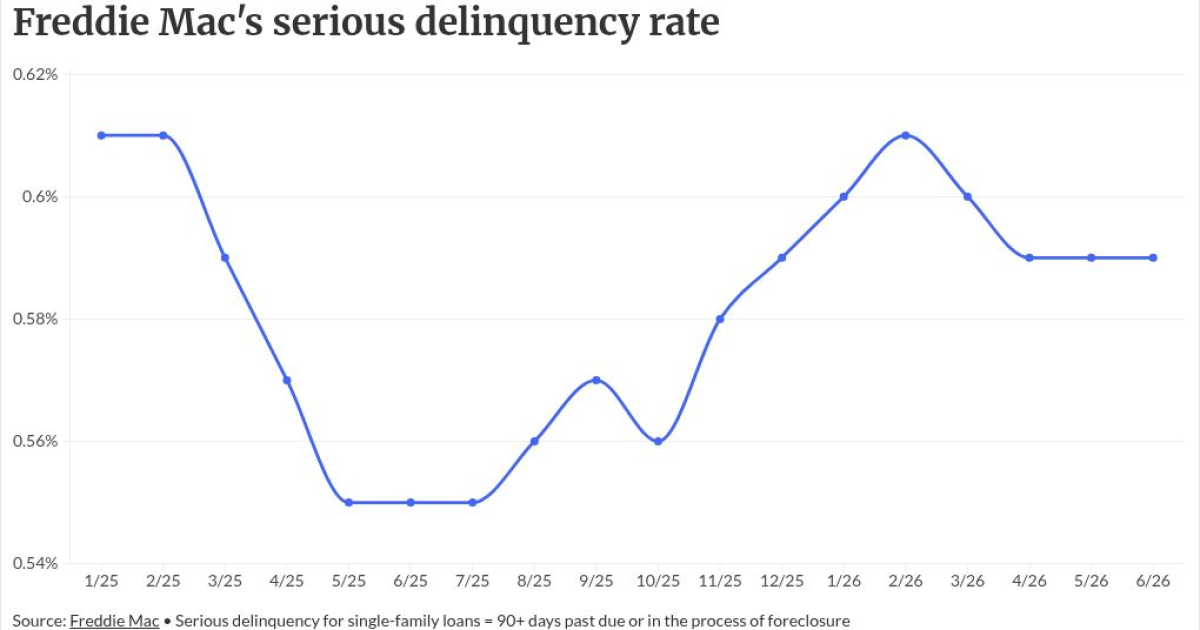
While seasonal improvement during the period when borrowers receive tax refunds this year hasn't lowered the enterprise's serious delinquencies quite as much as it did in 2025 the difference this year is relatively small.
Freddie's serious delinquency rate was 0.59% last month compared to 0.55% at the same time last year.
However, some experts examining Freddie Mac's recent numbers in conjunctions with broader economic indicators like high debt levels have said that they may mean more
The highest Freddie's serious delinquency rate has gotten in recent history was 4.2%, and that number hasn't been seen since the housing crash that drove the GSEs into conservatorship in 2008. During the pandemic in 2020, Freddie's serious delinquency rate rose to 3.17%.
The enterprise has said that one aim of its plan to modernize servicing procedures has been to identity and mitigate concerns earlier than it has in the past.
What actions will trigger reporting
Freddie will be requiring servicers to engage in the following types of event-based reporting:
- Borrower outreach efforts: unsuccessful attempts, right party contact and
quality RPC with follow-through discussions around repayment hurdles and potential remedies
- Collections notifications: When servicers send payment reminder or default notices, letters asking borrowers in arrears to discuss possible aid or formal packages of information about assistance
- Loss mitigation: Any time servicers receive completed assistance packages, money sent on time during a trial period for assistance on under the terms of a repayment plan
- Foreclosure actions: Attorney referrals, first legal actions such as default notices, when lienholders have been served with information the start of proceedings, court-issued final judgments, changes in the status of a sale, holds and terminations
- Bankruptcy: Filings for borrower protection including those under chapters 11, 12 or 13, proof of claim for mortgage debt filed with a court, motion for relief in an active bankruptcy, a result update or delay notifications related to proceedings
- Other events: litigation, government seizures, probate, title concerns, borrowers involved in active military service, and changes to the property's condition or occupancy.
Freddie Mac recommended servicers prepare for the new daily reporting of events by starting to assess how monthly procedures can be adapted for the new requirements in a process involving an inventory of data sources and evaluation of integration strategies.
Additional GSE updates
Freddie Mac also announced loan-level investor reporting should be done in line with new requirements that become mandatory Feb. 1, 2027 as soon is practicable.
The new daily reporting must be processed by 3:45 a.m Eastern time or earlier and revisions such as payments received after the principal and interest determination date have to be made by 10:45 p.m. Eastern one business day after calendar month ends.
Separately, Fannie Mae announced that it plans to add secure technology for wire transfers that can occur without manual significant by the end of the third quarter.