One of 2026's latest acquisition deals involves two companies eyeing growth — one through addition and the other via the sale of assets, allowing it to focus on its core mission since inception.
The May deal between
In the new agreement, Carrington takes over a portfolio, consisting primarily of conventional Fannie Mae and Freddie Mac loans serviced or subserviced by Valon. For Carrington, the move also represents the second major deal in the last 12 months
The agreement is another feather in the cap for Valon in 2026, but it also initially raised questions among industry watchers about what was bought and sold and whether it might impact existing relationships with any owners, namely, Rithm Capital, parent of Newrez, which
Meanwhile, Valon remains as a standalone technology platform. With Carrington, known for its strengths as a Ginnie Mae servicer, joining Newrez as a notable new client this year, Valon's leaders feel they may have come upon the formula to displace the status quo in this particular segment of the mortgage industry.
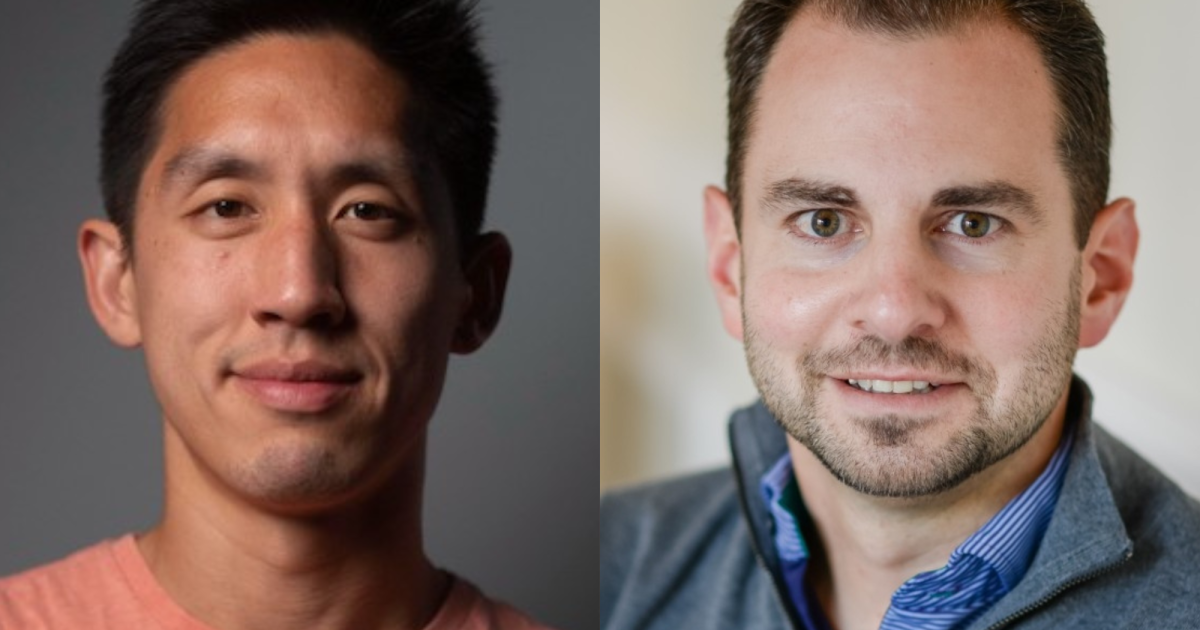
In a conversation at the recent Mortgage Bankers Association conference in New York, Andrew Wang and Andrew Taffet, CEOs of both Valon and Carrington Cos. spoke about how the deal benefits both companies, whether they change existing agreements and what changes they see to servicing with AI in the background.
This interview has been edited for clarity and length.
On Valon's decision to sell off its servicing book and focus on technology
WANG: We started the company about seven years ago with a very simple premise, which is if you build a single source-of-truth system, vertically integrated, you'll have much greater efficiencies. The question is how do you actually show that.
If you try to sell software on its own, it's actually quite challenging because there's such a broad and high ecosystem to build for. It was much more efficient for us to start as a servicer, and build our own software to figure out what you need to build and actually generate performance efficiencies.
When you think about just the absolute depth of complexity, arcane rules, everything that's in servicing, the only way you can actually say to someone with a straight face, 'I know what I'm doing,' is if you lived it and breathed it. People need to respect you as a fellow operator — obviously now a former operator — but that level of understanding is super critical.
I've read every single guide — Fannie, Freddie, Ginnie, the state regulations — and the reality is there's too much complexity hidden underneath that is not a deterministic answer you can derive from those guides. It is something you have to learn about through industry operations.
All of this was from the very beginning a plan to build software for the space, and seven years later, we're now at a place where we have enough traction, enough business, enough clarity into how we're going to build our business that we can finally get out of the first stage.
On Valon's current ownership structure and whether any stakeholder, such as Rithm, gets access to customer data
WANG: The whole point is we want neutrality. What we're doing here is to build software for the ecosystem. Nobody wants a single player controlled by any other player.
Valon Technologies is a venture-backed startup built to effectively build the vertically integrated servicing system for the ecosystem. The two main competitors in the space today, as everyone knows very well, are Black Knight's MSP [acquired by ICE Mortgage Technology in 2023] and Sagent's Dara.
We have a variety of institutional investors. Rithm is just one of them. There's no strategic with greater than 10% ownership. They were an early investor in the company and bought a huge percentage early on. They're good strategic partners and know their role.
They do not have control. That's a really important thing for everybody; it's a neutral company.
The biggest cap table owners are venture funds. The only people with greater than 10% are myself and venture-backed investors —
On Carrington's decision to pivot to a new platform
TAFFET: Andrew [Wang] and I met five years ago, and I think my first response was a servicing system change is a major project, and we're not going through one.
Then, over time, as we've seen what Andrew, [co-founder] Linda [Du] and the team have built out over at Valon Technologies, we've been extremely impressed, not just in the optics, not just in the functionality, but really in the speed to build.
We've been in this industry where there've been two players in the servicing tech space for 30 years, and finally you have this new company coming along that's looking to innovate and disrupt the space with faster speed to build, easier work streams for the employees of Carrington to actually service our customers.
We didn't just come to a conference and look at a demo. We've had our team in their shop for well over a year, going through various segments, from front-end collections to back-end claims and everything in between.
WANG: Carrington has been a really great partner for us because it really does two things for us.
It gets us out of the servicing space, which is important for us as a software company. We're not competitors with our software customers. But obviously, given their Ginnie expertise, there couldn't be a better partner for us in that regard.
On the process of transitioning to a new servicing platform
TAFFET: Upon closing, the [former] Valon mortgage assets will remain on the Valon OS, which is owned by Valon Technologies. The Carrington serviced loans will remain for the next 12 months on Sagent,
Once we work together over the next year or so and are comfortable that Valon OS is fully built out to handle the
What this Valon mortgage platform gives us is the ability to continue to grow and scale and get a great early look at the technology to train our customers early, and then also partner with Valon in building out the Ginnie Mae default capabilities to both of our standards.
Carrington is primarily a government servicer. We do service $15 billion to $20 billion of Fannie and Freddie assets, so it's not foreign to us. I think what's most important to us is gaining the trust of Andrew's existing clients and making sure they're comfortable post transition with our level of service.
On the current technology trajectory in servicing and where AI fits in its future
TAFFET: I think mortgage servicing is still a people business, and people are coming to you with either issues or just to talk to you about one of the biggest financial investments they have in their entire life. Having a person involved is extremely important for us, and it's extremely important for Valon as well. The AI component makes our job easier and more streamlined in providing that level of service to our customers.
We do many things very manually. The ability to take what should be very automated and more of a streamlined process will save our employees a ton of time in what they do on a daily basis, and that will allow them to speak to customers more if they have problems with their mortgage and focus on the core function of servicing.
WANG: We'd like to take credit for the tailwinds of AI in terms of what that means for the ecosystem, but the reality and the truth of the matter is it's been 30 years with two players. The existing systems were not only not built for the internet, they're definitely not built for AI. So there are a lot of flows that will be more efficient and much more quick to iterate on.
One simple way to look at this is the
Then, when it comes to something like AI, there's a lot of different ways to apply AI. You can apply AI very simply as a call center tool; you can apply AI as a back-office tool, where you're reading documents. If you have infrastructure that enables AI but allows you to put your own taste of AI, i.e. how you want to do it based on data from your people, that's the optimal setup rather than having every single servicer reinvent how that works.
AI is a good moment for everyone to re-evaluate. It will continue to improve and drive efficiencies. For a lot of servicers out there, I think the delta between what they think is possible and what they see today is normally quite narrow, but AI grew that dramatically. That starts conversations much more readily, because people think about it from such a large value-creation perspective that they're willing to engage and commit to a conversation.
What the latest asset acquisition says about Carrington's growth path after its 2025 expansion
TAFFET: We always view ourselves as an asset manager first, not necessarily a mortgage company. Through the asset manager, we interact with clients or investors that want exposure into the single-family residential space. We can provide the highest level of service through these various operating entities, whether that's servicing, lending, real estate services, title, escrow, you name it.
We focus on purchasing assets, client relationships and ultimately, our borrower relationships. That's where we're focused, and we'll let the pros focus on building out technology.
About future growth prospects for Valon
WANG: By having both Newrez and Carrington — and we have quite a few others behind that — it gives people comfort that there's a company they are all talking to that is conversing amongst all of them as well about what's the right standard, the right way to build and the right ultimate outcome for themselves, as well as the consumers that they serve.
There is, I think, a lot of value for the ecosystem in having a player who purely focuses on building better infrastructure for the space, keeping up with what's going on. There's obviously continuous changes from a regulatory perspective, but also from an agency perspective. Fannie, Freddie and Ginnie really require a technology company to evolve alongside it.