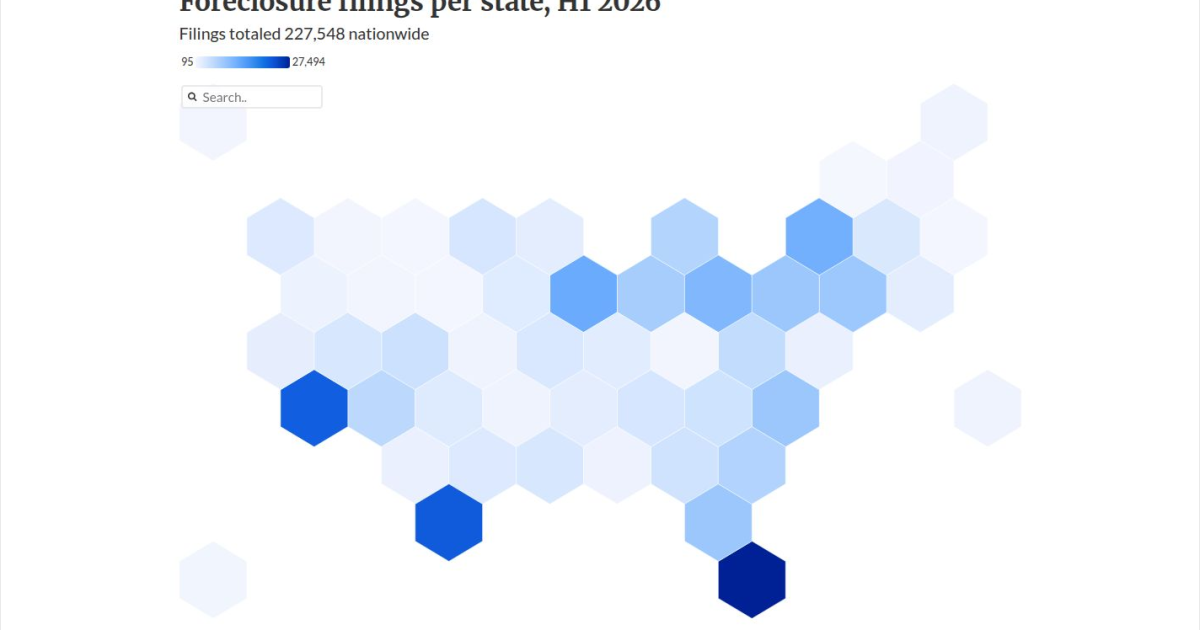
Foreclosure filings surged by more than 20% through the first half of 2026, with numbers reflecting a return to historical patterns rather than heightened risk, according to a new report from Attom.
Filings in the form of default notices, scheduled auctions or bank repossessions appeared on the records of 227,548 residential units between January and June, the real estate data provider said. The number accelerated 21.3% from the
"Foreclosure activity continued to increase in the first half of 2026, but the broader picture remains one of a market that is gradually returning to more typical patterns," said Attom CEO Rob Barber in a press release.
"The combination of rising foreclosure starts, increased foreclosure completions and shorter timelines points to a continued normalization of the foreclosure process, although the increases also suggest that some homeowners may be facing greater financial strain than they were a year ago."
On a
New starts and repos see significant jumps
Servicers started foreclosure proceedings on 164,566 properties in the first half of this year, a 17.6% increase from 140,006 over the same six months of 2025.
Meanwhile, real estate-owned units returning to the lender leaped 33.2% to 27,983 repossessions compared to 21,007 one year earlier.
The rise in 2026 foreclosure activity coincides with a
Texas led the country both in the number of new starts, with 20,739, and repossessed total at 3,322.
The Lone Star State also currently leads the country with the shortest foreclosure timeline at an average of 155 days in the second quarter. The relatively rapid pace of foreclosure in Texas compares to a 563-day average nationwide, which happens to be the lowest level since 2013. The national average decreased from 645 days a year ago.
Troubling signs in Florida?
Still, despite foreclosure normalization patterns across the country, regional numbers suggest pockets of stress, Attom's data showed.
Western and Southeastern states saw the largest year-over-year spike in new filings through the first half of 2026, with activity in Idaho jumping by approximately 59%, followed by Colorado at 57%. Data showed foreclosures coming in 52% higher in Georgia, and rounding out the "top" five states were North Carolina and Mississippi, where activity increased 47% and 45%, respectively.
With the dubious distinction of having the
Just behind Florida was South Carolina, where 0.26% of homes ended up in the foreclosure process, followed by Indiana and Delaware, both at 0.25%.
Those numbers were well ahead of the national foreclosure rate of 0.16%, equal to one in every 632 U.S. properties.