Garages tend to be the most misunderstood square footage in a home. It’s half storage graveyard, half “someday project” that never quite happens. Homeowners often wonder if pouring money into concrete floors, insulation, and fresh drywall will ever come back to them when it’s time to sell. Others worry they’ll over-improve a space buyers might still just use to stash holiday decorations and broken treadmills. That’s why many wonder: Does a finished garage add value? The answer isn’t always straightforward, but it’s exactly what makes the upgrade worth unpacking.
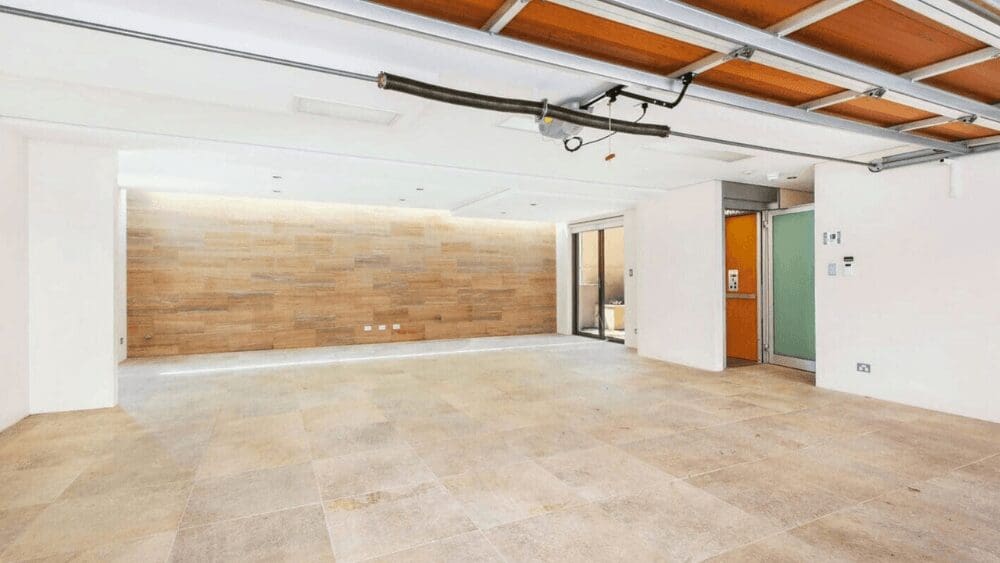
First, let’s define what the term “finished garage” means. “A finished garage doesn’t have open and exposed beams. It’s drywalled, and in some cases, the walls are textured and painted,” explains Ryan McKee, an experienced Los Angeles-based agent who’s sold several properties with finished garages. “For some people, there’s an extended definition for a finished garage [..] It’s finished to a livable condition to use as an extra bedroom, a bonus room, or a rentable space. However, most call those converted garages.” In other words, a finished garage is a garage that has been upgraded beyond a basic storage space to include interior finishes similar to the rest of the home. This includes features like drywall, insulation, painted walls, proper flooring, lighting, and sometimes heating or cooling. While it remains primarily a garage, it feels cleaner, more polished, and more usable for activities beyond parking. A finished garage is not the same as a converted garage, which is redesigned for full-time living space.What is a “finished” garage anyway?