- Key takeaway: Dime Commercial Bancshares in New York is eyeing additional expansion in New Jersey after opening a branch in one of the Garden State's fastest-growing municipalities.
- Supporting data: As Dime shifts to a commercial business model, its once-dominant multifamily portfolio continues to shrink, falling below 30% of total loans on June 30.
- Expert quote: Dime "continues to remix earning assets towards higher-yielding business loans." — David Konrad, analyst with Keefe Bruyette & Woods
After 162 years with a New York-only footprint, New Jersey is emerging as an increasingly important part of Dime Commercial Bancshares' strategic calculus.
The $15 billion-asset Dime, which is based on Long Island, opened its
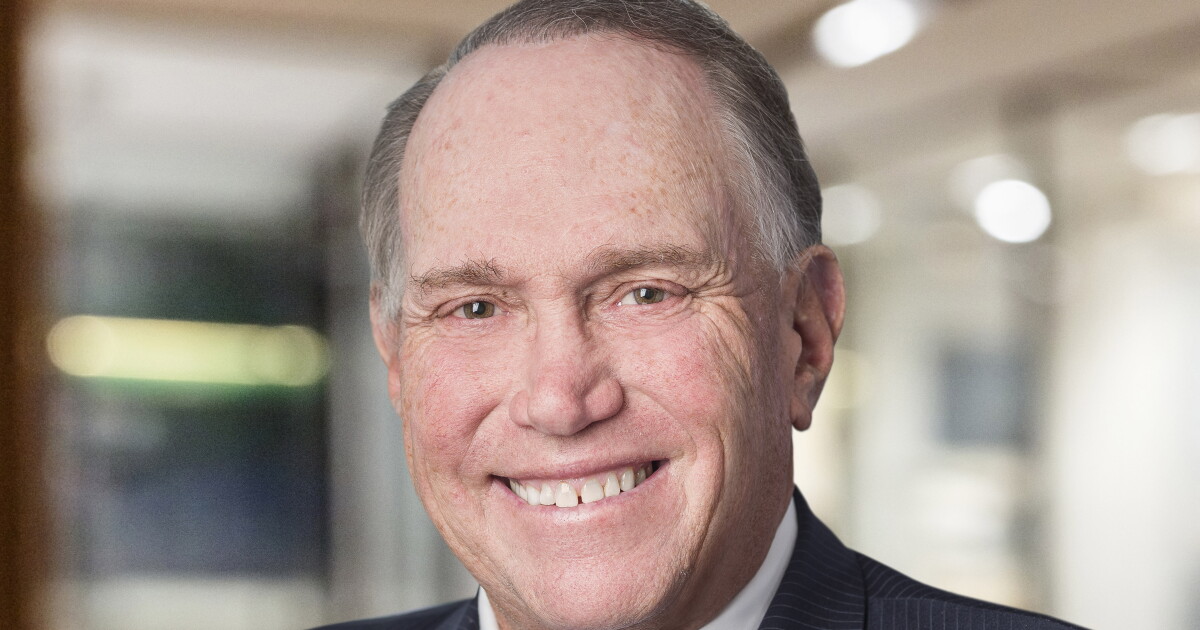
"We do think there's an opportunity in New Jersey, and over time we'll look to capture more market share," Lubow told American Banker. He mentioned Bergen, Hudson and Essex counties — all three of which are north of Lakewood, located in Ocean County — as potential targets for additional growth.
Lakewood ranks among New Jersey's fastest-growing municipalities. Its population grew more than 6% from 2020 to 2025, reaching an estimated 143,765, according to Census Bureau data.
"It's a very vibrant marketplace," Lubow said. "A lot of activity, new businesses, commercial real estate development. We thought this was an opportunity we couldn't pass up."
The Lakewood branch isn't Dime's only recent foray into New Jersey. In May, it launched an equipment and franchise leasing group in Hackensack. Dime also hired a commercial-and-industrial lending team that focuses on the Garden State.
Equipment and franchise finance was "the one area we wanted to build in terms of a new industry specialization," Lubow said. "While we did franchise finance and some equipment finance, we did it more on an ad-hoc basis for existing customers."
Dime's entry into New Jersey marks the latest stage of an ongoing transformation that has seen the company evolve from a Brooklyn-based thrift with a heavy concentration in multifamily lending into a full-fledged commercial bank. Indeed, Dime recently changed the name of its bank subsidiary to Dime Commercial Bank, dropping "Community" from its moniker.
"Now, our business is [largely] commercial," Lubow said. "Approximately 75 percent percent of our deposits are commercial, 60 percent of our loans are commercial real estate or commercial-and-industrial loans."
"Whether it's on the east end of Long Island or in Nassau County or Brooklyn, we are the pre-eminent commercial bank in our footprint with over $15 billion in assets," he said. "We wanted to reinforce that with the name change."
Read more:
The top-performing 20 public banks with under $2B of assets in 2025 The top-performing banks with $2B to $10B of assets in 2025 'The data has to be perfect': BofA CEO Moynihan on AI Should a bank ever be liable when a customer gets scammed?
While Dime began its commercial shift more than a decade ago, the transition accelerated after the 2023 failures of Signature Bank and First Republic Bank, which paved the way for Dime to
Multifamily loans, Dime's forte for decades, comprised 29% of the loan portfolio on June 30, 2026, down from 35% at the end of 2024 and 78% in 2017. That was the year Lubow
Dime expects the decline in multifamily loans to continue into the second half of 2026, according to Keefe Bruyette & Woods analyst David Konrad.
Dime "continues to remix earning assets towards higher-yielding business loans," Konrad wrote in a July 23 research note.
Institutions moving from a thrift business model to one focused on commercial banking have been a prominent feature of New York's banking landscape throughout the past three decades. Some banks have struggled with the transition.
The former New York Community Bancorp teetered for a time, after
For Lubow, Dime's New Jersey move is something of a homecoming. He was raised in Middlesex County in the central part of the state. He served as CEO of Teaneck, New Jersey-based Community State Bank before its sale to Lakeland Bancorp in 2003.
"It's an area I know well," Lubow said.
Lubow, who will mark his
"With the density of population in New York and New Jersey, there's a tremendous opportunity to continue to grow," he said. "I think that's what we're going to focus on."