Mortgage industry leaders are torn over whether the Financial Conduct Authority should provide guidance on the use of AI or remain as flexible as possible to give firms maximum freedom to innovate.
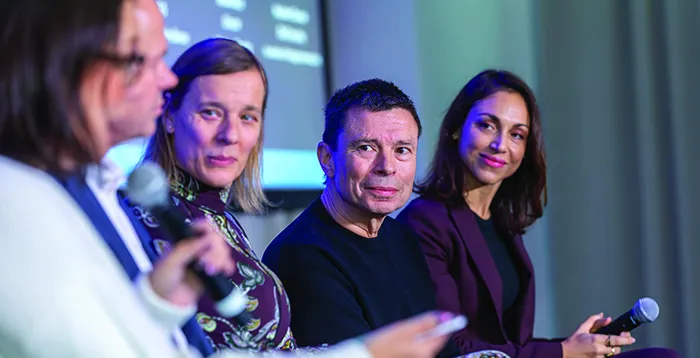
Speakers on the Leader Panel: Building the Future of the Mortgage Business talked about the challenges firms faced around safely adopting AI.
Chairing the panel, Association of Mortgage Intermediaries chief executive Stephanie Charman said: “The FCA has indicated that it doesn’t plan to actually introduce any specific guardrails for AI use, but it remains focused on the role of AI in the future mortgage sector.”
Without a stronger steer from the FCA, fewer people will want to be involved
She asked panelists whether the absence of clear guidance was hindering innovation by creating uncertainty or was actually helpful in providing firms with more freedom to experiment.
“The regulator certainly seems to really want to test and learn very quickly in the AI space,” said Mortgage Advice Bureau chief executive Peter Brodnicki.
“I think that’s fine in a sandbox environment where you have a very tightly controlled testbed, but to then not provide any guardrails for the rest of us — I think that’s very difficult, especially when it’s not telling us how it will treat unintended consequences. It just creates more uncertainty.”
Without a stronger steer from the regulator, Brodnicki warned, “fewer people will want to be involved”.
But Lloyds Banking Group head of intermediaries Esther Dijkstra argued that it was good that the FCA had given firms freedom to innovate.
If we want to go faster, we need to have tracks that don’t wobble
She said: “With the regulator having introduced the Consumer Duty, it is saying you are responsible for your customers’ outcomes. We are facing into this new world where you have to try it, test it, quickly iterate, dip your toe in the water and see how it lands. I think you have to be brave and bold. That’s a risk, but it’s an acknowledged risk.”
Barclays director of digital mortgage platforms Stefania Ricci shed light on some of the difficulties major banks face in relation to tech innovation.
Ricci said: “As a bank with 300 years of history… we bring lots of baggage that is old and it does not allow for the frictionless digital-first experience, which is what everybody wants: instant decisions, predictability and connection with actors across the mortgage landscape.”
The big mistake we all make is trying to bring in people who are like us
Investing in future-proofing basic systems and functions is critical for maintaining stability, before more ambitious modernisation can take place, Ricci warned.
She said: “For banks, if we want to go faster we need to have tracks that don’t wobble when we start innovating at pace, because instability for a bank equals fragility.”
Panelists reflected on the need for a different kind of management strategy in order to thrive amid constantly evolving technology.
Dijkstra even argued that the conventional top-down approach should be flipped on its head.
She said: “In traditional leadership models, you see a sort of pyramid shape. But, with the transformation we are seeing in the industry and technology, and with the pace of change, you have to empower your people at the front end to take decisions. They will need to have the expertise so that they can make fast-paced, data-driven decisions and make changes really fast.
“So I think it’s flipping that model, so that there’s no longer the captain of the ship. It’s more a flotilla of speedboats where you need someone in each boat to be empowered to take their own decisions.”
The FCA has indicated that it doesn’t plan to actually introduce any specific guardrails for AI use
Legal & General managing director of mortgage services Kevin Roberts stressed the importance of recruiting team members who “think differently”.
He said: “The big mistake we all make is trying to bring in people who are like us. But the last thing I should do in my business is bring in anyone who’s like me. Our chief technology officer really challenges me. She makes me think. She’s completely different from me and that’s what my business needs.”