A group of eight Republican senators is again urging the Federal Emergency Management Agency to scrap Risk Rating 2.0, the flood insurance pricing overhaul implemented under the Biden administration. The request comes in a new letter led by Sen. Bill Cassidy of Louisiana, following a similar appeal he sent to FEMA last June.
The push lands as the National Flood Insurance Program
What Risk Rating 2.0 changed
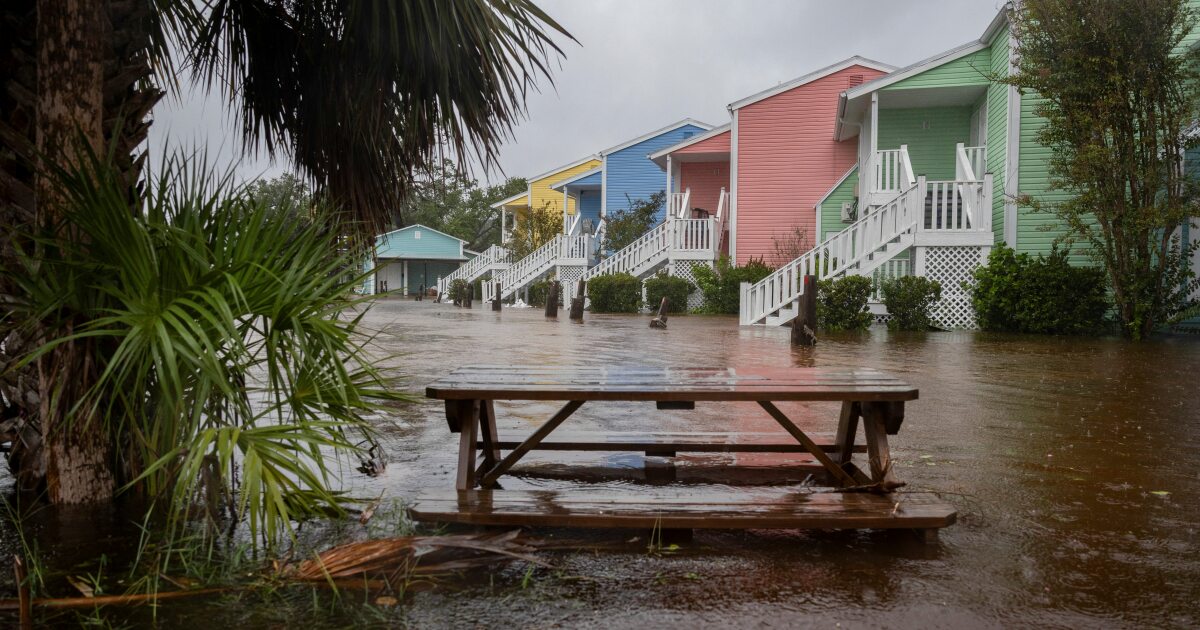
Risk Rating 2.0, which took effect in October 2021, shifted the NFIP's pricing away from broad flood zones and elevations to a property-by-property model. Premiums are now based on factors such as replacement cost value, frequency of flooding, proximity to flood sources and flood types including storm surge, river overflow, coastal erosion and heavy rainfall.
Supporters say the changes were necessary to make the program more actuarially sound. Critics argue the new methodology has caused premiums to spike sharply in some regions.
While implemented during the Biden administration, Risk Rating 2.0
Who is calling for a rollback
Cassidy led the latest letter and was joined by Sen. John Kennedy, R-La.; Sens. Cindy Hyde-Smith and Roger Wicker, R-Miss.; Sens. Jim Justice and Shelley Moore Capito, R-W.Va.; Sen. Tommy Tuberville, R-Ala.; and Sen. John Cornyn, R-Texas.
The senators argue that the pricing shift is undermining participation in the federal flood insurance program at a time when a broad risk pool is essential to its stability.
"Since Risk Rating 2.0 took effect, flood insurance premiums have increased in every state, and FEMA estimates that approximately 77% of policyholders now pay more than they would have under the prior system," the senators wrote in a letter to acting FEMA Administrator Karen Evans.
They also claim premium increases of more than 100% in parts of Louisiana have pushed tens of thousands of homeowners to drop coverage altogether.
Conflicting data on policyholder impact
Other data show a more mixed picture. A 2023 update from the American Flood Coalition found that after the first year of Risk Rating 2.0,
In a November 2025 response to Cassidy's earlier letter, FEMA said the revised pricing structure is required by Congress to ensure actuarial soundness and to better reflect actual flood risk.
The actuarial argument
The NFIP carried $20.5 billion in debt as of July 2023, according to a presentation by the American Academy of Actuaries that cited a September 2020 study.
"Actuarial principles can provide important guidance to the NFIP in establishing rates that yield sufficient revenue to cover program claims in a way that reflects each policy's risk," the study said, while noting that standards used in private insurance may not fully translate to a public program like the NFIP.
Susan Kent, vice president of casualty at the Academy, said the organization is not an advocacy group but provides technical expertise to policymakers weighing changes to the program.
"Changing a pricing approach for an important public program like the NFIP involves balancing sustainability, policyholder needs, public debt financing and the use of improved data and technology," Kent said.
The senators' letter acknowledges the need for financial responsibility but argues the current approach is having the opposite effect.
They cited a December 2025 study published in the Journal of Catastrophe Risk and Resilience that found Risk Rating 2.0 led to an 11% to 39% decline in new NFIP policies and a 5% to 13% drop in existing policies, depending on the size of premium increases.
That erosion, the senators said, creates a structural problem by shrinking the risk pool and increasing concentration.
What the senators are asking FEMA to do
The letter calls on FEMA to:
- Terminate Risk Rating 2.0, halt premium increases above the statutory minimum, and work with Congress to restore a pricing structure that supports broad participation and program stability.
- Provide full transparency into NFIP rate-setting, including disclosure of data inputs, modeling assumptions and actuarial analyses used to justify premium increases.
National Mortgage News reached out to FEMA for comment.