Takeaways:
- Penalties for claims payment delays are not retroactive
- Provisions duplicate existing regulations
- Practical aspects of adjusting claims not accounted for
California's
Policyholder attorneys and advocates call the proposed bills addressing loss estimates and claims payments unenforceable, and insurance industry attorneys say their provisions impose unreasonable and impractical demands on carriers.
One of the bills, SB 878, would impose interest penalties on insurers for claims payment delays. This would increase accountability, said Beth Swanson, insurance analyst at The Zebra. "But again, if there's no follow up by a government agency or some kind of administration to make sure that's happening, they could potentially choose not to do that," she said. "It's ultimately going to come down to what they decide the punishments will be if they don't comply."
However, California already has regulations requiring timely home claims payments, as well as policyholders' rights to receive claims documents and get timely decisions on accepting or denying claims, according to Keith Meyer, partner in the insurance recovery group at Reed Smith in Los Angeles. The proposed bills, if enacted, would not retroactively apply to victims of last January's wildfires, he pointed out. Timely claims payments are already required, but not enforced, Meyer added. "They're great on paper, but they really have no teeth. They're not self enforcing," he said.
Insurers' ability to deploy claims adjusters was a big problem in the L.A. wildfires, for different reasons, according to Meyer and an insurance industry attorney.
"When you have a major catastrophe like this, where the insurance companies don't have enough good adjusters, they actually go out and hire third parties to become their adjusters," he said. "It's like rent-an-adjuster, and it's terrible, because they don't necessarily know California laws or regulations, and they think they'll do well if they minimize the claim. That's not the job of an adjuster."
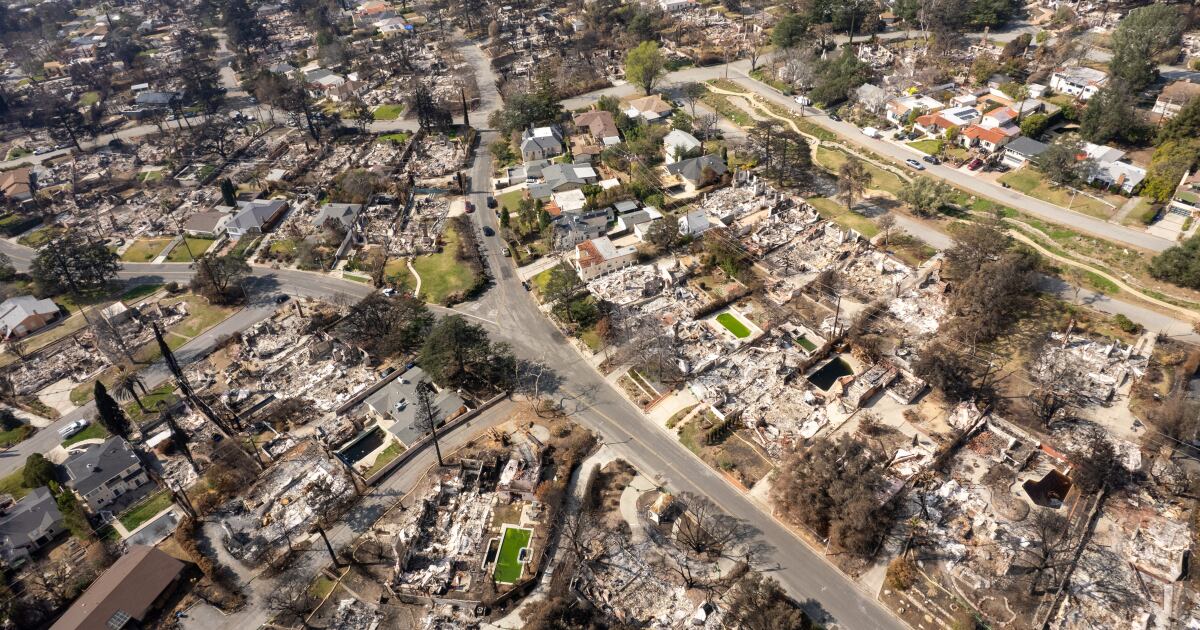
In the L.A. wildfires, the scale of destruction challenged insurers' abilities to assess claims, and SB 878 does not account for this, according to Michael Coffey, founding partner at Coffey Modica LLP. "If you're going to double penalties during declared disasters, you're also making an assumption that insurers are going to be able to hit the ground at full capacity," he said. "If the infrastructure becomes crippled or you don't have the access to areas, you're going to allow penalties to accrue. When the fires occurred in Pacific Palisades, it was unsafe for people to get up there right away."
SB 876, addressing disaster recovery, insurance coverage and consumer protections, according to Coffey, will increase costs. "It's going to add more layers of bureaucracy. Already, California is one of the most heavily regulated jurisdictions. Every company that writes here already does submit disaster response procedures to the Department of Insurance and would have to come up with new disaster recovery plans, and it's going to be really duplicative," he said. "You're going to force companies to eat even more administrative costs. Adding more oversight layers is not really going to streamline and cut down the time to deliver money. It's really going to elongate and cost more."
Coffey added that the legislation amounts to an effort to "own the insurance companies without having any of the responsibility. It's really going to lead to terrible consequences, because it's really going to have fewer options. There's going to be less places for consumers to go."
Also, SB 877, addressing transparency in loss estimates, is another standard already included in California's insurance regulations, according to Kya Coletta, associate at Reed Smith. "That doesn't guarantee fairness in the claims handling process itself."
The new laws instituted on January 1 addressing risk mitigation and modeling, and other related insurance issues are limited in their scope, explained Chris Micheli of Snodgrass & Micheli, a Sacramento-based law firm. "There are ultimately limitations as to how competitive the insurance market can actually be without a loosening of some of the limitations on rates of return to ensure that there is, in fact, a vibrant insurance market in the state," he said.
The pending legislation will have support in the state senate's insurance committee, as the author of SB 876, Steve Padilla, chairs that committee, Micheli noted. Three of the committee's seven members are now from Los Angeles County, after senate president pro tempore Monique Limón replaced two Northern California committee members in November. "Although the insurance industry is one of the most powerful at the California State Capitol, I think we're likely to see movement on several of these bills," Micheli said.