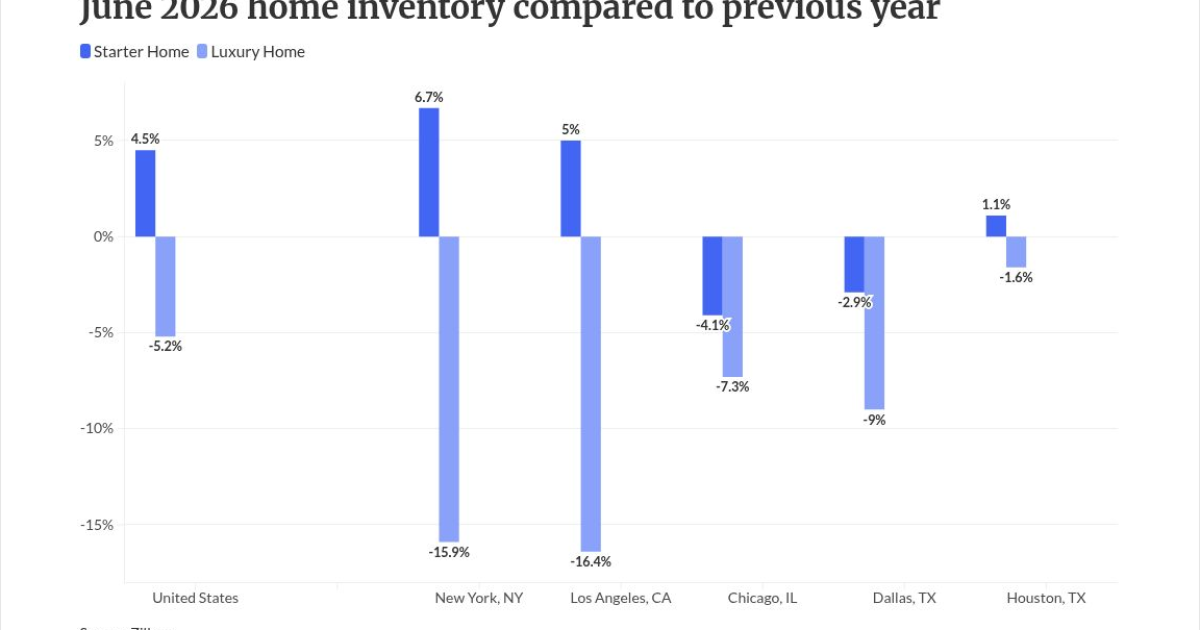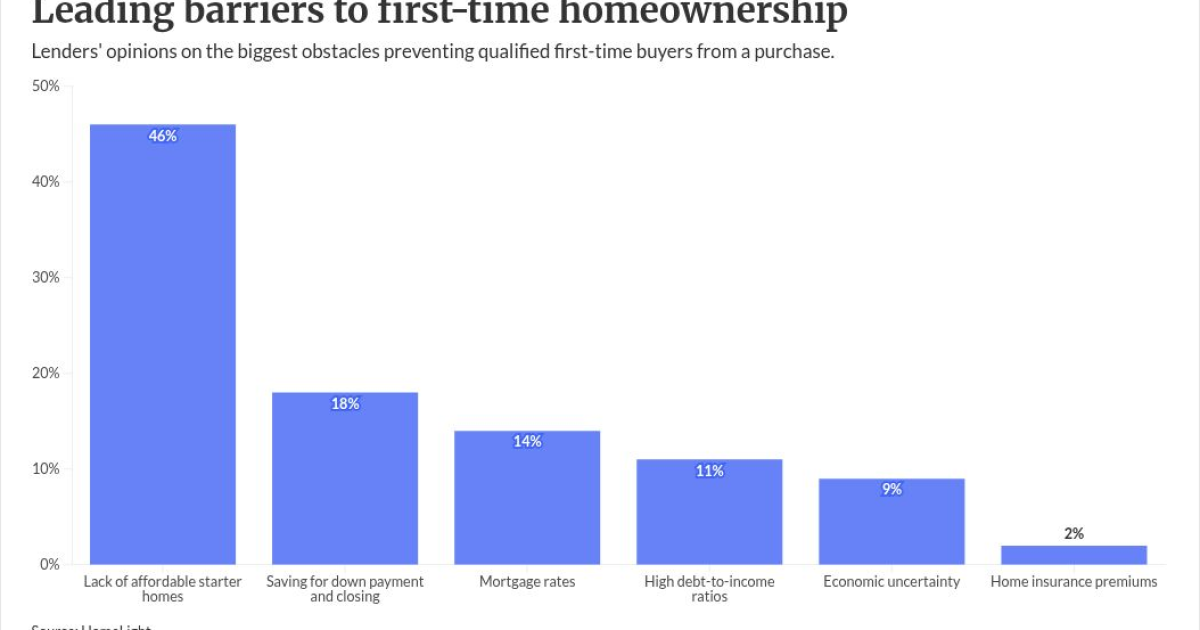
Housing supply and consumer financial worries appear to have a larger effect than headline mortgage rates in subduing the current home purchase market, according to a new survey of lenders.
In research conducted by buy-before-you-sell firm HomeLight, 46% of loan officers said an inadequate supply of
Meanwhile,
"Many lenders said that while lower mortgage rates, down payment assistance and other financing tools can help individual buyers, they don't address the underlying imbalance between supply and demand," HomeLight said in an accompanying report. Some respondents pointed to how policies could create greater supply and much-needed equilibrium for the market.
"By building more starter homes, townhomes and other attainable housing options, we create more opportunities for families to enter the housing market." said Ashlee Sheppard, a loan officer in Evans, Georgia.
Still, the effect of lower mortgage rates did not go unrecognized, with some respondents noting they would trigger interest among current homeowners to potentially move, boosting available inventory.
The current economic factor
Apart from starter-home supply, lenders reported widespread concern over both personal finances and macroeconomic issues as high on the mind of the customers they serve.
More than three-fifths, or 61%, of mortgage lenders said today's first-time buyers are facing greater affordability challenges and financial strain today compared to the market of five years ago.
Data suggests the situation is not improving. Compared to one year ago, affordability still came in as the leading obstacle to obtaining mortgage approvals, 42% of lenders said. Consumer-debt levels were well behind at 21%, followed by
While affordability challenges remain a dominant trend, more than one-third, or 38%, of loan officers think broad economic uncertainty will become the defining theme for the rest of 2026. Supply-chain
Only 28% thought affordability would be the top issue, followed by 12%, who noted mortgage rate movements.
How home buyers are responding
To get themselves into a home, borrowers are increasingly looking at upfront savings costs, rather than waiting for rates to drop, HomeLight said.
Thirty-seven percent of LOs said requesting seller-paid closing costs had turned into the most common strategy employed among borrowers looking for increased affordability. Another 17% noted the use of low down-payment programs. A similar 15% share looked toward down-payment assistance programs.
"Loan officers frequently called for more generous, easier-to-use down-payment assistance programs, including higher income limits, broader eligibility and forgivable assistance that helps first-time buyers overcome upfront cash barriers," the report said.
Lenders also said borrowers would be better served through financial literacy programs, with many of their clients unaware of how many assistance options exist.
At the same time, aspiring homeowners will help their own cause if they make efforts to get their own financial affairs and debt-to-income ratios in order. Forty-seven percent of loan officers pointed to auto loans as the leading type of debt keeping their customers from qualifying. The share far outran credit cards, cited by 27% of respondents
"First-time homebuyers need a wake-up call," said Stephanie Sanger Robinson, an LO in St. Augustine, Florida. "Be realistic and don't overcommit. And for the love of all things holy — there is nothing sexier than a paid-off car," she said.