Greg Abel's first major deal at the helm of Berkshire Hathaway Inc. wasn't just a way to put a dent in a nearly $400 billion cash pile. It was also a bet on the American Dream.
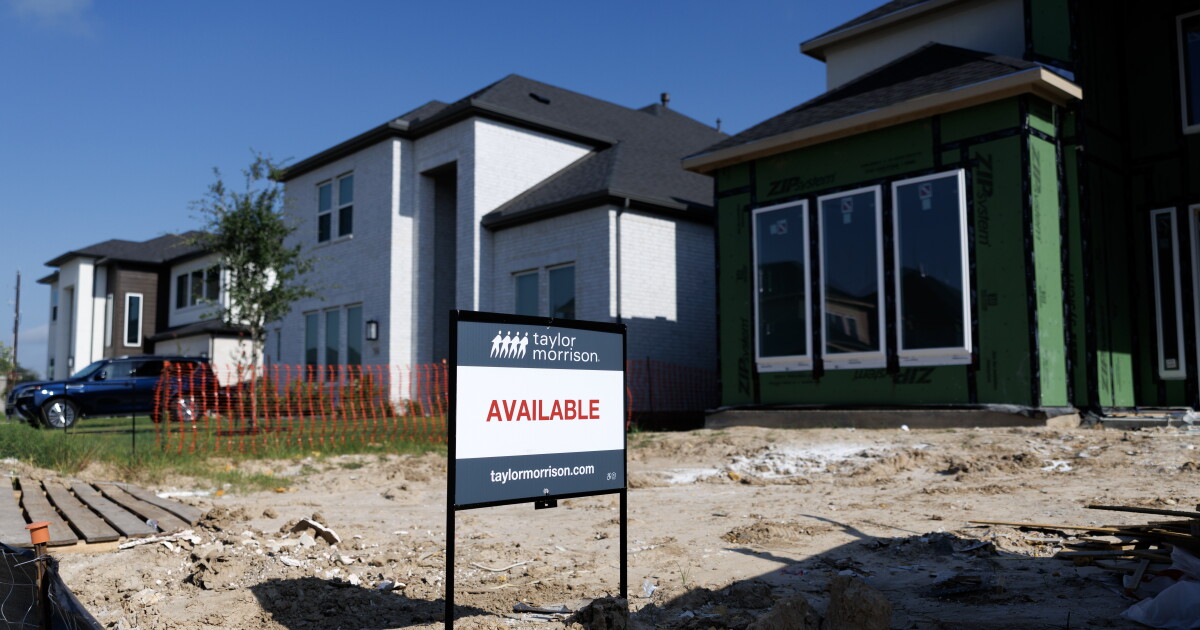
With its acquisition of Taylor Morrison Home Corp., Berkshire vaulted into the ranks of the largest US homebuilders, topped only by D.R. Horton Inc., Lennar Corp. and PulteGroup Inc. based on 2025 closings.
READ MORE:
For Berkshire — now with Abel as its chief executive officer — the purchase extends a housing empire that stretches from factory-built houses and building materials to real estate brokerages and utilities, giving the conglomerate exposure to nearly every stage of the homebuying economy. It also pushes Berkshire closer to a longstanding goal of making homeownership accessible to as many people as possible.
"It's clear that their strategy is to just play the whole affordable-housing issue," said Bill Boor, CEO of manufactured-housing company Cavco Industries Inc., a competitor of Berkshire-owned Clayton Homes. "Berkshire's the only one that I know of that's really put it all together. It has all of it under one roof, including lending and insurance."
When Berkshire reports second-quarter earnings Aug. 8, investors will look for more clues about how Abel plans to steer the company after taking over from Warren Buffett this year, including whether Berkshire intends to become an even bigger player in the real estate industry.
READ MORE:
The bet reflects long-term optimism for the housing market during a challenging time, as persistently high mortgage rates discourage would-be buyers and weigh on
Still, the US is estimated to be millions of homes short of what it needs, keeping housing supply at the center of policy debates in Washington. Bipartisan legislation that
"There will always be demand for new homes," said Meyer Shields, an analyst at Keefe, Bruyette & Woods who covers Berkshire. "Homes are finite and the population is growing."
The Taylor Morrison acquisition complements the business Berkshire built through its ownership of Clayton, which focuses on lower-cost houses that are at least partially built in factories. With the two companies, Berkshire can serve a much broader customer base, from entry-level to move-up and luxury buyers, through offerings spanning manufactured, site-built and master-planned communities.
Berkshire's also getting a larger foothold in the fast-growing active-adult market. Taylor Morrison's higher-margin Esplanade communities often take longer to develop, which makes sense for Berkshire's "patient capital," said Jay McCanless, managing director of homebuilding equity research at Citizens.
READ MORE:
The deal aligns with Buffett's longtime approach of buying established businesses with the hope of reaping improving returns over time. And with plenty of money to deploy, Berkshire has ample capacity to expand further in housing if opportunities emerge.
"If Berkshire wanted to, they could write a check and take out the entire public industry with all the cash sitting on the balance sheet," McCanless said. "But I don't know that it would necessarily be additive to what they already get with Taylor Morrison."
Before the acquisition, Berkshire had already made some equity investments in companies in the sector. The conglomerate owns a stake in Lennar that was worth about $900 million at the end of the first quarter. It also previously held shares in D.R. Horton.
Bringing Clayton's manufacturing expertise together with Taylor Morrison's traditional homebuilding operations could eventually give the firm more bargaining power with suppliers and speed construction, analysts say.
UBS analyst John Lovallo estimates factory-built components such as prefabricated wall panels can reduce framing time by roughly 30% while cutting costs by about $6,200 a home.
Under Berkshire, both companies also would have more resources to expand, with the goal of becoming "a top-three builder in every market" they operate in, said Sheryl Palmer, who will stay on as CEO of Taylor Morrison.
"We're joining one of the most reputable companies in the world," Palmer said in an
For Berkshire investors, the transaction may also offer an early indication of how Abel intends to manage the conglomerate.
Under Buffett, Berkshire's operating companies largely functioned independently, with limited coordination across businesses. Combining Taylor Morrison with Clayton under a dedicated housing operation would resemble Berkshire Hathaway Energy, where Abel spent years overseeing a collection of utility businesses.
"As Greg looks forward, he is definitely going to want to make his own stamp on the company," said Cathy Seifert, an analyst at CFRA Research who covers Berkshire. "Because he's an operations guy, his stamp on the company may be how the existing businesses operate and function."