Figure Technology Solutions reported a profitable start to 2026, driven by new partnerships on its blockchain-backed loan and capital marketplace, and signaled a potential future mortgage offering.
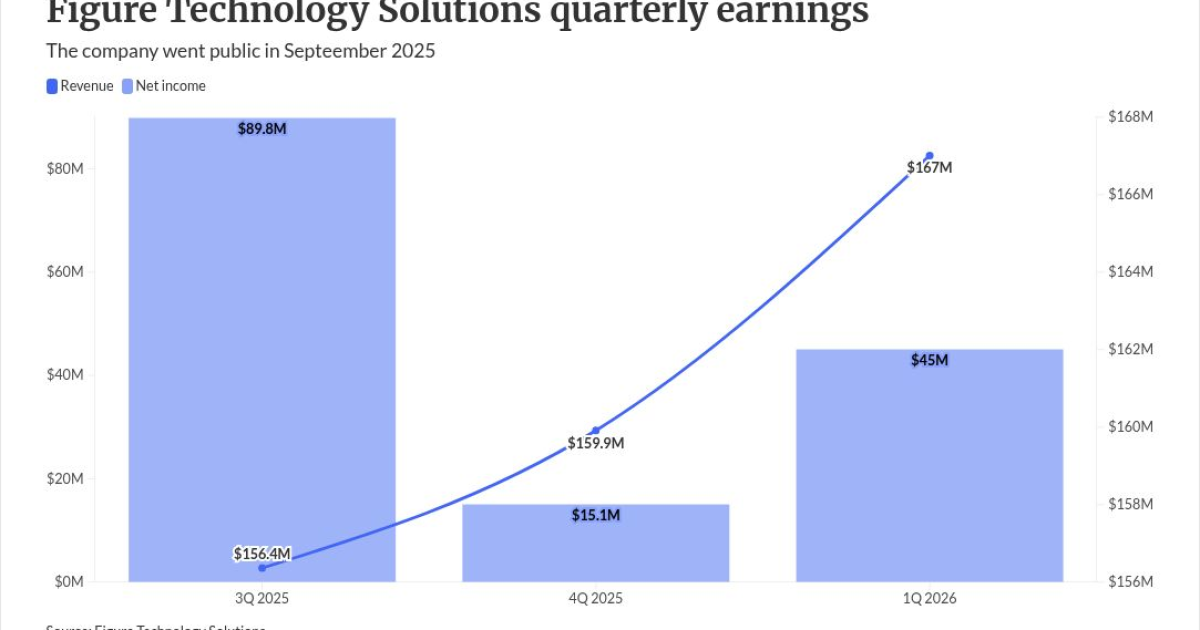
The New York-based fintech reported net income of $45 million in the first quarter, almost tripling its gain
The bottom line surpassed consensus estimates of analysts surveyed by S&P Global, who forecasted profits to come in at $41.9 million.
Profits came off of net revenue of $167 million, rising from the prior quarter's $159.9 million and $84.5 million a year ago.
Is a purchase mortgage in the cards?
Demand and interest for first-lien products, which made up 20% of production volume, helped drive growth, and have Figure executives looking ahead toward future possibilities, including a new purchase mortgage, they said. The company already offers a refinance loan.
"It's a medium-term goal, for sure," said CEO Michael Tannenbaum during an earnings call. "We have great relationships across partners, and as we look to ultimately take the entire capital market onchain, purchase mortgage is a part of that. For us, we are currently contemplating developing that with some of our larger partners, who have actually come inbound and asked for that."
With current growth occurring across all channels, including
"We added 80 new partners, the most ever, and launched new partners, including the seventh largest mortgage vendor in the country," Tannenbaum noted. At the end of March, the fintech counted 387 businesses as active partners within its network.
Contributing to the rise in those numbers was a surge of depository institutional partners like Flagstar Bank. It's a trend that demonstrates a demand for loan products from such businesses and bodes well for Figure's future prospects, he added.
"Being a profitable public company makes banks more likely to work with us, and I think the years in business, frankly, is another thing. All those years being really careful not to cross-sell and not to cross-market is really important to banks, who spent, in many cases, centuries protecting their brand."
Those same partners are expected to drive volumes of any new purchase-mortgage product. Along with feedback from existing partners, regulatory changes to
"Most banks want to play in mortgage, but they don't know how. They don't have the technology. They're ambivalent about the capital market," Tannenbaum said in a subsequent interview. "I think Figure is a natural partner."
Elsewhere in first-quarter earnings, the fintech reported volume across its full consumer loan marketplace, encompassing HELOCs, crypto products and other loans as well as activity from Figure Connect, increasing to $2.9 billion. The number climbed up from $2.7 billion at the end of the fourth quarter.
Lending of
Figure provided guidance for consumer loan marketplace production, with forecasts of between $3.8 billion and $4.1 billion over the second quarter.
Trades of Figure's stock initially surged overnight following the release of the first-quarter numbers late Monday after closing at a price of $38.97 per share. Following a sudden downward plunge at opening bell, FIGR's value jumped again on Tuesday and was trading at $41.29 by mid afternoon.