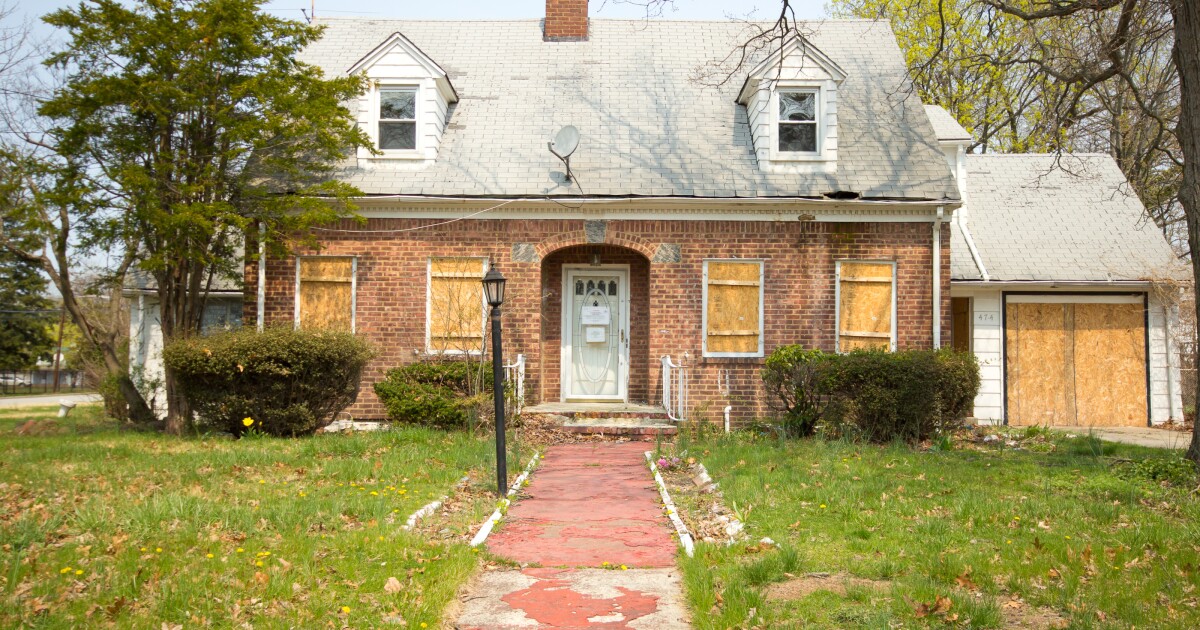
Foreclosures notably increased in 2025, but still remained well below prepandemic levels, according to Attom's year-end foreclosure market report.
Foreclosure filings, default notices, scheduled auctions and bank repossessions, were reported on 367,460 properties in the United States last year, up 14% from 2024 and 3% from 2023, but still down 25% from 2019,
"Foreclosure activity increased in 2025, reflecting a continued normalization of the housing market following several years of historically low levels," Attom CEO Rob Barber said in a press release Thursday. "While filings, starts, and repossessions all rose compared to 2024, foreclosure activity remains well below prepandemic norms and a fraction of what we saw during the last housing crisis.
The report also found there were 44,990 properties with foreclosure filings in December alone, up 26% from November and 57% from the year prior. There were 111,692 properties with foreclosure filings in the fourth quarter as well,
"The data suggests that today's uptick is being driven more by market recalibration than widespread homeowner distress, with strong equity positions and more disciplined lending continuing to limit risk," Barber said.
Foreclosure starts rose 14% last year from 2024 to 289,441, which was still 14% lower than 2019. Texas and Florida recorded the most foreclosure starts of any state, each above 34,000, while New York, Chicago and Houston saw the greatest number of any city.
Lenders repossessed 46,439 properties through foreclosures in 2025, up 27% from the year prior but down 68% from 2019. Texas and California experienced the most repossessions of any state, with Chicago, New York and Houston again ranking above any other city.
The average time to foreclose also decreased by 3% from the third quarter and 22% from a year ago to a national average of 592 days in the fourth quarter. Louisiana posted the longest average time of any state by far at 3,461 days.
Where were foreclosures most common?
The five states with the worst foreclosure rates last year were Florida (one in every 230 housing units), Delaware (one in every 240 housing units), South Carolina (one in every 242 housing units), Illinois (one in every 248 housing units) and Nevada (one in every 248 housing units).
Among the 225 metropolitan areas with a population of at least 200,000, Lakeland, Florida (one in every 145 housing units), Columbia, South Carolina (one in every 165 housing units), Cleveland (one in every 187 housing units), Cape Coral, Florida (one in every 189 housing units), and Atlantic City, New Jersey (one in every 192 housing units), recorded the worst foreclosure rates in 2025.
Jacksonville, Florida, Las Vegas and Chicago joined Cleveland as metro areas with a population greater than 1 million that had the worst foreclosure rates.