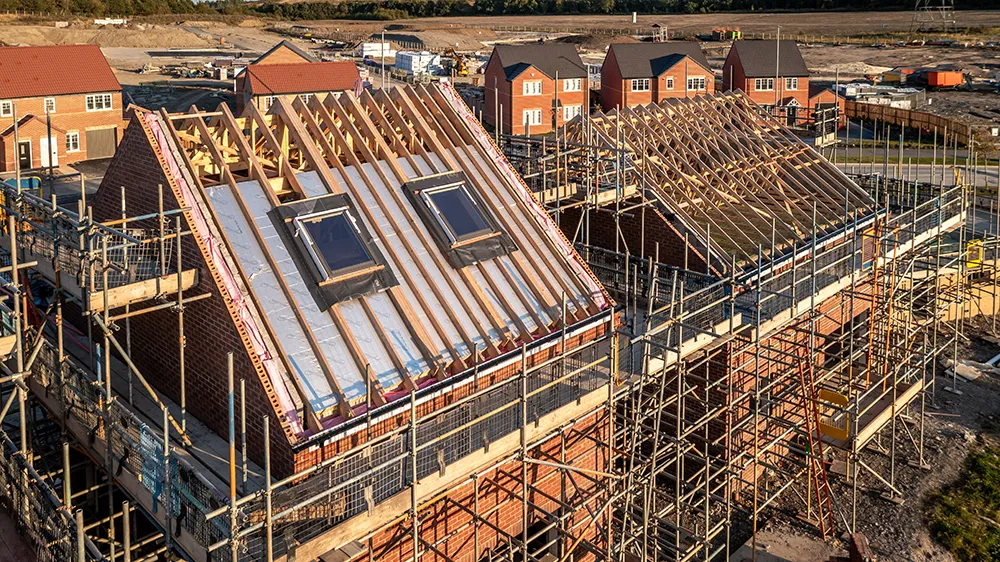
Output levels fell again in the construction sector in July, the slowest place since March, the latest S&P Global UK Construction PMI reveals.
S&P says this contributed to a sustained rebound in business activity expectations for the year ahead.
The latest index shows supply chain performance improved and input price inflation eased to a five-month low.
At 44.7 in July from 38.4 in June, the seasonally adjusted purchasing managers index reached its highest level for four months and remained below the 50.0 threshold.
Reduced volumes of business activity have been recorded since January 2025, which is the longest continuous period of decline since the global financial crisis.
Much slower rates of contraction were seen in all three main sub-sectors in July.
It shows commercial work (index at 46.8) showed the greatest resilience and civil engineering activity again saw the steepest pace of decline (38.3), while house building activity decreased at the least marked pace since October 2025 (index at 41.8).
Total new business received by construction companies fell at the slowest pace for 10 months in July.
Some firms commented on a recent turnaround in tender opportunities, including for commercial development, residential projects and transport infrastructure work.
However, many survey respondents also noted that heightened geopolitical uncertainty and subdued domestic economic conditions continued to weigh on customer demand.
The latest data highlighted a softer reduction in employment numbers across the construction sector and showed that the rate of job losses was the slowest since February.
S&P says anecdotal evidence cited the non-replacement of voluntary leavers in response to a lack of new work. At the same time, subcontractor availability improved to the greatest extent since April 2025.
July data revealed a sustained decline in purchasing activity, albeit the least marked since September 2025.
Softer demand for construction products and materials, alongside fewer reported instances of transportation delays, contributed to an improvement in supplier performance for the first time in five months.
Meanwhile, input price inflation eased further from May’s near four-year high.
Although still sharp, the latest increase in average cost burdens was the slowest since February.
Business activity expectations for the year ahead remained positive in July, with around 38% predicting an expansion and only 17% anticipating a decline.
S&P Global Market Intelligence economics director Tim Moore says: “July data suggests that the performance of UK construction sector has started to stabilise after a sharp downturn throughout the second quarter of 2026.
Business activity levels continued to decline in all three main categories, but in each case the rate of contraction was much slower than in June. This was supported by the weakest reduction in new business intakes since September 2025.”
“Survey respondents commented on signs of a turnaround in client demand and a revival in new tender opportunities in some cases, despite subdued underlying market conditions.”
“This contributed to more upbeat business activity expectations for the year ahead, with confidence levels the highest since February.”
“A renewed improvement in supplier performance and softer input cost inflation were also positive developments in July. Construction companies widely commented on fuel surcharges and higher raw material prices due to the war in the Middle East, but the overall rate of cost inflation was the lowest for five months.”
Also commenting, Shawbrook managing director of development finance Terry Woodley says: “A fall in construction output – marking the slowest downturn since March – across the latest S&P Construction PMI data highlights ongoing headwinds facing an industry striving to build momentum.”
“All three main categories of construction recorded a slower drop in business activity, marking the slowest downturn in construction output for four months, likely due to higher borrowing costs and business uncertainty.”
“The Government’s plans to deliver 1.5 million new homes over the course of this parliament will require sustained investment across the sector to overcome these softer construction figures.”
“While this new data points to a temporary setback, continued efforts, such as recent local planning and development reforms by Andy Burnham, demonstrate that the policy driver for addressing the housing demand remains strong.”