- Key Insight: The Fed's preferred inflation gauge rose again in May, extending a streak of elevated readings that leaves policymakers with little room to pivot toward rate cuts.
- What's at Stake: With the federal funds rate holding between 3.5% and 3.75%, the headline figure exceeds the upper bound of the Fed's target range, producing a negative real interest rate.
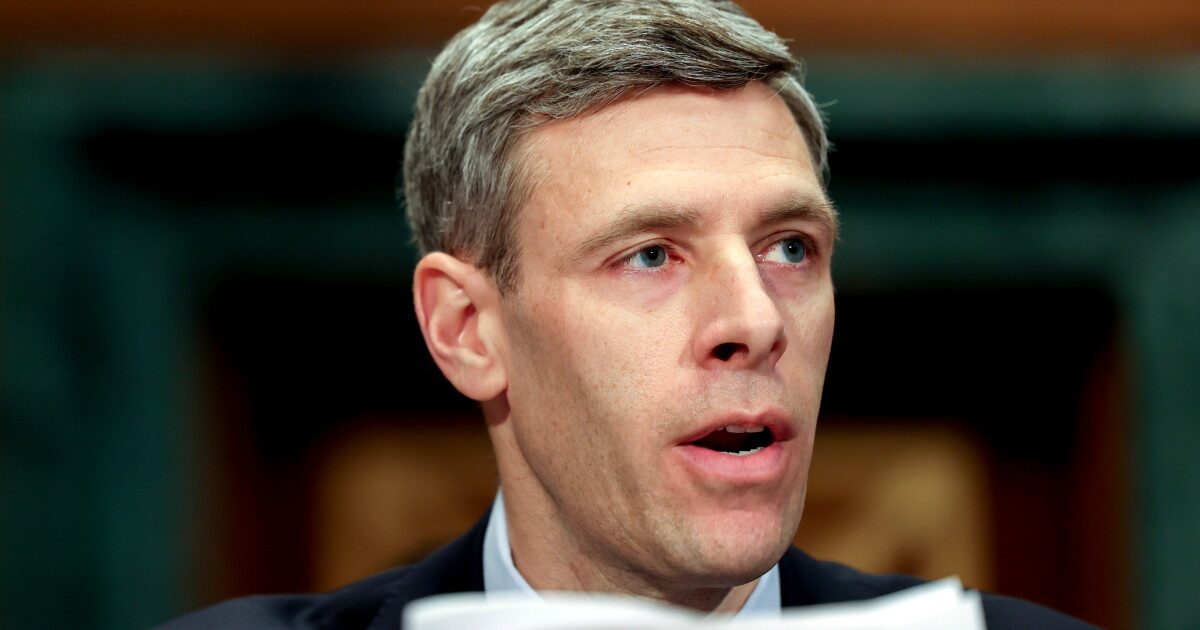
- Forward Look: After Thursday's report that inflation is still running well above the Fed's 2% target, borrowers, markets, and businesses are watching new Federal Reserve Chair Kevin Warsh closely for any sign that relief is coming.
The Federal Reserve's preferred inflation gauge continued its climb in May, casting further doubt on the prospects of near-term interest rate cuts from the Federal Reserve.
The personal consumption expenditures price index rose 4.1% from last year, up from
However, the Core PCE price index, which excludes more volatile food and energy prices and is closely watched by Fed officials, stood at 3.4% last month. That could give Fed officials reason to take their time in deciding whether to raise rates.
Total consumer spending accelerated from $111.1 billion in April to $156.1 billion in May, according to the report. While April's gains were led by gasoline and energy goods and housing, last month saw financial services and insurance surge to the top alongside a rebound in health care spending.
Last week, in its first statement issued since Federal Reserve Chair Kevin Warsh took the helm of the central bank, the Federal Open Market Committee
"Economic activity is expanding at a solid pace despite elevated uncertainty that owes, in part, to the conflict in the Middle East," the statement read. "Inflation remains elevated relative to the Committee's 2 percent goal, in part reflecting supply shocks that have driven price increases in certain sectors, including energy."
While Fed officials have offered little public commentary in the past month, Warsh
Warsh indicated the committee is open to "methodological changes" in how it gathers data, a potential signal toward his view that trimmed mean inflation — which strips out the most extreme price movements relative to overall indexes — offers a more accurate read on underlying price change.
The FOMC's quarterly statement of economic projections — known as the dot plot — showed that Fed officials were divided on the rate path for the rest of the year, with roughly half projecting further hikes and others expecting rates to hold. Markets have largely priced in at least one additional 25 basis point increase before the end of the year.
On June 10, the U.S. Bureau of Labor Statistics reported that the
The Labor Department's Bureau of Economic Analysis also revised its first quarter estimate of gross domestic product growth up on Thursday, bringing its forecast from 1.6% to 2.1%.