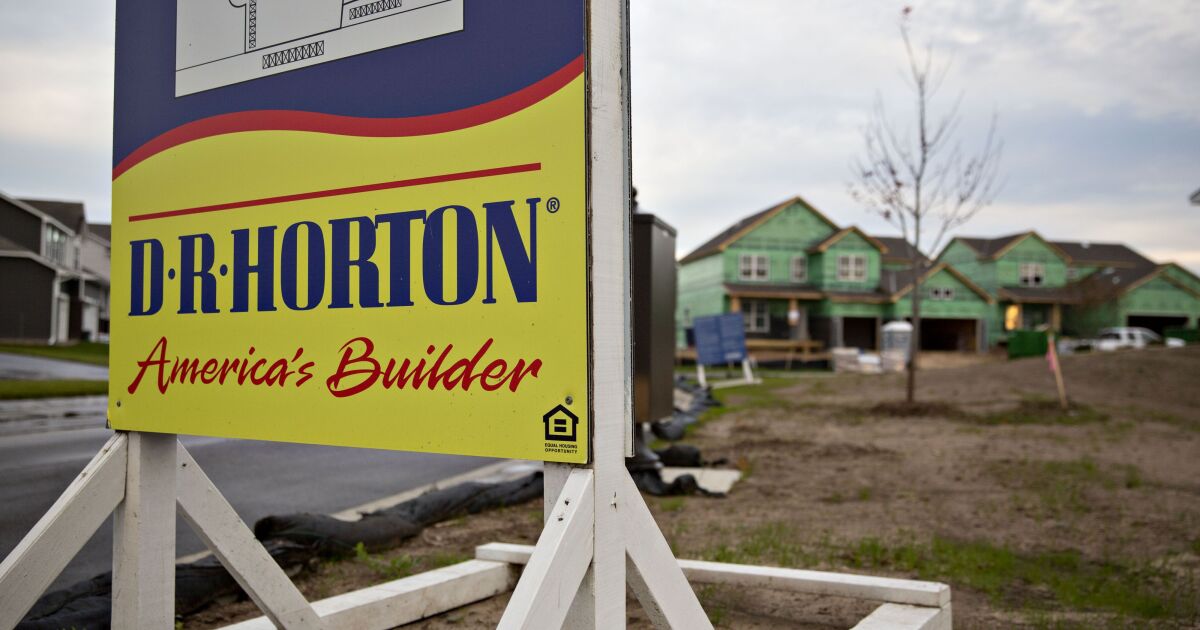
D.R. Horton and its lending arm are defending their underwriting practices as lawful, after borrowers sued the companies for saddling them with mortgage payment shocks.
The homebuilder's motion to dismiss, filed Monday in a Nevada federal court, is its first response to a class action suit, which
The claims suggest that D.R. Horton is profiting from a bait-and-switch scheme to make its homes look more affordable than competitors, and that the industry giant is qualifying borrowers for homes that cost more than
Plaintiffs say their true escrow estimate was hidden in mortgage forms, while the company quoted borrowers on the "suppressed" escrow estimates based on lower property tax assessments on unimproved land. In a 26-page response this week, D.R. Horton says it clearly informed borrowers of potential property tax hikes.
"That plaintiffs seemingly ignored these many disclosures does not render DHIM's conduct fraudulent or misleading—quite the opposite," wrote attorneys for the homebuilder and its lending arm.
Neither the company nor attorneys for the sides responded to requests for further comment Tuesday.
While racketeering lawsuits are
DR Horton defends its business practices
The company explains that new construction is typically assessed by local officials as "unimproved" with lower tax rates, when loans close. The lender says it provided full disclosures, including estimated future property taxes, on federal forms including loan estimates and closing disclosures.
Further, the companies say plaintiffs in applying for loans received and signed two "Important Property Tax Notices" explaining that the escrow account would be reassessed. Those forms were more detailed than what the Consumer Financial Protection Bureau suggests, the motion claims.
Attorneys for D.R. Horton included in their filing detailed financial breakdowns of the plaintiffs' alleged closing disclosures, and attached 25 exhibits of forms they signed, among other documents.
The firm also offers technical challenges to the lawsuit, contesting the RICO claims should be tossed because D.R. Horton had no role in preparing the purportedly fraudulent disclosures shared by DHIM. The motion also challenges accusations under the Nevada Deceptive Trade Practices Act, arguing real estate loans don't meet the statute's goods or services standard.
Plaintiffs have two weeks to respond to the homebuilder's filing, according to court records.
The company last month reported quarterly earnings in which its $595 million in net income was a significant decline from the prior and year ago periods. The company's financing arm also closed on 17,818 homes in the recent fiscal year 2026 first quarter, also down from past reporting cycles.