- Key Insight: Discover how Fannie Mae plans to offset its newly slashed mortgage origination forecast.
- What's at Stake: Mortgage lenders fighting to maintain revenue as Fannie Mae slashes its volume forecast.
- Forward Look: Freddie Mac is testing a new pilot program called LPA Express.
Overview bullets generated by AI with editorial review.
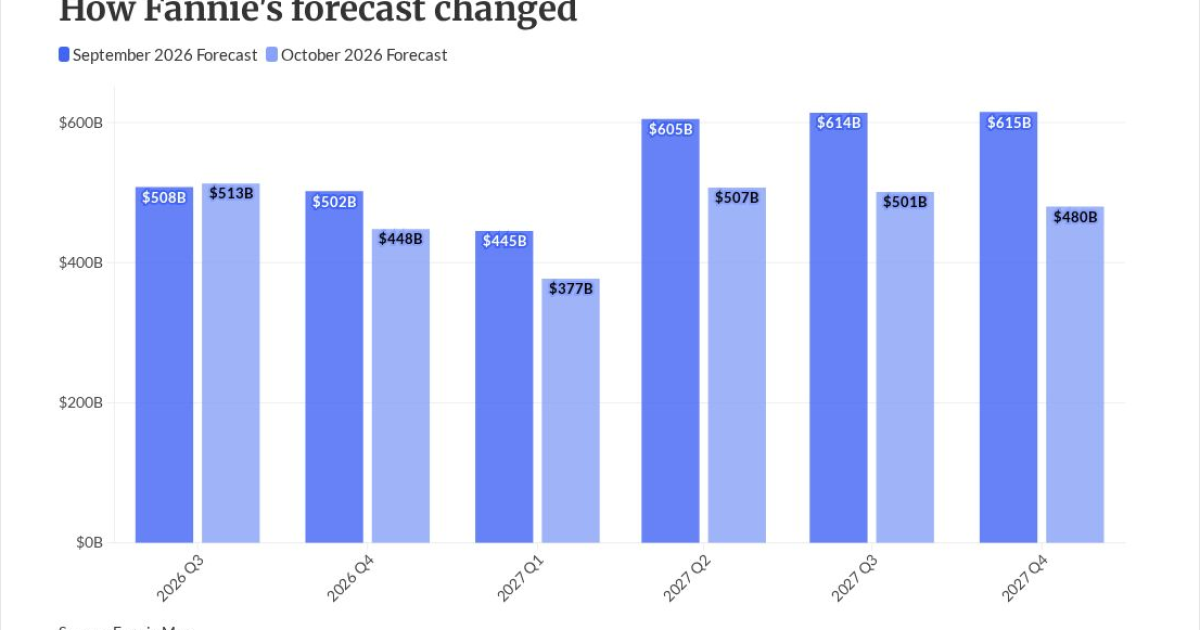
Fannie Mae has downshifted its origination forecast for next year but both it and Freddie Mac seek to offset this by offering lenders operational efficiencies they can use to augment capital markets revenue
Fannie's reduced projections follows others like
The GSE previously anticipated originations could grow to nearly $2.3 trillion in 2027, but now sees volume falling to below $1.9 trillion.
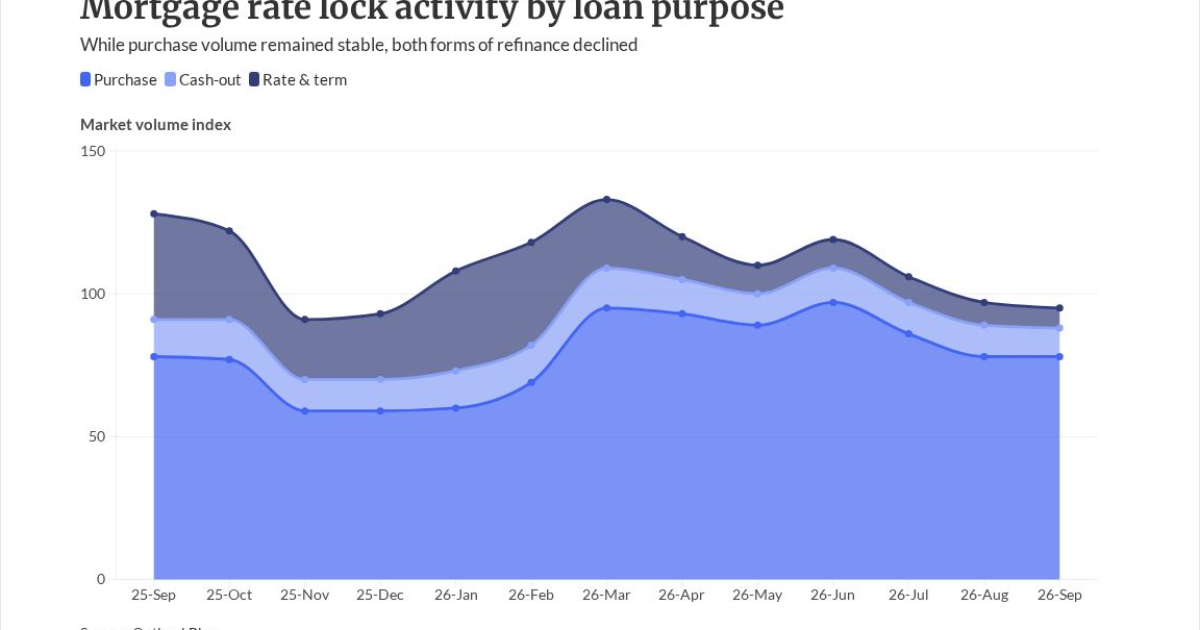
There's still a chance rate environment could improve for lenders next year, but so far, the latest economic indicators have not been promising
Given that outlook, the two government-sponsored enterprise loan-buyers told lenders at a recent industry conference that they are working to help mortgage companies serve more borrowers and operate more efficiently while managing rate-related risks.
What the GSEs are doing: By the numbers
"We are doing business with 30% more sellers than we were four years ago," Sonu Mittal, executive vice president and head of single-family acquisitions at Freddie Mac, told attendees at the MBA's annual meeting in Chicago.
Jake Williamson, Fannie Mae's executive vice president and head of single-family, said the GSE is being more nuanced in its underwriting.
Fannie Mae is hearing pretty loud and clear from its customers the market is very challenging, so it will get creative about products and policy.
"There's not a one-size-fits-all when it comes to risk management. Can we get more granular in the way we approach things? A lot of our investments are really focused on that customer feedback," he said.
Mittal said Freddie is working on doing more to work with non-W2 borrowers.
"We got a lot of feedback from the industry that not all the jobs are 9-5 anymore," he said. "There is a lot of variable income, which we see in the industry. So we partnered with the industry on fluctuating income in other areas, and we launched the income calculator, which continues to help lenders make sure that they can get the borrowers from point A to point B."
He said Freddie is working to do more in this area with a new pilot related to its Loan Product Advisor automated underwriting system called LPA Express.
"What we are doing there is validating the income for the lender, and it's showing really, really good promise early on," Mittal said.
Both GSEs also touted savings from home valuation options.
Fannie has bought around 5.4 million loans using
Mittal said Freddie also is approaching $3 billion in savings for borrowers.
"And while we are doing those appraisal waivers, we are continuing to see the quality remain in a really good place, so it's not compromising safety and soundness," he said.
Both GSE executives also reported savings from title alternatives.
Fannie Mae reported that about 8,000 loans have come in the door on attorney opinion letters with no title defects. Another 22,000 have come in the door through its title acceptance program with no title defects.
"The cost savings of just those two things in the last year and a half has been about $25 million. And when you look at it at a loan level, that's $500 to $1500 per transaction," Williamson said.
Mittal said average savings from its title alternative, which it offers only
- Heidi Patalano contributed reporting from the MBA's annual meeting